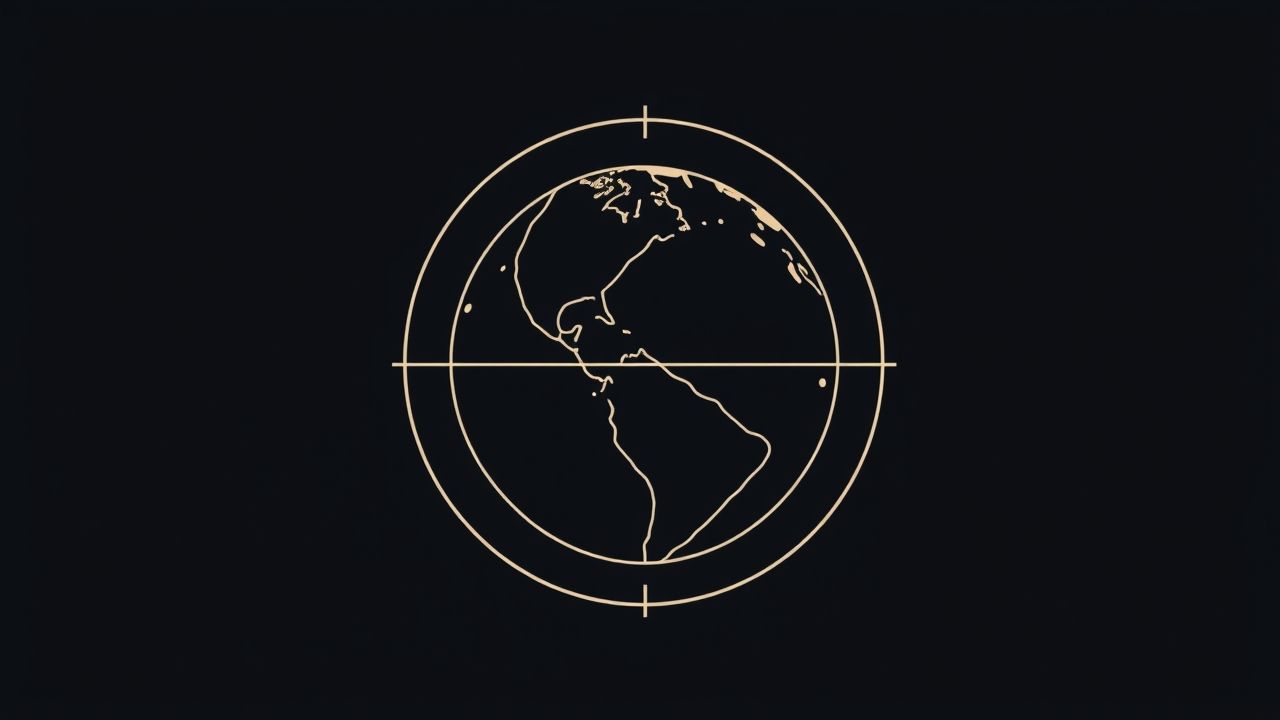
The circumference of Earth at the equator is one of the most fundamental measurements in geography, astronomy, and geophysics. It helps us understand the planet’s shape, size, and how it rotates on its axis. This measurement has implications for global positioning systems, satellite orbits, climate science, and even historical navigation. When discussing Earth’s geometry, the equatorial circumference is particularly important because it represents the planet’s widest horizontal span. Understanding how this measurement was calculated and what it means for science and daily life allows us to better grasp the structure of our world.
What Is the Circumference of Earth at the Equator?
The Earth’s equatorial circumference is approximately40,075 kilometersor about24,901 miles. This measurement refers to the distance around the Earth along the equator, which is the imaginary line circling the planet horizontally at 0 degrees latitude. Unlike a perfect sphere, Earth is slightly flattened at the poles and bulging at the equator, making its equatorial diameter slightly larger than its polar diameter.
Equatorial vs. Polar Circumference
Because the Earth is an oblate spheroid, its equatorial circumference is greater than its polar circumference. The polar circumference measured around the Earth through the poles is approximately 40,008 kilometers (24,860 miles), slightly less than the equatorial measurement. This difference is caused by the planet’s rotation, which causes a bulging effect at the equator.
Why the Equator Matters
The equator is more than just an imaginary line; it divides the Earth into the Northern and Southern Hemispheres and plays a critical role in climate, ocean currents, and weather patterns. Locations along the equator receive consistent sunlight year-round, which leads to warm, tropical climates and rich biodiversity.
Scientific Relevance of the Equator
- Solar radiationThe equator receives the most direct sunlight, influencing global heat distribution.
- Climate zonesThe region around the equator typically experiences little seasonal variation and is home to rainforests and equatorial low-pressure systems.
- Coriolis effectThe rotation of the Earth causes wind and water to deflect, influencing global weather and ocean currents.
How the Circumference Was Measured
Measuring the Earth’s circumference has fascinated scientists and mathematicians for thousands of years. The first known scientific attempt was made by the Greek mathematician Eratosthenes in the 3rd century BCE. Using simple tools and geometry, he achieved a surprisingly accurate estimate of Earth’s circumference based on the angle of the Sun’s rays in two locations in Egypt.
Modern Methods of Measurement
Today, scientists use advanced technologies such as satellite data, geodetic surveys, and laser ranging to measure Earth’s dimensions with extreme precision. These tools take into account Earth’s irregularities, such as mountains, ocean trenches, and gravitational anomalies.
Applications of Equatorial Circumference
Understanding the Earth’s equatorial circumference is critical for various practical and scientific fields. It influences calculations in astronomy, satellite deployment, aviation, and telecommunications. Without accurate measurements of the planet’s size, global navigation systems would not function effectively.
Key Uses in Modern Technology
- GPS SystemsRequire precise knowledge of Earth’s size and shape to provide accurate positioning data.
- Satellite OrbitsEngineers must consider the Earth’s circumference when designing satellite trajectories and speeds.
- Flight PlanningAviation routes are optimized based on Earth’s geometry, particularly for long-haul flights that follow great-circle routes.
The Shape of the Earth Oblate Spheroid
The Earth is not a perfect sphere. Due to its rotation, it is slightly flattened at the poles and bulging at the equator. This shape is known as an oblate spheroid. As a result, the diameter of the Earth at the equator (about 12,756 kilometers) is greater than the diameter measured through the poles (about 12,714 kilometers).
Implications of Earth’s Shape
This bulging affects not only the equatorial circumference but also gravitational force, sea level, and satellite dynamics. For example, satellites in low Earth orbit must account for this bulge to maintain stable orbits. Similarly, geophysicists studying the Earth’s gravitational field use models that incorporate this equatorial expansion.
Cultural and Historical Perspectives
The idea of measuring Earth’s circumference was not only a scientific pursuit but also a demonstration of humanity’s growing understanding of the natural world. Eratosthenes’ calculation in ancient Greece was groundbreaking, but later civilizations continued to refine our knowledge of Earth’s dimensions through exploration, trade, and navigation.
Role in Global Exploration
During the Age of Exploration, knowing the size of Earth helped navigators plan long sea voyages. Although early explorers still had inaccurate estimates, the desire to understand Earth’s full extent was a driving force behind major discoveries, including the mapping of new continents and ocean routes.
Interesting Facts About the Equatorial Circumference
- The equator passes through 13 countries, including Ecuador, Brazil, Indonesia, and Kenya.
- The rotational speed of Earth at the equatoris approximately 1,670 kilometers per hour (about 1,040 miles per hour).
- If you were to walk around the Earth’s equatorat an average speed of 5 kilometers per hour, it would take you over 330 days without stopping.
- Space launch sitesare often located near the equator because rockets gain extra speed from the Earth’s rotation.
Equator and Human Activity
People living near the equator experience consistent day lengths, with nearly 12 hours of daylight year-round. This consistency affects agriculture, energy use, and cultural rhythms. Many equatorial countries depend on this stable climate for crop production, especially for tropical fruits, coffee, and cacao.
Equatorial Tourism and Landmarks
Several landmarks have been built to mark the equator, including the Mitad del Mundo monument in Ecuador and the Equator Sign in Uganda. Tourists often visit these sites to stand with one foot in each hemisphere, symbolizing the line that circles the planet horizontally.
The circumference of Earth at the equator is not just a number it’s a vital piece of knowledge that connects geography, science, history, and everyday life. Measuring approximately 40,075 kilometers, this distance defines the planet’s widest point and shapes much of our modern understanding of Earth’s structure. From ancient observations to modern space technology, the equatorial circumference remains a fundamental reference in everything from navigation and science to culture and global cooperation. As our world continues to evolve, this measurement continues to remind us of the scale, beauty, and complexity of the planet we call home.