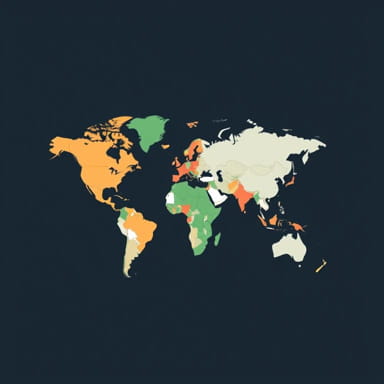
When people ask how many countries there are in the world, the answer is not always as straightforward as it might seem. The number of recognized countries can vary depending on the source, political recognition, and international affiliations. Understanding how countries are defined, recognized, and counted helps us grasp the complexity of international relations, sovereignty, and global geography. From fully recognized independent nations to territories with limited recognition, the global landscape of countries continues to evolve over time due to historical, political, and cultural developments.
Understanding the Concept of a Country
What Defines a Country?
A country is typically defined as a sovereign state with a permanent population, a defined territory, a functioning government, and the ability to enter into relations with other states. These criteria are outlined in the Montevideo Convention of 1933, a widely accepted standard in international law. However, political realities often complicate these definitions. Some territories fulfill these criteria but lack broad international recognition, while others may be recognized by some countries but not by others.
Recognition and Membership
Recognition is a crucial aspect of a country’s legitimacy on the world stage. There are two main forms of recognition
- De jure recognitionLegal recognition under international law.
- De facto recognitionPractical acknowledgment without legal endorsement.
Countries recognized by the United Nations (UN) are generally accepted as sovereign states. However, there are cases where regions or entities operate as independent countries but are not members of the UN due to political disputes.
United Nations Member States
The Official Count
As of now, there are193 member states of the United Nations. These are fully recognized sovereign countries with a seat and voting rights in the UN General Assembly. This list includes a wide range of nations across all continents, from large countries like the United States, China, and Brazil, to smaller nations like Liechtenstein, Tuvalu, and the Maldives.
Observer States
In addition to the 193 member states, the UN also recognizes2 observer states
- Vatican City (Holy See)A religious sovereign entity with diplomatic ties to many countries.
- PalestineA state recognized by many countries, though not a full UN member due to political disagreements.
These observer states are allowed to participate in General Assembly debates and activities but do not have voting rights.
Countries With Limited Recognition
Entities Claiming Independence
Beyond the UN-recognized states, there are several regions that claim independence and function as de facto countries but are not universally recognized. These include
- TaiwanA highly developed territory with its own government and economy, but not recognized by the UN due to pressure from China.
- Western Sahara (Sahrawi Arab Democratic Republic)Claimed by the Polisario Front, but also claimed and mostly controlled by Morocco.
- KosovoRecognized by over 100 UN members, but not by others, including Serbia and several major powers.
- South Ossetia and AbkhaziaRecognized by Russia and a few countries, but considered part of Georgia by most of the world.
- Northern CyprusRecognized only by Turkey; considered part of the Republic of Cyprus by the international community.
Total Including Limited Recognition
When including all self-declared independent entities, the number of countries in the world can be seen asover 200. This includes 193 UN members, 2 observer states, and more than 10 additional territories with partial or limited recognition. Some lists count up to 206 or more depending on the inclusion criteria.
Dependent Territories and Special Regions
Territories That Are Not Fully Independent
Some regions are politically and administratively tied to other countries and do not qualify as independent states. These are known as dependent territories, and they often have varying degrees of autonomy. Examples include
- Puerto RicoAn unincorporated territory of the United States.
- GreenlandAn autonomous territory within the Kingdom of Denmark.
- Hong Kong and MacauSpecial Administrative Regions of China with separate economic systems and governance.
- French PolynesiaAn overseas collectivity of France.
These territories may have distinct cultures, flags, and governments, but they are not considered independent countries under international law.
Changing Political Landscapes
New Countries in Recent History
Throughout history, the number of countries in the world has changed due to wars, decolonization, and political agreements. In the 20th and 21st centuries, new countries have emerged through peaceful means and conflict. Some recent examples include
- South Sudan (2011)The newest UN member, formed after seceding from Sudan through a referendum.
- East Timor (2002)Gained independence from Indonesia following years of struggle.
- Montenegro (2006)Separated peacefully from the State Union of Serbia and Montenegro.
Potential Future Countries
There are also movements around the world seeking independence or recognition. These include regions such as
- ScotlandA part of the United Kingdom with an active independence movement.
- CataloniaA region in Spain seeking full independence.
- KurdistanA region spanning parts of Iraq, Turkey, Syria, and Iran with longstanding aspirations for sovereignty.
The recognition of new countries often depends on international politics and diplomatic negotiation rather than just self-declaration.
How Different Organizations Count Countries
UN vs. Other Institutions
Various international organizations may have slightly different country counts based on their own membership or recognition policies. For example
- FIFA (Football Federation)Has over 210 members, including some that are not recognized by the UN.
- International Olympic Committee (IOC)Includes territories and regions that compete separately in the Olympics.
- ISO (International Organization for Standardization)Maintains a list of country codes that includes some non-sovereign entities.
Educational and Map Variations
Textbooks, globes, and maps may show different totals depending on the publisher and the geopolitical context. Some include disputed territories as separate countries, while others follow the strict UN membership list.
The answer to how many countries are there in the world depends on how we define and recognize a country. According to the United Nations, there are 193 member states, along with two observer states. However, if we consider territories with limited recognition and self-declared independence, the total can exceed 200. Understanding these nuances helps us appreciate the complexity of international relations and the ever-evolving nature of global boundaries. Whether we look at the world from a political, cultural, or geographical standpoint, the count of countries reflects not only numbers but the stories, struggles, and identities of people across the planet.