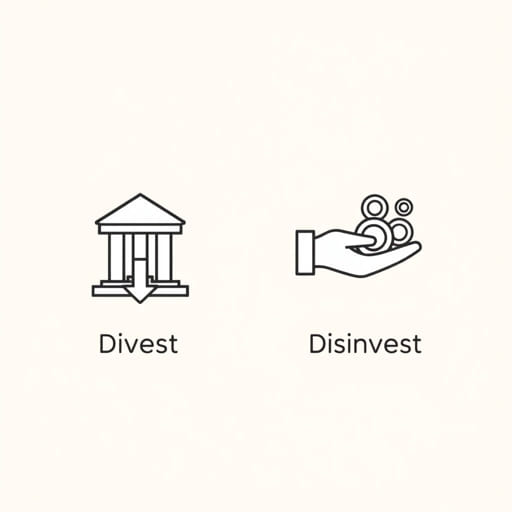
In the world of finance and corporate strategy, the terms ‘divest’ and ‘disinvest’ are often used when referring to the reduction or withdrawal of assets, investments, or interests in companies or sectors. While these words are sometimes used interchangeably, there are subtle differences in their usage, context, and implications. Understanding the difference between divest and disinvest is crucial for investors, business professionals, policy makers, and students of economics. These concepts appear frequently in corporate news, investment decisions, and government actions, making it essential to explore their meanings in depth.
Understanding the Meaning of Divest
Definition and Context
To divest means to sell off or dispose of an asset, business unit, or investment, usually for strategic, financial, or ethical reasons. The process of divestiture is commonly seen in corporate environments where companies decide to streamline operations, improve profitability, or exit a non-core segment of their business. Divestment often involves tangible action, such as selling a subsidiary, spinning off a business division, or transferring ownership of an asset.
Common Scenarios of Divestment
- Strategic Refocus: A company may divest a business unit that no longer aligns with its long-term strategy.
- Regulatory Pressure: Governments may require companies to divest assets to prevent monopolies or ensure fair competition.
- Financial Constraints: Companies may sell off assets to raise capital or reduce debt.
- Ethical Reasons: Institutions may divest from companies that engage in unethical practices, such as fossil fuels or tobacco.
Examples of Divestment
An international energy company might divest its coal mining operations to focus on renewable energy. A large corporation could spin off its consumer products division into a separate company. Universities and pension funds have also divested from companies involved in arms manufacturing or environmentally harmful industries.
Understanding the Meaning of Disinvest
Definition and Usage
Disinvest typically refers to the withdrawal or reduction of investment, particularly by governments or institutional investors. It involves the act of pulling out capital, either partially or fully, from a sector, region, or company. The term is often used in policy discussions and public finance, rather than in corporate boardrooms.
Common Scenarios of Disinvestment
- Government Disinvestment: A state may disinvest from a public sector enterprise to raise revenue or encourage private sector participation.
- Policy-Driven Disinvestment: Countries may disinvest in industries for political, ethical, or environmental reasons.
- Investor Withdrawal: Institutional investors may disinvest from volatile markets or sectors showing declining performance.
Examples of Disinvestment
The Indian government has frequently used the term disinvestment when reducing its stake in public sector undertakings (PSUs). A government choosing to reduce its shareholding in a national airline or bank is an example of disinvestment. Similarly, a large investment firm pulling funds from a politically unstable country also constitutes disinvestment.
Key Differences Between Divest and Disinvest
1. Origin and Usage
‘Divest’ is more commonly used in corporate finance and strategic management, while ‘disinvest’ is often seen in government or institutional finance. Though similar in meaning, their usage depends heavily on the context and the entity taking the action.
2. Subject of Action
- Divest: Generally refers to companies selling assets or divisions.
- Disinvest: Refers to withdrawal of capital or reduction in investment, particularly by governments or investors.
3. Implications
Divestment typically results in a direct transfer of ownership, which might include the sale of a business or transfer of shares. Disinvestment may or may not involve direct sale; it can include reduction in funding or a shift in investment strategy. Disinvesting does not always mean selling an asset it could also mean not reinvesting when an asset matures.
4. Motivation
- Divest: Often motivated by strategic realignment, profit optimization, or ethical business decisions.
- Disinvest: Often driven by fiscal policy, socio-political objectives, or risk management strategies.
Why the Distinction Matters
For Investors
Investors must understand whether a company is divesting or whether a fund is disinvesting. A corporate divestment may signal a shift in focus or a move to become leaner and more profitable. In contrast, disinvestment by large funds may indicate concerns about sustainability, volatility, or ethical issues.
For Policymakers
Governments use disinvestment as a policy tool. Understanding its impact on the economy, markets, and public services is essential for effective decision-making. Policymakers must weigh the benefits of reduced public ownership against the potential loss of control over strategic sectors.
For the Public
Divestment and disinvestment can impact employment, national revenue, and public services. The general public needs to be aware of these terms, especially when they relate to privatization or changes in public spending priorities.
Overlap and Interchangeability
There are situations where the terms divest and disinvest are used interchangeably, particularly in non-technical discussions. For example, a university choosing to sell off shares in fossil fuel companies may be said to be both divesting and disinvesting. However, in formal and financial contexts, using the correct term helps in maintaining clarity and precision.
While the words ‘divest’ and ‘disinvest’ are closely related and often used in similar scenarios, they carry different connotations and are best understood within their respective contexts. Divestment is typically used in corporate settings to describe the selling of business units or assets, often for strategic reasons. Disinvestment, on the other hand, is usually associated with the withdrawal of investments by governments or institutions for economic or policy reasons. Understanding the difference between divest and disinvest enables better communication, decision-making, and interpretation of economic and financial developments. For anyone involved in investment, business strategy, or public policy, distinguishing between these two terms can make a significant difference in understanding the broader financial landscape.