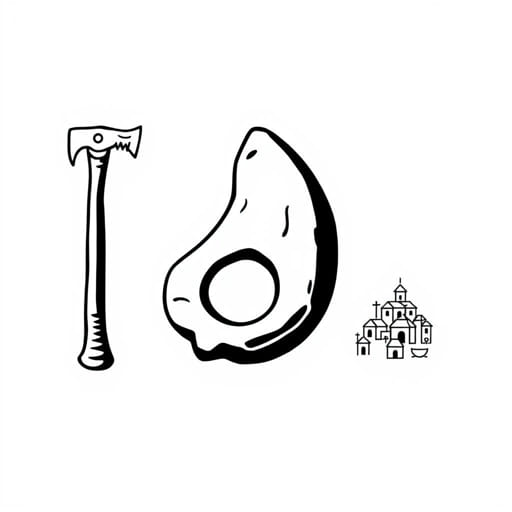
The prehistoric period of human history is broadly divided into three major ages: the Paleolithic, Mesolithic, and Neolithic periods. These stages represent the gradual evolution of human society, culture, and technology over thousands of years. Each age is characterized by distinct developments in tools, lifestyle, and social organization, reflecting how early humans adapted to their environment and changed the world around them. Understanding the difference between the Paleolithic, Mesolithic, and Neolithic ages helps us appreciate the remarkable progress of human civilization from hunter-gatherer groups to settled agricultural communities.
Paleolithic Age: The Old Stone Age
The Paleolithic Age, also known as the Old Stone Age, is the earliest and longest phase of human history. It began approximately 2.5 million years ago and lasted until around 10,000 BCE. This period is defined by the first use of stone tools by early humans and spans the vast majority of human existence.
Key Characteristics of the Paleolithic Age
- Hunter-Gatherer Lifestyle: People survived by hunting wild animals and gathering edible plants, fruits, and nuts. They moved frequently in search of food.
- Stone Tools: Early humans crafted simple tools made of chipped stones such as hand axes, scrapers, and spear points.
- Nomadic Societies: Paleolithic humans lived in small, mobile groups without permanent settlements.
- Fire Control: Mastery of fire provided warmth, protection, and a new way to cook food.
- Cave Art and Early Culture: Evidence of early symbolic thought can be found in cave paintings, carvings, and rudimentary religious practices.
This age laid the foundation for human survival skills, tool-making, and social organization that would evolve in later periods.
Mesolithic Age: The Middle Stone Age
The Mesolithic Age marks the transitional period between the Paleolithic and Neolithic ages, roughly dating from 10,000 BCE to 7,000 BCE, depending on the region. It corresponds to the end of the last Ice Age and is characterized by significant environmental changes and technological advancements.
Key Features of the Mesolithic Age
- Climate Change and Adaptation: As the Ice Age ended, warmer temperatures led to changes in flora and fauna. Humans adapted by diversifying their diet and lifestyle.
- Microlithic Tools: Smaller, more sophisticated stone tools called microliths were developed, often set into wood or bone to create composite tools like arrows and harpoons.
- Semi-Nomadic Lifestyle: While still mobile, some groups began to establish seasonal camps, taking advantage of predictable food sources.
- Fishing and Food Storage: Advances in fishing techniques and the beginnings of food preservation appeared.
- Early Domestication: There is evidence that humans started domesticating animals such as dogs and began experimenting with plant cultivation.
The Mesolithic Age represents a bridge where humans began shifting from pure hunting and gathering towards more settled and sustainable ways of living.
Neolithic Age: The New Stone Age
The Neolithic Age, or New Stone Age, began around 7,000 BCE and lasted until the introduction of metal tools. This period witnessed the most profound transformation in human history: the development of agriculture and permanent settlements.
Distinctive Traits of the Neolithic Age
- Agriculture and Domestication: Humans cultivated crops like wheat and barley and domesticated animals such as cattle, sheep, and goats, enabling food surplus.
- Permanent Settlements: Farming allowed people to settle in one place, leading to the rise of villages and eventually complex societies.
- Advanced Tools and Pottery: Tools became polished and specialized for farming, while pottery was developed for storing food and water.
- Social Complexity: The Neolithic period saw the emergence of social hierarchies, trade networks, and early religious practices.
- Construction and Architecture: People built houses, storage facilities, and megalithic structures such as Stonehenge.
This age is often considered the dawn of civilization, as it set the stage for cities, governance, writing, and technological progress.
Comparing the Paleolithic, Mesolithic, and Neolithic Ages
While all three periods belong to the Stone Age, they differ significantly in terms of lifestyle, technology, and societal organization.
Major Differences
- Subsistence: Paleolithic people hunted and gathered; Mesolithic groups expanded their diet and began fishing; Neolithic communities farmed and raised livestock.
- Tools: Paleolithic tools were crude and large; Mesolithic tools were smaller and composite; Neolithic tools were polished and specialized.
- Settlement Patterns: Paleolithic people were nomadic; Mesolithic people had seasonal camps; Neolithic people built permanent villages.
- Social Organization: Social structures were simple in the Paleolithic; more organized in the Mesolithic; complex in the Neolithic with emerging hierarchies.
- Cultural Developments: Paleolithic art was mostly cave paintings; Mesolithic art introduced more intricate tools and rituals; Neolithic culture included pottery, construction, and religious monuments.
Significance of These Ages in Human History
Each Stone Age period represents crucial steps in human evolution, adapting to climate changes, developing technology, and organizing societies. The Paleolithic Age established fundamental survival skills and early culture. The Mesolithic Age adapted those skills to a changing environment and paved the way for food production. The Neolithic Age revolutionized human life by introducing agriculture, permanent settlements, and social complexity, setting the foundation for modern civilization.
The Paleolithic, Mesolithic, and Neolithic ages represent a fascinating journey of human progress from simple hunter-gatherers to complex agricultural societies. By understanding the key differences in their tools, lifestyles, and social structures, we gain valuable insight into how early humans shaped their destiny. These three stages collectively narrate the story of human adaptation, innovation, and the beginnings of civilization as we know it today.