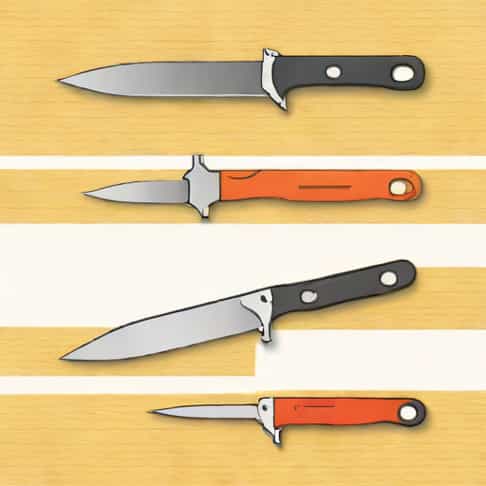
In every kitchen, knives are essential tools that significantly impact cooking efficiency and precision. Among the most commonly used knives are the paring knife and the utility knife. While they may seem similar to beginners, these knives serve different purposes and are designed with specific tasks in mind. Understanding the difference between a paring knife and a utility knife can improve your cooking experience, enhance safety, and ensure better results when preparing meals. This topic explores the characteristics, uses, advantages, and limitations of both knives, helping you make informed choices in the kitchen.
What Is a Paring Knife?
A paring knife is a small, versatile knife with a short blade, typically ranging from 2 to 4 inches in length. It is designed for tasks that require precision and control, such as peeling, trimming, and intricate cutting. The blade is usually pointed, allowing for fine maneuvering, and the knife is light and easy to handle. Paring knives are a staple in both professional and home kitchens due to their ability to handle detailed tasks that larger knives cannot manage effectively.
Features of a Paring Knife
- Small blade, usually 2-4 inches long
- Pointed tip for precise cutting
- Lightweight and easy to control
- Blade is narrow and straight, allowing detailed work
- Designed for hand-held tasks rather than chopping on a cutting board
Uses of a Paring Knife
- Peeling fruits and vegetables
- Trimming fat from meat or poultry
- Deveining shrimp or removing seeds from peppers
- Creating decorative cuts or garnishes
- Segmenting citrus fruits or cutting small items with precision
Advantages of a Paring Knife
- Provides high precision for detailed work
- Easy to handle due to its lightweight design
- Versatile for small cutting tasks
- Ideal for delicate ingredients that require control
Limitations of a Paring Knife
- Not suitable for chopping large vegetables or meat
- Requires careful handling due to the small, sharp blade
- Limited cutting length, which can slow down tasks involving larger items
What Is a Utility Knife?
A utility knife is a medium-sized knife with a blade generally ranging from 4 to 7 inches long. It is designed to be more versatile than a paring knife, bridging the gap between small knives and chef’s knives. The utility knife is ideal for tasks that are too large for a paring knife but too small for a chef’s knife, such as slicing sandwiches, cutting medium-sized fruits and vegetables, or trimming meat. Its blade is slightly longer and more robust, making it suitable for general-purpose kitchen tasks.
Features of a Utility Knife
- Medium-length blade, usually 4-7 inches
- Slightly broader and sturdier than a paring knife
- Versatile design for a range of cutting tasks
- Can handle both precision and larger slicing tasks
- Balances control and strength for general kitchen use
Uses of a Utility Knife
- Slicing sandwiches and small meats
- Cutting medium-sized fruits and vegetables
- Trimming fat from meat
- Performing tasks that are too large for a paring knife but too small for a chef’s knife
- Occasionally used for light chopping or mincing
Advantages of a Utility Knife
- Highly versatile for everyday kitchen tasks
- Handles larger cutting jobs more efficiently than a paring knife
- Provides a balance between precision and cutting power
- Useful for slicing, trimming, and general preparation tasks
Limitations of a Utility Knife
- Less precise than a paring knife for delicate work
- Not suitable for heavy-duty chopping like a chef’s knife
- Requires more hand strength for intricate cuts compared to a paring knife
Key Differences Between Paring and Utility Knives
Although both knives are essential in a kitchen, understanding their differences helps you choose the right tool for the task. The main distinctions lie in blade length, purpose, and versatility.
Blade Length
- Paring Knife Short blade, usually 2-4 inches, ideal for precise and delicate tasks.
- Utility Knife Medium-length blade, usually 4-7 inches, designed for general-purpose cutting.
Purpose and Function
- Paring Knife Precision tasks like peeling, trimming, and decorative cuts.
- Utility Knife Versatile tasks that are larger than paring knife tasks but smaller than chef’s knife tasks.
Versatility
- Paring Knife Limited to small, detailed cutting tasks.
- Utility Knife More versatile, suitable for a broader range of cutting, slicing, and trimming tasks.
Handling and Control
- Paring Knife Lightweight and highly maneuverable, offering maximum control.
- Utility Knife Slightly heavier, balancing control with the ability to cut larger items.
Common Applications
- Paring Knife Peeling fruits, trimming vegetables, deveining shrimp, garnishing.
- Utility Knife Slicing sandwiches, cutting medium fruits and vegetables, trimming meat, general kitchen prep.
Choosing Between a Paring Knife and a Utility Knife
The choice between a paring knife and a utility knife depends on the type of cooking you do and the tasks you frequently perform. If you often work with small fruits, vegetables, and delicate ingredients, a paring knife is indispensable for its precision. On the other hand, a utility knife is ideal for everyday kitchen tasks that require moderate cutting power and flexibility. Many cooks find that having both knives in their kitchen ensures they are prepared for both detailed and general tasks efficiently.
Factors to Consider
- Task Size Use a paring knife for small or intricate cuts and a utility knife for medium-sized items.
- Precision Paring knives excel at delicate work, while utility knives provide versatility.
- Frequency of Use Consider which knife aligns more with your cooking habits.
- Comfort and Control Paring knives are easier for intricate handling, while utility knives offer a balance of control and cutting power.
Paring knives and utility knives are essential tools in the kitchen, each serving unique purposes. A paring knife is ideal for precision tasks, such as peeling, trimming, and intricate cutting, thanks to its small, maneuverable blade. A utility knife, with its medium-length blade, bridges the gap between a paring knife and a chef’s knife, making it versatile for slicing, trimming, and general kitchen prep. Understanding the differences between these knives helps cooks select the right tool for each task, improving efficiency, safety, and overall cooking experience. Having both knives in a kitchen ensures that you are equipped to handle both detailed and general cutting tasks effectively.