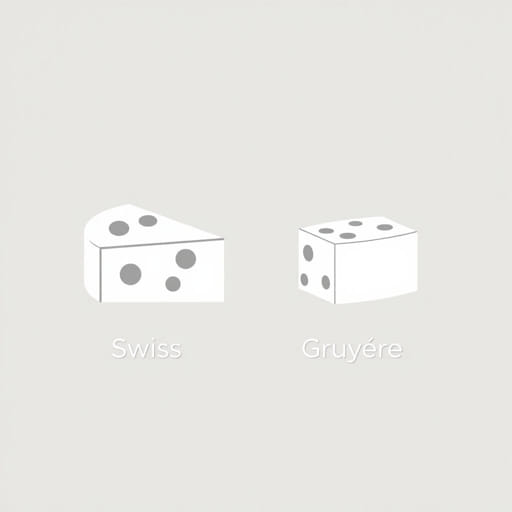
Cheese lovers often encounter the terms ‘Swiss cheese’ and ‘Gruyere,’ and sometimes they assume these names refer to the same product. While both cheeses hail from Switzerland and share certain similarities, they have distinct characteristics, flavors, and uses. Understanding the difference between Swiss and Gruyere cheeses can enhance your culinary experience, whether you’re crafting a classic fondue or simply selecting a cheese for sandwiches or cooking. This topic delves into the history, production methods, taste profiles, and culinary applications of Swiss and Gruyere cheeses to clarify their unique identities.
Origins and Background
Both Swiss and Gruyere cheeses come from Switzerland, a country renowned worldwide for its cheese-making tradition. However, they originate from different regions within Switzerland and have unique cultural and historical backgrounds.
Swiss Cheese
The term ‘Swiss cheese’ is broadly used in many countries, particularly in the United States, to describe a style of cheese inspired by traditional Swiss Emmental cheese. Emmental cheese originated from the Emmental valley in the canton of Bern. Its name means ‘Emme valley,’ which is the area where it was first produced centuries ago. This cheese is famous for its characteristic large holes or eyes and mild, nutty flavor.
Gruyere Cheese
Gruyere is named after the town of Gruyères in the canton of Fribourg. It is a traditional hard yellow cheese that has been made in this region for centuries. Gruyere is highly valued for its rich, complex flavors that range from nutty to slightly sweet, with hints of earthiness. It is considered one of the most classic Swiss cheeses and plays a vital role in Swiss cuisine, particularly in dishes like fondue.
Production Methods
Although both cheeses are made from cow’s milk and use traditional Swiss cheesemaking techniques, their production processes differ, which influences their final texture and flavor.
Swiss Cheese Production
- Swiss cheese (Emmental-style) is made using raw or pasteurized cow’s milk.
- The milk is heated and combined with bacterial cultures and rennet to coagulate.
- The curds are cut and stirred, then heated to release whey.
- The cheese is pressed into molds and aged for several months at cool temperatures.
- During aging, specific bacteria produce carbon dioxide, which forms the famous holes or eyes.
- The aging period typically lasts 4-5 months, contributing to a mild, slightly sweet, and nutty flavor.
Gruyere Cheese Production
- Gruyere uses raw or pasteurized cow’s milk, but its production is closely regulated under Swiss AOP (Appellation d’Origine Protégée) standards.
- The milk is heated, and specific bacterial cultures are added for fermentation.
- After coagulation, the curds are cut finer and heated higher than in Swiss cheese production.
- Gruyere is pressed and then aged for a longer period, ranging from 5 months to over a year, depending on desired flavor intensity.
- During aging, the cheese develops smaller holes compared to Swiss cheese, often barely visible.
- The extended aging results in a more complex flavor profile, with earthy, nutty, and sometimes fruity notes.
Appearance and Texture
Visual differences and texture play a significant role in distinguishing Swiss cheese from Gruyere.
Swiss Cheese
- Typically pale yellow in color.
- Has large, round holes scattered throughout, which are formed by carbon dioxide gas released by bacteria.
- Texture is smooth, elastic, and slightly springy.
- The cheese slices easily and melts well but tends to be milder and less creamy than Gruyere.
Gruyere Cheese
- Usually a darker golden yellow color, depending on aging.
- Contains small, sometimes nearly invisible holes.
- Texture is dense and firm but becomes creamier and more granular with longer aging.
- Gruyere melts beautifully and is prized for its creamy yet slightly granular consistency.
Flavor Profiles
The flavors of Swiss cheese and Gruyere differ markedly, making them suitable for different culinary purposes.
Swiss Cheese Flavor
- Mild and nutty with a slightly sweet undertone.
- Often described as buttery and creamy, but not overpowering.
- Less complex and lighter compared to Gruyere.
- Generally suitable for those who prefer a subtle cheese flavor.
Gruyere Flavor
- Rich, savory, and complex, with pronounced nutty and earthy notes.
- As it ages, Gruyere can develop hints of fruitiness, caramel, and even a slight saltiness.
- The flavor is deeper and more intense than Swiss cheese, making it a favorite for gourmet dishes.
- The complexity increases with aging, offering a range from mildly sweet to robust and tangy.
Culinary Uses
Both Swiss cheese and Gruyere are versatile but are best suited to different dishes because of their unique qualities.
Swiss Cheese Uses
- Commonly used in sandwiches, especially classic ham and Swiss cheese sandwiches.
- Melts well for cheeseburgers and grilled cheese sandwiches.
- Added to salads or cheese platters for its mild flavor and visual appeal (due to holes).
- Used in simple fondue recipes, though often combined with other cheeses for complexity.
Gruyere Uses
- A key ingredient in traditional Swiss fondue, prized for its smooth melting and rich flavor.
- Popular in French dishes like French onion soup, croque monsieur, and quiches.
- Used in gratins, casseroles, and baked pasta dishes to add depth of flavor.
- Often served on cheese boards paired with fruits, nuts, and wines.
Price and Availability
Swiss cheese is generally more widely available and less expensive than authentic Gruyere due to differences in production scale and regulation. In many countries, the term ‘Swiss cheese’ covers a range of cheeses with similar characteristics, sometimes even mass-produced varieties. Gruyere, especially AOP-certified Swiss Gruyere, is more specialized, often imported, and commands a higher price reflecting its quality and aging process.
Summary of Differences
| Feature | Swiss Cheese | Gruyere Cheese |
|---|---|---|
| Origin | Emmental region, Switzerland | Gruyères region, Switzerland |
| Appearance | Pale yellow with large holes | Golden yellow with small or no holes |
| Texture | Smooth, elastic | Dense, creamy, slightly granular |
| Flavor | Mild, nutty, buttery | Rich, complex, nutty, earthy |
| Aging Time | 3-5 months | 5 months to 1 year or more |
| Culinary Uses | Sandwiches, melting cheese, salads | Fondue, French dishes, gratins, cheese boards |
| Price | Generally affordable and widely available | More expensive, specialty cheese |
Though often confused, Swiss and Gruyere cheeses are distinct in many ways. Swiss cheese offers a mild, approachable flavor with its characteristic holes and smooth texture, making it a versatile option for everyday use. Gruyere, on the other hand, is a richer, more complex cheese, highly prized in gourmet cooking and classic dishes like fondue. Choosing between Swiss and Gruyere depends largely on your taste preferences and the culinary context. Whether melting Swiss cheese on a sandwich or grating aged Gruyere over a gratin, each cheese brings its unique charm to the table.