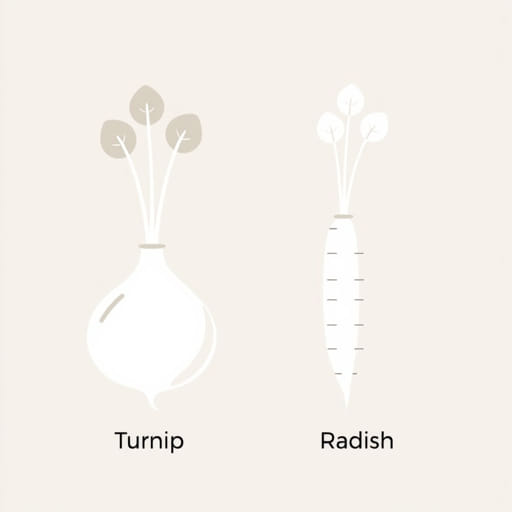
Turnips and radishes are two root vegetables that are often confused due to their similar appearances and common use in salads and cooking. However, despite their outward similarities, these two vegetables are quite different in terms of flavor, texture, nutritional content, and culinary applications. Understanding the differences between turnips and radishes can help home cooks and food enthusiasts make better choices when selecting ingredients for their meals. This topic explores the key distinctions between turnip and radish, including their botanical background, taste profiles, growing conditions, and health benefits.
Botanical Differences
Turnips and radishes both belong to the Brassicaceae family, also known as the mustard family, which includes many other popular vegetables such as cabbage, broccoli, and mustard greens. Despite being in the same family, they belong to different genera and species.
- Turnip (Brassica rapa subsp. rapa): Turnips belong to the Brassica genus and are closely related to cabbage and mustard plants. They are root vegetables grown primarily for their bulbous, swollen roots.
- Radish (Raphanus sativus): Radishes belong to the Raphanus genus and are cultivated mainly for their edible root, which can vary widely in shape, size, and color.
This botanical distinction explains many of the physical and flavor differences between turnips and radishes.
Appearance and Physical Characteristics
While both vegetables develop edible roots, their shapes, colors, and sizes tend to vary significantly.
- Turnip: Turnips generally have a round or slightly flattened shape, with a smooth outer skin that can range from white to purple or pale yellow. The upper portion of the turnip, where the leaves grow, often shows a purplish or greenish tint. The flesh inside is typically white and firm.
- Radish: Radishes come in many varieties, and their shapes range from small and round to long and cylindrical. Their skins can be red, pink, white, purple, or even black. The flesh is usually white but can sometimes have a pink hue, depending on the variety.
The variety of radish types means that there is a greater diversity in appearance compared to turnips, which tend to be more uniform in shape and color.
Flavor and Texture Differences
The most noticeable difference between turnips and radishes is their flavor profile and texture, which greatly influences how they are used in cooking.
Turnip Flavor and Texture
Turnips have a mild, slightly sweet, and earthy flavor. When eaten raw, they are crunchy but less sharp or peppery than radishes. Cooking turnips softens their texture and enhances their sweetness, making them versatile for roasting, boiling, mashing, or adding to stews.
Radish Flavor and Texture
Radishes are known for their peppery, spicy, and sharp flavor, which can range from mildly pungent to quite intense depending on the variety and freshness. Raw radishes have a crisp, crunchy texture that adds a refreshing bite to salads and sandwiches. Cooking radishes reduces their spiciness and softens their texture, but they are less commonly cooked than turnips.
Culinary Uses
Both turnips and radishes are used in a variety of dishes, but their unique flavor and texture characteristics make them suited for different culinary applications.
- Turnips: Due to their mild flavor and ability to soften when cooked, turnips are often used in soups, stews, roasts, and mashed vegetable dishes. They can also be roasted or sautéed as a side dish, or added to casseroles. Turnip greens are edible and often cooked similarly to spinach or kale.
- Radishes: Radishes are most commonly eaten raw, sliced thin in salads or as a crunchy garnish. Their peppery bite makes them an excellent contrast in fresh dishes. Pickled radishes are popular in many cuisines, and some varieties can be roasted or grilled, though this is less common.
Nutritional Value
Turnips and radishes are both low-calorie vegetables rich in vitamins, minerals, and dietary fiber, making them healthy additions to any diet. However, there are subtle differences in their nutritional profiles.
- Turnips: Turnips are a good source of vitamin C, potassium, calcium, and fiber. They provide antioxidants that help combat inflammation and support immune function.
- Radishes: Radishes contain vitamin C, folate, potassium, and are known for their natural compounds called glucosinolates, which have potential cancer-preventing properties. Their spicy compounds may also aid digestion and detoxification.
Both vegetables promote digestive health and contribute beneficial phytochemicals to the diet.
Growing Conditions and Seasonality
Turnips and radishes are both cool-season crops but have slight differences in their growth habits and seasons.
- Turnips: Turnips prefer cooler temperatures and are typically planted in early spring or late summer for fall harvests. They require well-drained soil and grow best in fertile, moist conditions. Turnips generally take longer to mature than radishes, around 50-60 days.
- Radishes: Radishes are among the fastest-growing vegetables, maturing in as little as 20-30 days. They are planted similarly in cool seasons and can tolerate a range of soils. Their quick growth makes them a popular choice for home gardeners.
Health Benefits Comparison
Both turnips and radishes offer a range of health benefits, thanks to their nutrient content and bioactive compounds.
- Turnips: Turnips support cardiovascular health through their potassium content, which helps regulate blood pressure. Their fiber aids digestion and promotes gut health. Antioxidants in turnips may help reduce oxidative stress.
- Radishes: Radishes have detoxifying properties and can support liver health. The glucosinolates and sulfur compounds may have antimicrobial and anticancer effects. Their vitamin C content boosts immunity.
Incorporating both vegetables into a balanced diet can provide complementary health advantages.
Common Confusions and How to Identify Each
Because turnips and radishes can look somewhat alike, especially the round, white varieties, it is easy to confuse them at first glance. Here are some tips to identify each:
- Check the taste: Turnips have a milder, slightly sweet flavor, while radishes are peppery and spicy.
- Look at the greens: Turnip greens are broader and tougher, while radish leaves are thinner and more delicate.
- Examine the skin: Radishes tend to have brighter, more vivid colors and sometimes a rougher skin texture; turnips have a smoother, often paler skin.
Turnips and radishes may share a family and some visual similarities, but they differ significantly in taste, texture, culinary use, and nutrition. Turnips are milder, sweeter, and more suited for cooking, while radishes offer a sharp, peppery bite often enjoyed raw. Knowing the difference between these root vegetables can enhance your cooking, help you select the right ingredient for your recipe, and allow you to enjoy their unique flavors and health benefits to the fullest.