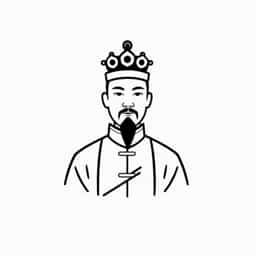
Emperor Yingzong of the Ming dynasty is a compelling figure in Chinese history, remembered for his turbulent reign, dramatic fall, and remarkable return to power. Born Zhu Qizhen, he became emperor at a young age and faced enormous challenges during his rule, including a disastrous military defeat and captivity by Mongol forces. Despite these setbacks, he eventually reclaimed the throne, leaving behind a legacy of political resilience and dynastic continuity. His reign reveals much about the complexities of Ming dynasty governance, court politics, and the vulnerabilities of imperial leadership in medieval China.
Early Life and Ascension to the Throne
Zhu Qizhen was born in 1427 as the eldest son of the Xuande Emperor. His father was a capable ruler who maintained stability within the Ming empire, and when he died in 1435, Zhu Qizhen ascended the throne at the age of only eight. He became Emperor Yingzong of Ming, with the temple name ‘Yingzong’ meaning ‘Heroic Ancestor.’
Due to his youth, real power initially lay with a group of regents, the most notable of whom was the eunuch Wang Zhen. Wang Zhen quickly gained significant influence over the young emperor and the imperial court. This relationship would later play a critical role in the decisions that led to a major national crisis.
The Tumu Crisis
One of the defining moments of Emperor Yingzong’s reign was the Tumu Crisis of 1449, a military disaster that deeply shook the Ming dynasty. At the time, the northern border of China faced pressure from Mongol forces under the leadership of Esen Taishi. Against the advice of many court officials, Wang Zhen convinced Emperor Yingzong to personally lead a military expedition to repel the Mongol threat.
The campaign ended in disaster. The Ming army was ambushed at Tumu Fortress in what is now Hebei province. The emperor was captured, thousands of soldiers were killed, and Wang Zhen was among the casualties. This event marked one of the most humiliating defeats in Ming history and led to a major political crisis.
Captivity and Deposition
After his capture, Emperor Yingzong was held as a prisoner by the Mongols, who hoped to use him as leverage to extract concessions from the Ming court. However, the Ming officials refused to negotiate, and instead made a swift political decision. Yingzong’s younger brother, Zhu Qiyu, was installed as the new emperor, taking the reign title of Jingtai.
Yingzong’s time in captivity lasted about a year. Eventually, the Mongols released him after realizing that they could not use him effectively against the Ming. Upon his return to Beijing in 1450, he was placed under house arrest and given the title Emperor Emeritus, effectively stripping him of power but allowing him to live in relative comfort.
The Jingtai Reign
During the Jingtai Emperor’s reign, many efforts were made to restore stability and strengthen the empire’s defenses. Jingtai was considered a capable ruler, and his administration focused on repairing the damage caused by the Tumu Crisis. He also removed many of Yingzong’s close associates from power, further consolidating his own authority.
However, the Jingtai Emperor’s reign faced challenges, including health issues and succession disputes. His decision to replace Yingzong’s son as heir to the throne created tension within the royal family and eventually weakened his support within the court.
The Return to Power
In a dramatic turn of events, Emperor Yingzong was restored to the throne in 1457 through a palace coup known as the å¤ºé ¨ä¹å (Duomen zhi bian), or Incident of the Seized Gate. Loyal court officials and palace guards helped Yingzong overthrow his brother, who was already in declining health. Zhu Qiyu was deposed and later died under suspicious circumstances.
Upon his return, Emperor Yingzong took the reign title of Tianshun, meaning Obedient to Heaven. His second reign lasted until his death in 1464. This unusual return to power regaining the throne after being deposed makes Yingzong one of the few emperors in Chinese history to reclaim his title in such a manner.
Restoration and Reforms
During his second reign, Emperor Yingzong focused on restoring the legitimacy of his rule and strengthening the administrative structure of the Ming dynasty. He sought to punish those who had wronged him but also promoted stability and order.
Key policies during this period included:
- Reforming the civil service examination system to improve government efficiency
- Suppressing court factions and reducing the influence of powerful eunuchs
- Strengthening border defenses to prevent further invasions
- Reinstating Confucian principles as central to governance
Although not all of his efforts were successful, his second reign is generally viewed more favorably than his first. He worked to rebuild trust in the monarchy and managed to secure a relatively peaceful final chapter for his rule.
Legacy and Historical Significance
Emperor Yingzong’s reign is remembered for its dramatic highs and lows. His early rule was marked by poor judgment and manipulation by court advisors, leading to one of the most significant defeats in Ming history. However, his resilience and political acumen in reclaiming the throne have earned him a unique place in Chinese history.
Historians often debate the long-term impact of Yingzong’s leadership. While his first reign revealed vulnerabilities in the Ming administrative system, his second reign demonstrated the ability of the monarchy to recover and stabilize. His story also illustrates the influence of eunuchs, the dangers of court intrigue, and the challenges faced by child emperors thrust into leadership roles.
Cultural Reflections
In Chinese literature and historical dramas, Emperor Yingzong’s life has been portrayed as a cautionary tale and a narrative of redemption. His capture, captivity, and comeback are themes that resonate deeply in traditional Chinese storytelling. These portrayals often highlight the complex nature of loyalty, legitimacy, and the fragility of power.
Emperor Yingzong of the Ming dynasty was a ruler whose life encapsulated the drama and instability of imperial China. From a boy emperor manipulated by advisors to a captured sovereign and finally a restored monarch, his journey reflects the unpredictable nature of power and the resilience of dynastic rule. Despite early failures, his ability to return to the throne and bring a measure of stability during his second reign speaks to his adaptability and determination. His reign continues to be studied by historians and scholars as an important episode in the broader narrative of the Ming dynasty and Chinese imperial history.