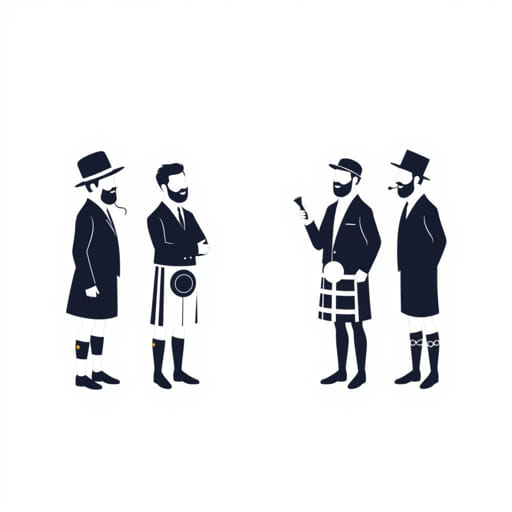
Jokes involving an Englishman, Irishman, Scotsman, and Welshman have been a popular staple of British humor for decades. These jokes often play on the stereotypes and cultural differences between the four nations of the United Kingdom and Ireland, using lighthearted rivalry to create humor. Despite their simplicity, these jokes reflect a rich tradition of storytelling, national identity, and social commentary that continues to entertain people worldwide. Understanding the origins, structure, and examples of these jokes offers insight into how humor can bridge cultural divides while celebrating diversity.
The Origin of Englishman Irishman Scotsman Welshman Jokes
The classic format featuring an Englishman, an Irishman, a Scotsman, and sometimes a Welshman traces its roots to British and Irish folk humor. These jokes emerged as a way for the different peoples within the British Isles to poke fun at each other’s customs, accents, and perceived quirks. The format typically involves the four characters facing a common situation, each responding in a way that highlights their national stereotype.
While the jokes are mostly lighthearted, they have sometimes sparked controversy when taken too far or used offensively. Over time, the jokes evolved to become more playful and self-deprecating, emphasizing camaraderie more than conflict.
Why These Four Nationalities?
The English, Irish, Scottish, and Welsh represent the major national identities within the British Isles. The English are often stereotyped as formal and reserved, the Irish as jovial and witty, the Scots as frugal and tough, and the Welsh as proud and musical. Using all four together creates a balanced dynamic where each is both subject and source of humor.
Common Themes and Structure of the Jokes
Most jokes follow a similar structure where an Englishman, Irishman, Scotsman, and Welshman are placed in a humorous scenario. The punchline often depends on how each national character behaves, reflecting stereotypes in an exaggerated but recognizable way. The humor lies in the contrast between their reactions or traits.
- Situational Humor: The characters face a problem or challenge, and each offers a solution that fits their national stereotype.
- Wordplay and Puns: Many jokes rely on linguistic quirks or accents associated with each nationality.
- Friendly Rivalry: The jokes emphasize differences without crossing into mean-spiritedness, fostering a sense of shared identity through humor.
Examples of Classic Jokes
Here are a few popular examples that illustrate the format:
- The Three Men and the Lion: An Englishman, Irishman, and Scotsman are trapped in a cage with a lion. The Englishman prays for help, the Irishman tries to fight, and the Scotsman picks up the lion and throws it out of the cage.
- The Fishing Trip: An Englishman, Irishman, Scotsman, and Welshman go fishing. The Englishman complains about the weather, the Irishman sings, the Scotsman counts his catch, and the Welshman plays the harp.
- The Drink Order: Each orders a drink, reflecting stereotypes: the Englishman a gin, the Irishman a whiskey, the Scotsman a beer, and the Welshman a cider.
Understanding the Stereotypes Behind the Jokes
To appreciate these jokes, it’s important to recognize the stereotypes they play on. While stereotypes can be misleading or unfair, in the context of these jokes they are exaggerated for comedic effect.
- Englishman: Seen as polite, reserved, and sometimes pompous.
- Irishman: Known for being witty, lively, and a bit mischievous.
- Scotsman: Often portrayed as thrifty, tough, and clever.
- Welshman: Proud of culture, musical, and friendly.
These caricatures reflect historical and cultural perceptions, often rooted in centuries of interaction and rivalry between the nations. However, the jokes generally avoid deep offense by relying on affection and shared identity.
Modern Adaptations and Sensitivities
In recent years, awareness of cultural sensitivity has influenced how these jokes are told. Many comedians and speakers now avoid stereotypes that might reinforce negative prejudices. Instead, the focus is on celebrating differences with kindness and humor.
Some versions of the jokes have adapted to include more diverse characters or updated punchlines that reflect contemporary life while maintaining the original spirit.
The Role of These Jokes in British and Irish Culture
Englishman Irishman Scotsman Welshman jokes serve as a form of social bonding. By highlighting differences playfully, they create a shared language of humor that transcends regional divides. They also offer an accessible way for people outside the UK and Ireland to engage with British Isles culture.
These jokes are often used in casual settings, comedy shows, and storytelling. They illustrate how humor can negotiate identity, pride, and rivalry without hostility.
Why Are They Still Popular?
The lasting appeal of these jokes comes from their simplicity, familiarity, and the universal human tendency to laugh at ourselves and others in good spirit. The four characters act as archetypes, allowing endless variations on the theme.
Moreover, the jokes tap into the rich cultural tapestry of the British Isles, offering a lighthearted way to explore history and national character.
Examples of Englishman Irishman Scotsman Welshman Jokes
To give a better sense of the humor, here are some more classic jokes:
- An Englishman, Irishman, Scotsman, and Welshman walk into a pub. The Englishman orders a pint, the Irishman orders whiskey, the Scotsman orders water, and the Welshman sings a song to cheer them up.
- The Englishman says, I’ll have tea.’ The Irishman says, I’ll have whiskey.’ The Scotsman says, I’ll have water.’ The Welshman says, Can I have a song instead?’
- In a contest to see who can hold their breath longest, the Englishman lasts 20 seconds, the Irishman 25, the Scotsman 30, and the Welshman sings underwater.
Englishman Irishman Scotsman Welshman jokes represent a rich and enduring tradition of humor that reflects the unique cultures of the British Isles. By using familiar stereotypes in playful ways, these jokes create laughter while fostering understanding and camaraderie. Whether heard around a pub table or read online, they remind us that humor can be a powerful way to connect across differences. Appreciating these jokes involves recognizing their historical roots, their structure, and the affectionate spirit behind the laughter.