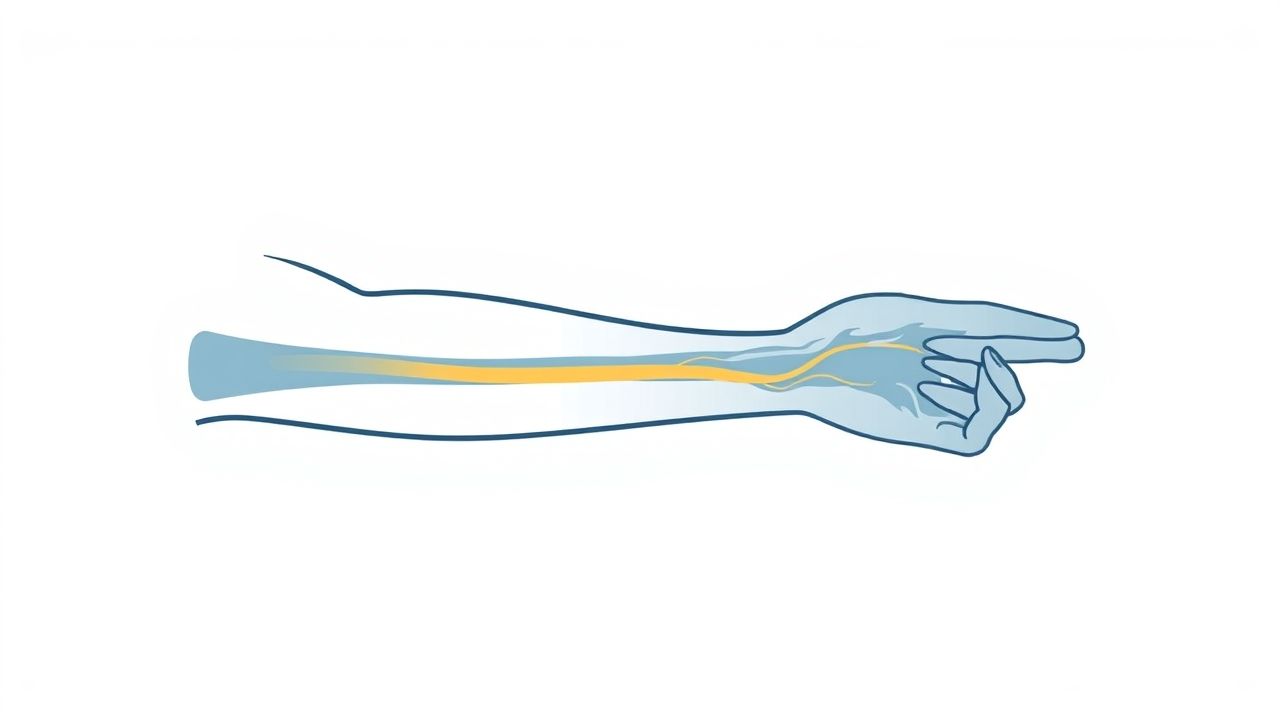
The ulnar nerve plays a vital role in hand and forearm function, controlling both movement and sensation. When this nerve becomes compressed or irritated along its pathway, a condition known as entrapment of the ulnar nerve occurs. This problem can affect daily activities, making it difficult to grip objects, perform fine motor tasks, or even feel normal sensations in the fingers. Many people first notice tingling or numbness in the ring and little fingers, but as the condition progresses, it can lead to weakness and muscle wasting. Understanding how this entrapment develops, the risk factors involved, and the diagnostic tools available is essential for proper management.
Anatomy of the Ulnar Nerve
The ulnar nerve originates from the brachial plexus, specifically from the C8 and T1 nerve roots. It travels down the inner side of the arm, passing behind the medial epicondyle of the humerus, commonly referred to as the funny bone. From there, it enters the forearm and extends into the hand, supplying sensation to the little finger and part of the ring finger, as well as controlling several important hand muscles. Because of its long course and multiple narrow passageways, the ulnar nerve is particularly vulnerable to compression or irritation at specific sites.
Common Sites of Entrapment
Entrapment of the ulnar nerve can occur at different anatomical locations. The two most common areas are
- Elbow (Cubital Tunnel Syndrome)The cubital tunnel, located at the inner elbow, is the most frequent site of ulnar nerve entrapment. Repeated bending of the elbow, direct pressure, or anatomical narrowing can compress the nerve.
- Wrist (Guyon’s Canal Syndrome)At the wrist, the ulnar nerve passes through a small tunnel called Guyon’s canal. Compression here is less common but can be seen in cyclists, weightlifters, or those who use their hands repetitively.
Causes and Risk Factors
There are several reasons why the ulnar nerve becomes trapped. The most frequent causes include
- Repetitive elbow flexion or prolonged pressure on the elbow.
- Trauma or fractures affecting the elbow or wrist.
- Inflammatory conditions leading to swelling and narrowing of the nerve’s passageway.
- Occupational activities involving heavy lifting, vibration, or leaning on elbows.
- Sports such as baseball, cycling, or weight training.
Risk increases with age, but younger individuals engaged in repetitive physical activity may also develop symptoms.
Symptoms of Ulnar Nerve Entrapment
The clinical presentation varies depending on the site and severity of the entrapment. Common symptoms include
- Numbness and tingling in the ring and little fingers.
- Pain in the forearm or hand, especially during elbow flexion.
- Weak grip strength and difficulty with fine motor skills.
- Muscle wasting in severe or prolonged cases, particularly affecting the small muscles of the hand.
- Claw-like deformity of the hand in advanced cases due to imbalance between muscles.
Diagnostic Evaluation
Accurate diagnosis of entrapment of the ulnar nerve requires both clinical examination and specialized tests. Physicians often start with a detailed history of symptoms and physical maneuvers such as Tinel’s sign at the elbow or wrist. To confirm and localize the compression, additional investigations may include
- Nerve Conduction StudiesThese assess the speed of electrical signals along the nerve and can reveal slowing at the site of entrapment.
- Electromyography (EMG)Evaluates muscle response to nerve stimulation and detects nerve injury.
- ImagingUltrasound or MRI can visualize structural causes like ganglion cysts, bony abnormalities, or scarring.
Treatment Approaches
Management of ulnar nerve entrapment depends on the severity of the condition. Early stages may improve with conservative care, while severe cases sometimes require surgery.
Non-Surgical Treatments
- Activity modification to reduce repetitive elbow flexion or direct pressure.
- Wearing elbow pads or wrist splints to protect the nerve.
- Anti-inflammatory medications to reduce swelling and pain.
- Physical therapy exercises to improve flexibility and nerve gliding.
Surgical Interventions
If symptoms persist despite conservative treatment or if nerve damage is severe, surgical options may be considered
- Cubital Tunnel ReleaseEnlarges the tunnel at the elbow to relieve pressure.
- Ulnar Nerve TranspositionMoves the nerve to a less compressed position.
- Guyon’s Canal DecompressionReleases pressure on the nerve at the wrist.
Recovery from surgery can take weeks to months, and early intervention generally leads to better outcomes.
Prevention and Lifestyle Considerations
Preventing ulnar nerve entrapment requires awareness of daily habits. Avoiding prolonged leaning on elbows, maintaining ergonomic positions at work, and taking breaks from repetitive activities are effective preventive strategies. Athletes and workers in high-risk occupations should use protective padding and strengthen supporting muscles to reduce stress on the nerve.
Prognosis
Most individuals with entrapment of the ulnar nerve improve significantly with timely treatment. Mild cases often resolve with conservative measures, while surgical results are generally favorable if performed before permanent nerve damage occurs. However, chronic untreated entrapment can lead to irreversible muscle weakness and hand deformities.
Entrapment of the ulnar nerve is a common condition that affects hand strength, sensation, and function. Recognizing early symptoms such as tingling, numbness, or weakness is crucial to preventing long-term disability. Through a combination of diagnostic techniques, conservative measures, and surgical options when necessary, patients can achieve substantial recovery. Protecting the nerve through lifestyle adjustments and ergonomic awareness remains an essential part of long-term management.