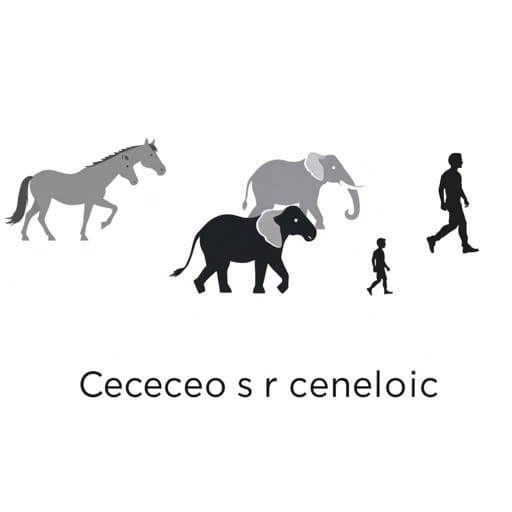
The Cenozoic Era is often referred to as the Age of Mammals,” marking a period in Earth’s history characterized by significant evolutionary, climatic, and geological changes. Spanning approximately the last 66 million years, the Cenozoic witnessed the rise of modern mammals and birds, the development of grasslands, and dramatic shifts in climate from warm periods to ice ages. Studying the epochs of the Cenozoic helps scientists understand the evolution of life, the formation of continents and oceans, and the environmental changes that have shaped the planet’s surface. This era is divided into distinct epochs, each with its unique geological and biological characteristics, which provide a detailed timeline of Earth’s recent history.
The Paleocene Epoch (66 to 56 Million Years Ago)
The Paleocene marks the beginning of the Cenozoic Era, immediately following the mass extinction event that wiped out the dinosaurs at the end of the Cretaceous. During this epoch, the Earth’s climate was generally warm and tropical, supporting the rapid diversification of mammals. Early mammals were relatively small, but they began to occupy ecological niches left vacant by extinct species. Flowering plants continued to evolve and spread, contributing to new habitats and food sources for terrestrial life.
Key Features of the Paleocene
- Recovery from the Cretaceous-Paleogene extinction event.
- Emergence of early mammals, such as multituberculates and primitive primates.
- Development of tropical forests in many regions.
- Formation of modern continental positions and the Atlantic Ocean widening.
The Eocene Epoch (56 to 34 Million Years Ago)
The Eocene epoch witnessed significant global warming, reaching temperatures higher than today, which allowed tropical and subtropical forests to thrive even in polar regions. Mammals diversified rapidly, giving rise to early forms of horses, whales, bats, and carnivores. This epoch also saw the formation of significant mountain ranges due to tectonic activity, such as the Alps and the Himalayas. The Eocene oceans were home to diverse marine life, including early whales, which began adapting to aquatic environments.
Key Features of the Eocene
- Warm climates with widespread tropical and subtropical forests.
- Diversification of mammals into many modern orders.
- Formation of important mountain ranges through tectonic collisions.
- Evolution of early whales adapting from land to water.
The Oligocene Epoch (34 to 23 Million Years Ago)
The Oligocene epoch marked a period of cooling after the warm Eocene, resulting in the expansion of grasslands and a decline in tropical forests. This cooling trend influenced mammalian evolution, promoting species adapted to open environments, such as early horses and camels. Large-scale tectonic activity continued, with further uplift of mountain ranges like the Himalayas, influencing climate patterns and ocean currents. Marine life also evolved, with modern groups of sharks, rays, and whales becoming more common.
Key Features of the Oligocene
- Global cooling leading to expansion of grasslands and savannas.
- Continued diversification of mammals adapted to open habitats.
- Significant tectonic uplift shaping modern landscapes.
- Evolution of marine mammals and modern shark lineages.
The Miocene Epoch (23 to 5.3 Million Years Ago)
The Miocene epoch represents a period of further cooling and drying, with grasslands and savannas spreading extensively. This epoch saw the evolution of many modern mammal families, including the ancestors of elephants, horses, and primates. Tectonic activity continued to shape continents, affecting ocean circulation and climate. Notably, this epoch is critical for the evolution of apes, leading to early human ancestors. Marine ecosystems also flourished, with kelp forests and coral reefs supporting diverse life forms.
Key Features of the Miocene
- Expansion of grasslands and open habitats.
- Evolution of many modern mammal families and early apes.
- Significant tectonic movements influencing climate and ocean currents.
- Flourishing marine ecosystems including coral reefs and kelp forests.
The Pliocene Epoch (5.3 to 2.6 Million Years Ago)
The Pliocene epoch was characterized by further climatic cooling and the establishment of modern ecosystems. Many mammal species familiar today evolved during this time, including early members of the genus Homo. Grasslands continued to expand, influencing the adaptation and evolution of grazing mammals. This epoch also saw the closing of the Isthmus of Panama, which altered ocean currents and climate patterns globally, affecting both terrestrial and marine environments. The Pliocene is often studied for insights into human evolution and environmental changes that shaped modern species.
Key Features of the Pliocene
- Continued cooling and drying of global climates.
- Evolution of early humans and modern mammal species.
- Expansion of grasslands and savannas.
- Geological events like the closing of the Isthmus of Panama.
The Pleistocene Epoch (2.6 Million to 11,700 Years Ago)
The Pleistocene is well-known for the ice ages, during which glaciers expanded across large parts of North America, Europe, and Asia. Mammals such as mammoths, saber-toothed cats, and giant ground sloths thrived during this epoch. The repeated glacial cycles influenced species distribution, evolution, and extinction. Early humans developed advanced tools, controlled fire, and migrated across continents. The Pleistocene’s end marked the retreat of glaciers and the transition to the current Holocene epoch, which coincides with the rise of human civilizations.
Key Features of the Pleistocene
- Repeated glacial and interglacial periods.
- Large mammals and megafauna dominated many ecosystems.
- Evolution and expansion of early humans.
- Major shifts in species distribution due to climate fluctuations.
The Holocene Epoch (11,700 Years Ago to Present)
The Holocene marks the current epoch, characterized by a relatively stable climate compared to previous ice ages. Human activity has become the dominant influence on the environment, leading to agriculture, urbanization, and industrialization. Ecosystems have been significantly altered, and many species have faced extinction due to human activity. Studying the Holocene provides crucial insight into how humans have shaped the planet and helps predict future environmental trends, especially in the context of climate change and biodiversity loss.
Key Features of the Holocene
- Stable climate allowing human civilization to develop.
- Expansion of agriculture, settlements, and technology.
- Significant human impact on ecosystems and biodiversity.
- Insights into future climate and environmental changes.
The epochs of the Cenozoic Era provide a detailed framework for understanding the evolution of life, climate, and geological processes over the last 66 million years. From the warm, tropical Paleocene to the ice ages of the Pleistocene and the stable climates of the Holocene, each epoch offers unique insights into how the Earth has changed and how species, including humans, have adapted. Studying these epochs allows scientists to trace the history of life, the formation of landscapes, and the impact of climate on ecosystems, offering lessons for understanding the present and future of our planet.