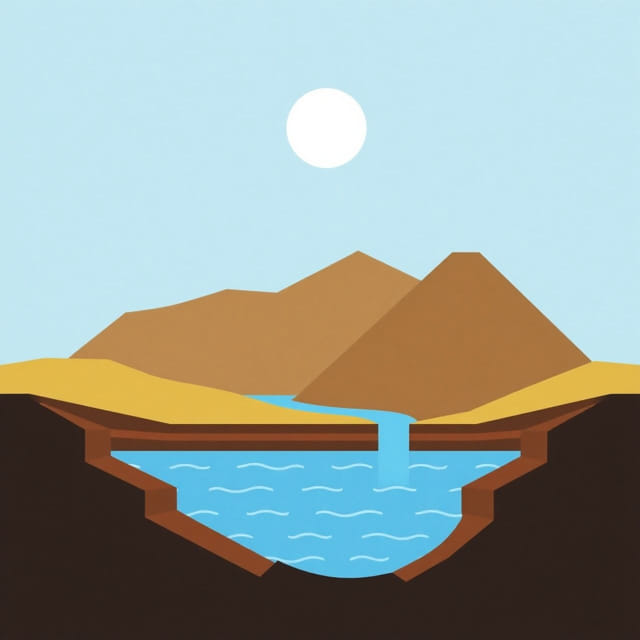
Groundwater plays a powerful yet often unnoticed role in shaping the Earth’s surface. While we commonly associate erosion with rivers, waves, or glaciers, the underground movement of water is equally capable of creating unique and fascinating landforms. These erosional landforms formed by groundwater are typically found in regions composed of soluble rocks such as limestone, dolomite, and gypsum. Over thousands or even millions of years, the continuous chemical action of slightly acidic groundwater dissolves the rock, resulting in a variety of underground and surface features. Understanding these features offers insights into natural processes that affect soil stability, groundwater flow, and even human infrastructure.
Formation of Erosional Landforms by Groundwater
How Groundwater Causes Erosion
Groundwater erosion primarily occurs through a process called chemical weathering. Rainwater, as it falls through the atmosphere and percolates through the soil, picks up carbon dioxide and forms a weak carbonic acid. This acidic water seeps into the ground and begins to dissolve soluble rock layers. Over time, as more water flows through cracks and bedding planes in the rock, it widens these pathways and creates voids and cavities that eventually become prominent erosional landforms.
Preferred Rock Types
The most common rocks affected by groundwater erosion are
- Limestone – highly soluble in weak acids, making it the most typical host for groundwater erosional features.
- Dolomite – less soluble than limestone but still subject to dissolution.
- Gypsum – very soluble and often forms dramatic subsurface features.
Major Erosional Landforms of Groundwater
Caves (or Caverns)
Caves are one of the most striking landforms created by groundwater erosion. They are underground hollow spaces formed primarily by the chemical dissolution of limestone. The process starts when groundwater flows through joints and bedding planes in the rock, slowly enlarging them over time. Eventually, these spaces grow large enough to form passageways and chambers. Many caves contain features like stalactites and stalagmites, which are mineral deposits formed by the redeposition of calcium carbonate from dripping water.
Sinkholes (Dolines)
Sinkholes are depressions or holes in the ground surface caused by the collapse of an underground void. As groundwater continues to dissolve rock beneath the surface, the ceiling of a cave or cavity can weaken and eventually collapse, forming a sinkhole. These features vary greatly in size and depth and can develop gradually or suddenly. In urban areas, sinkholes can pose serious hazards to buildings, roads, and infrastructure.
Solution Valleys
Solution valleys, also known as uvalas, are formed when several sinkholes expand and merge. Over time, as groundwater dissolves more rock material and existing sinkholes collapse or grow, they can coalesce into a larger, shallow depression. These features are commonly found in regions of intense limestone dissolution and are often part of a larger karst landscape.
Limestone Pavements
Limestone pavements are flat, exposed surfaces of limestone that have been weathered by the chemical action of groundwater. These surfaces often exhibit a pattern of grooves and ridges, known as clints and grikes, which are caused by water flowing over and through the limestone. The grikes are widened cracks formed by dissolution, while the clints are the remaining blocks. This landform is typically found in glaciated limestone areas where overlying soil has been removed.
Karst Towers and Cones
Karst towers and cones are isolated hills or mounds of limestone that remain after the surrounding material has been dissolved and eroded away by groundwater. These features are common in tropical regions with heavy rainfall and highly fractured limestone. The towers often have steep or vertical sides and rise dramatically from flat plains. They are remnants of more extensive limestone layers and highlight the long-term effects of subsurface erosion.
Special Karst Features Linked to Groundwater Erosion
Disappearing Streams
In karst regions, it’s common to find streams that suddenly vanish into the ground. These disappearing or sinking streams often flow into sinkholes or cave openings, where they continue underground. This feature results from the erosive action of groundwater creating subsurface channels that divert surface water underground.
Springs
Springs occur where groundwater naturally emerges at the surface, often at the base of a limestone hill or cliff. In karst areas, these springs may be the outlets of underground rivers that have traveled long distances through caves and channels. The water in these springs often carries dissolved minerals, giving rise to secondary depositional features such as travertine terraces or tufa formations.
Global Examples of Groundwater Erosional Landforms
Mammoth Cave, USA
Located in Kentucky, Mammoth Cave is one of the longest cave systems in the world and an excellent example of groundwater erosion in a limestone region. The extensive network of passageways has been formed entirely by underground water activity over millions of years.
Guilin Karst Towers, China
The iconic limestone towers around Guilin in southern China are the result of deep groundwater erosion in a tropical karst environment. These features demonstrate how powerful and widespread the effects of underground water can be on a landscape.
Slovenian Karst Plateau
The Karst Plateau in Slovenia has given its name to all karst landscapes. It features numerous sinkholes, caves, and underground rivers, all sculpted by the dissolving power of groundwater over a long geological period.
Environmental and Human Impact
Hazards of Erosional Features
While fascinating, many groundwater erosional features pose significant risks. Sudden sinkhole formation can destroy roads, homes, and farmland. Cave collapses and land subsidence can result in costly damage. Urban development in karst areas requires careful geological assessment to avoid such dangers.
Groundwater Resource Management
Groundwater in karst regions can be both a blessing and a challenge. The same erosion that forms caves and conduits allows rapid groundwater movement, which can lead to contamination spreading quickly. Effective management is necessary to protect drinking water and preserve natural features.
Erosional landforms of groundwater reveal the hidden but powerful forces shaping our world beneath the surface. From vast caves to sudden sinkholes, these features tell a story of water’s persistent ability to dissolve, sculpt, and transform the landscape over time. While many of these formations are beautiful and scientifically valuable, they also present challenges that require responsible human planning and environmental stewardship. By studying and respecting the processes that create these landforms, we gain a deeper appreciation of the dynamic interactions between water and the Earth’s geology.