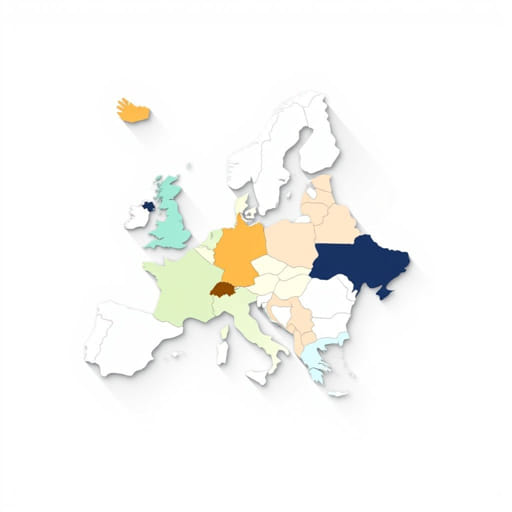
Europe is a continent with a long and complex history of religious development, from the rise of Christianity to the Reformation, the spread of Islam, and the influence of secular movements in the modern era. The religious landscape of European countries varies widely, reflecting historical, cultural, and political factors. Some nations remain deeply rooted in traditional religious practices, while others have shifted toward secularism, with religion playing a minor role in daily life. Understanding religiosity across Europe requires examining church attendance, belief systems, religious identification, and the broader social and cultural implications of faith in contemporary society.
Defining Religiosity in Europe
Religiosity refers to the intensity, commitment, and influence of religious beliefs and practices in individuals’ lives. In Europe, religiosity is often measured through indicators such as church attendance, participation in religious rituals, self-reported belief in God or a higher power, and the degree to which religion shapes moral values and public behavior. Surveys and studies, including those conducted by Eurobarometer and Pew Research Center, provide insight into these measures, revealing significant differences between countries, regions, and demographics.
Church Attendance and Religious Practice
One of the primary measures of religiosity is regular participation in religious services. Southern European countries like Italy, Spain, and Portugal generally exhibit higher church attendance compared to Northern European nations. Italy, with its deep Catholic roots, often reports a substantial portion of the population attending Mass weekly, though this has declined among younger generations. In Spain and Portugal, traditional religious festivals and community events continue to encourage active participation, sustaining a visible level of religiosity in these societies.
Belief and Personal Faith
Beyond formal attendance, belief in God or a higher power is a crucial element of religiosity. Countries such as Poland, Ireland, and Malta show strong personal faith among the population. In Poland, Catholicism remains deeply intertwined with national identity and public life, reinforcing both personal belief and social conformity. Similarly, in Malta and Ireland, religious education and family traditions support sustained faith across generations, even as secular influences grow.
Secularism and Low Religiosity in Europe
While some European nations retain strong religious traditions, others have moved toward secularism, with religion playing a minimal role in daily life. Northern European countries, including Sweden, Denmark, and Estonia, display some of the lowest levels of religiosity in Europe. In these nations, fewer individuals attend religious services regularly, and belief in God or the supernatural is often limited. Secularization in these countries is influenced by historical movements, social policies, and cultural attitudes that prioritize individual autonomy and rationalist perspectives over traditional religious authority.
Historical and Cultural Influences
The low religiosity observed in Northern Europe can be traced to historical factors, including the Protestant Reformation, Enlightenment ideals, and state policies promoting secular governance. In Denmark and Sweden, Lutheran traditions initially reinforced religious norms, but over centuries, the rise of education, urbanization, and social welfare systems contributed to reduced dependence on religious institutions. Estonia, in particular, experienced decades of Soviet influence that suppressed religious expression, resulting in a largely non-religious population today.
Regional Variations Across Europe
Religiosity in Europe is not uniform, and regional differences are evident even within the same country. In Germany, for example, Southern regions such as Bavaria remain predominantly Catholic with higher levels of religious observance, while Northern and Eastern regions lean toward secular or Protestant traditions. Similarly, the United Kingdom displays marked differences between England, Scotland, Wales, and Northern Ireland, with Northern Ireland showing higher religiosity due to historical Catholic and Protestant communities.
Factors Contributing to Regional Differences
Several factors contribute to these regional variations, including
- Historical EventsWars, reforms, and political changes have shaped local religious practices and affiliations.
- Cultural TraditionsRegional festivals, rituals, and family practices sustain religious engagement.
- Urban vs. Rural DifferencesUrban areas tend to exhibit lower religiosity compared to rural communities, where traditional values and social cohesion may reinforce faith practices.
- Immigration and DiversityMigration patterns introduce new religions and belief systems, influencing local religiosity.
Religiosity and Social Identity
Religion in Europe is not only a matter of personal belief but also an important component of social and cultural identity. In many countries, religious affiliation affects politics, education, and social networks. For instance, in Poland and Italy, Catholicism often influences national debates on moral and ethical issues. In Ireland, religious identity historically shaped social policies and continues to impact contemporary discussions on education and family law. In contrast, countries with low religiosity, such as Sweden and Estonia, tend to emphasize secular identity, with religion playing a minimal role in public life.
Religiosity and Age
Age also plays a significant role in religiosity trends across Europe. Older generations tend to maintain stronger religious beliefs and practices, while younger generations are often more secular. This generational shift is particularly noticeable in Western and Northern Europe, where youth participation in religious services is declining. Conversely, in countries like Poland or Malta, religious traditions are actively taught to younger generations, sustaining intergenerational faith practices.
Challenges and Future Trends
Europe faces several challenges in understanding and sustaining religiosity. The rise of secularism, multiculturalism, and digital influence has changed how religion is practiced and perceived. Traditional religious institutions are experiencing declining membership and participation, particularly among younger demographics. However, new forms of spirituality, community engagement, and online religious content are emerging, reflecting a transformation rather than an outright disappearance of religiosity. Researchers predict that while overall religiosity may continue to decline in some regions, personal and cultural expressions of faith will adapt to changing social contexts.
Comparing Religiosity Across Countries
Based on surveys and research, European countries can be broadly categorized by levels of religiosity
- High ReligiosityPoland, Malta, Ireland, Portugal, Italy
- Moderate ReligiositySpain, Germany, France, Belgium
- Low ReligiositySweden, Denmark, Estonia, Czech Republic, Netherlands
These categorizations reflect not only belief and practice but also the cultural and social significance of religion in each country. High religiosity countries often integrate faith into public life, community identity, and social norms, while low religiosity countries emphasize secular governance, individualism, and rationalist perspectives.
The study of European countries by religiosity reveals a continent marked by diversity, historical complexity, and evolving cultural patterns. From highly religious societies in Poland and Malta to largely secular nations like Sweden and Estonia, Europe showcases a spectrum of belief and practice influenced by history, culture, demographics, and social policy. While secularization is a significant trend, religion continues to shape identity, community, and moral frameworks in many regions. Understanding religiosity in Europe requires recognizing both traditional practices and emerging forms of faith, highlighting the ongoing interplay between personal belief, cultural heritage, and social change in contemporary European life.