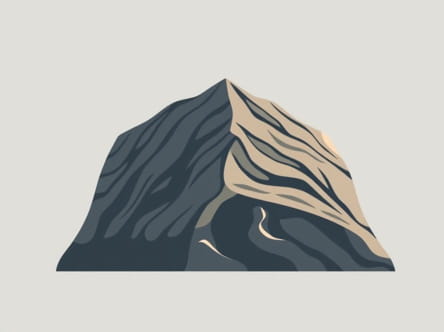
Foliated metamorphic rocks are among the most visually distinct types of rocks found on Earth due to their layered or banded appearance. These rocks are formed under significant pressure and temperature conditions that cause minerals to realign into parallel layers or planes. Foliation develops as a result of directed pressure, typically in regional metamorphism, where rocks are buried deep within the Earth’s crust and subjected to forces over long periods. These layered rocks are not only important in geology but also used widely in construction, architecture, and educational settings. Understanding the examples of foliated metamorphic rocks helps explain the powerful geological processes that shape our planet’s crust.
What Are Foliated Metamorphic Rocks?
Formation and Characteristics
Foliated metamorphic rocks form when pre-existing rocks (called protoliths) undergo metamorphism in a directional pressure environment. The minerals within these rocks align perpendicularly to the stress direction, creating a banded or sheet-like structure. This foliation can range from fine, barely visible layers to thick, well-defined bands, depending on the intensity of the metamorphic process and the mineral composition.
Common Features of Foliation
- Parallel alignment of minerals
- Layered or banded texture
- Presence of platy or elongated minerals such as mica and chlorite
- Varying grain sizes depending on the degree of metamorphism
Examples of Foliated Metamorphic Rocks
Slate
Slate is one of the most well-known foliated metamorphic rocks. It originates from shale, a sedimentary rock composed primarily of clay minerals. Under relatively low-grade metamorphism, the clay minerals in shale begin to recrystallize into microscopic micas, giving slate its fine-grained texture and excellent cleavage.
Key Characteristics of Slate
- Fine-grained texture
- Excellent foliation or slaty cleavage
- Dark gray, black, green, or red color depending on mineral content
- Used in roofing, flooring, and blackboards
Phyllite
Phyllite represents a slightly higher grade of metamorphism than slate. It is characterized by a shiny or glossy surface due to the growth of tiny mica crystals. The foliation in phyllite is more pronounced than in slate, and the rock typically exhibits a wrinkled or wavy texture known as crenulation.
Key Characteristics of Phyllite
- Slightly coarser than slate
- Silky sheen or luster
- Composed mainly of fine-grained mica and quartz
- Foliation may be wavy or irregular
Schist
Schist is a medium- to high-grade metamorphic rock with a visibly foliated texture due to the abundant presence of platy minerals like biotite and muscovite mica. These minerals are large enough to be seen with the naked eye and are aligned in parallel sheets, giving schist its shiny appearance and flaky texture.
Key Characteristics of Schist
- Medium to coarse grain size
- Strong foliation (schistosity)
- Often sparkly or glittery due to mica
- May contain garnet, staurolite, or other index minerals
Gneiss
Gneiss is a high-grade foliated metamorphic rock that shows a distinct banding of light and dark minerals. Unlike schist, gneiss has less mica and more quartz and feldspar. The banding results from the segregation of mineral types under extreme pressure and temperature, and it often appears striped.
Key Characteristics of Gneiss
- Coarse-grained texture
- Alternating light and dark bands
- Forms from granite or sedimentary rocks under intense metamorphism
- Used in countertops and decorative stone
Mylonite
Mylonite is a less commonly known foliated metamorphic rock, formed through intense shearing and deformation, typically along fault zones. It has a very fine-grained matrix with streaks or bands of larger minerals and often shows a lineated or striated appearance due to intense pressure and ductile deformation.
Key Characteristics of Mylonite
- Fine-grained texture with elongated mineral grains
- Formed in fault zones by dynamic recrystallization
- Shows strong linear foliation rather than planar layers
Importance of Foliated Metamorphic Rocks in Geology
Indicators of Tectonic Activity
Foliated rocks are essential for geologists to understand the history of tectonic movements and mountain building events. Their mineral alignment and deformation patterns provide clues about the direction and intensity of stress during metamorphism. These rocks often form in orogenic belts, where continents collide and create mountain ranges.
Use in Structural Geology and Petrology
By examining the type and grade of foliation, geologists can infer the depth and temperature conditions present during metamorphism. The presence of index minerals like garnet or staurolite in schist and gneiss further helps to determine the pressure-temperature paths of metamorphic events.
Applications in Everyday Life
- ConstructionSlate and gneiss are used for tiles, flooring, and dimension stone due to their durability and aesthetic appeal.
- Art and DesignSchist and phyllite are sometimes used for sculpting or decorative purposes.
- Historical UsesSlate was widely used in school blackboards and writing tablets in the past.
Comparison Between Foliated and Non-Foliated Metamorphic Rocks
Key Differences
Foliated metamorphic rocks are distinctly layered, while non-foliated ones lack any visible alignment of minerals. Non-foliated rocks, such as marble or quartzite, form under conditions where pressure is applied uniformly or where mineral compositions do not allow foliation to develop.
- FoliatedSlate, phyllite, schist, gneiss, mylonite
- Non-FoliatedMarble, quartzite, hornfels
Foliated metamorphic rocks like slate, phyllite, schist, gneiss, and mylonite serve as powerful indicators of the dynamic processes occurring deep within the Earth. Their layered appearance is more than just a visual trait it tells a story of pressure, heat, and time. Whether used in construction or studied by geologists, these rocks are vital to understanding Earth’s geological history and tectonic behavior. With their unique textures and mineral compositions, foliated rocks remain some of the most fascinating and important components of the metamorphic rock family.