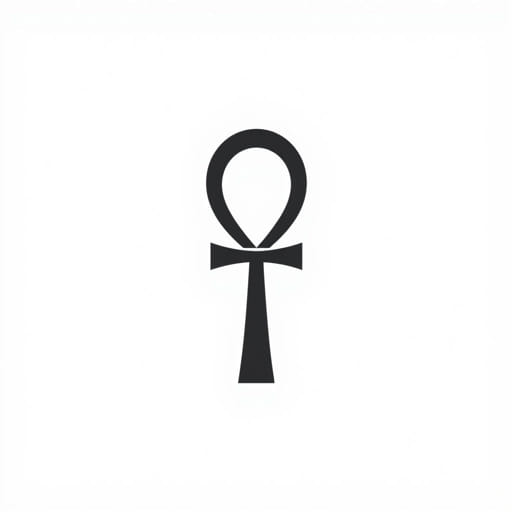
The Ankh is one of the most recognizable symbols from ancient Egypt, known worldwide as a representation of life and immortality. Often depicted in Egyptian art, carvings, and artifacts, the Ankh holds deep cultural and spiritual significance. It looks like a cross with a loop at the top, and it appears in numerous contexts related to gods, pharaohs, and funerary practices. Beyond its aesthetic appeal, the Ankh represents complex ideas about life, death, and rebirth that were central to Egyptian religion and worldview. Exploring facts about the Ankh helps us understand not only ancient Egyptian culture but also how this symbol continues to influence modern spiritual and artistic expressions.
Origins and Meaning of the Ankh
The Ankh, also called the key of life or crux ansata, originated in ancient Egypt around 3000 BCE. It symbolizes eternal life and the divine power that sustains existence. The shape of the Ankh is unique: it consists of a T-shaped cross with an oval loop replacing the upper arm. Scholars have proposed various interpretations of its form, suggesting it might combine symbols for male and female principles or represent a sandal strap, among other theories.
- Dates back to early dynastic Egypt, around 3000 BCE.
- Represents life, immortality, and divine protection.
- Also known as key of life or crux ansata.
- Shape combines a loop with a cross-like structure.
The Ankh in Egyptian Religion and Mythology
The Ankh is frequently seen in the hands of Egyptian gods and goddesses, symbolizing their ability to grant life and protection to humans. Deities such as Osiris, Isis, and Ra are often shown holding the Ankh, sometimes offering it to pharaohs or the deceased, signifying the transfer of life and divine blessing. The Ankh was believed to bridge the mortal world and the afterlife, emphasizing the Egyptian belief in life beyond death.
In funerary art, the Ankh appears on tombs and coffins, reinforcing hopes for resurrection and eternal life. It is also associated with the Nile River, whose annual flooding brought fertility and renewal, concepts closely linked with the life-giving powers represented by the Ankh.
- Held by gods and goddesses in Egyptian art.
- Symbolizes divine life-giving power.
- Linked to afterlife and resurrection beliefs.
- Associated with fertility and the Nile River.
Use of the Ankh in Daily Life and Magic
The Ankh was not only a religious symbol but also part of everyday life in ancient Egypt. It was used as an amulet to bring protection, health, and good fortune. People wore the Ankh as jewelry or carried it as a talisman to connect with spiritual power. Priests used the symbol in rituals and ceremonies, often inscribing it on objects to invoke divine energy.
Magically, the Ankh was believed to ward off evil and ensure the well-being of its bearer. Its presence in temples and sacred spaces underscored its role as a mediator between the gods and humanity.
- Used as an amulet for protection and health.
- Worn as jewelry and carried as a talisman.
- Featured in religious rituals and magic.
- Inscribed on temples, tombs, and sacred objects.
The Ankh’s Influence Beyond Ancient Egypt
The Ankh’s symbolism and design have transcended ancient Egyptian culture to inspire many later traditions and art forms. In the early Christian era, the Ankh influenced the design of the Coptic cross used by Egyptian Christians. Its shape also appears in modern spiritual movements, where it is often adopted as a symbol of life, balance, and eternal wisdom.
Artists, writers, and fashion designers worldwide have embraced the Ankh, incorporating it into jewelry, tattoos, and visual arts. The symbol’s association with mystery, spirituality, and timelessness continues to resonate with people seeking connection to ancient wisdom or alternative beliefs.
- Inspired the Coptic cross in early Christianity.
- Used in modern spiritual and New Age symbolism.
- Popular in art, fashion, and tattoos globally.
- Represents eternal life and spiritual balance.
Interpretations and Theories About the Ankh
While the Ankh’s meaning as a symbol of life is clear, scholars have debated the exact origin and deeper interpretations of its form. Some theories suggest that the Ankh represents the union of male and female principles, with the loop symbolizing the womb and the cross representing the masculine. Others propose that it resembles a sandal strap or a stylized key used to unlock the gates of life and death.
Modern esoteric traditions often view the Ankh as a symbol of spiritual awakening and the eternal cycle of life, death, and rebirth, connecting it to broader themes found in world religions and philosophies.
- Possible symbol of male and female unity.
- May represent a sandal strap or key shape.
- Associated with unlocking mysteries of life and death.
- Seen as a symbol of spiritual awakening and rebirth.
Famous Depictions of the Ankh
The Ankh appears in many famous Egyptian artworks, including temple reliefs, statues, and tomb paintings. One well-known image shows the goddess Isis holding the Ankh to the nose of the deceased pharaoh, symbolizing the breath of life being restored. Another frequent depiction is the god Osiris clutching the Ankh, emphasizing his role as the lord of the afterlife.
These iconic images underline the central role of the Ankh in conveying the idea of life’s continuity beyond death, a theme deeply embedded in Egyptian culture.
- Isis offering the Ankh to the deceased.
- Osiris holding the Ankh as god of the afterlife.
- Temple reliefs featuring gods and pharaohs with the Ankh.
- Funerary art symbolizing resurrection and eternal life.
Modern Use and Popularity
Today, the Ankh remains a powerful and popular symbol around the world. It is embraced by various subcultures, including those interested in Egyptian history, spirituality, and symbolism. The Ankh is often worn as a necklace, used in logos, or tattooed as a personal emblem of life and protection.
The symbol’s timeless appeal reflects its deep cultural roots and universal message about the preciousness and mystery of life itself.
- Common in jewelry and tattoos globally.
- Used by spiritual and cultural groups.
- Featured in popular media and art.
- Represents life, protection, and spirituality today.
The Ankh is much more than an ancient Egyptian symbol; it is a timeless emblem of life, death, and spiritual power. Its unique shape and rich symbolism have made it a lasting icon of human culture and belief. From its origins in the Nile Valley to its widespread use in modern times, the Ankh continues to inspire curiosity and reverence. Understanding the facts about the Ankh reveals not only the sophistication of ancient Egyptian civilization but also humanity’s enduring quest to understand and celebrate life in all its forms.