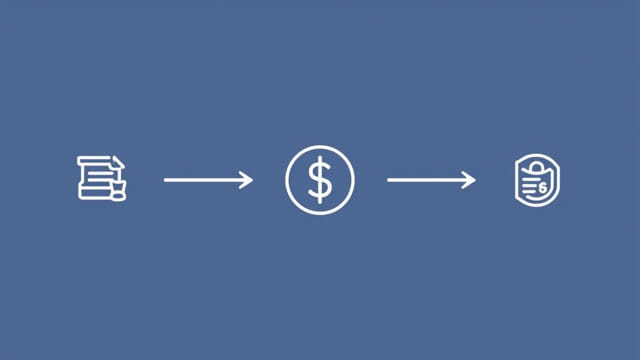
In the financial and securities industry, settlement processes play a critical role in ensuring that transactions between buyers and sellers are executed properly and securely. One specific term that often arises in settlement discussions is Free of Payment or FOP. Understanding what this term means and how it applies in different financial contexts is essential for investors, custodians, brokers, and financial institutions. While the phrase may seem self-explanatory, the implications and mechanics behind a settlement that occurs free of payment are quite specific and significant in various markets.
Definition and Concept of Free of Payment
Free of Payment refers to a settlement method whereby securities are transferred from one party to another without a corresponding exchange of cash. In this arrangement, the buyer or recipient of the securities does not immediately make a payment to the seller at the time the securities are delivered. This contrasts with the more commonly used Delivery Versus Payment (DVP) settlement, where securities and payment are exchanged simultaneously to mitigate risk.
Key Characteristics of FOP Settlements
- No simultaneous cash transfer is involved during the delivery of securities.
- Commonly used in internal transfers, gifts, donations, or collateral movements.
- Involves a higher level of trust between parties due to the separation of payment and delivery.
- Usually takes place within the same custodian or between custodians with established relationships.
Use Cases and Examples
Free of Payment settlement is not typically used in standard market trades where payment and delivery occur concurrently. Instead, FOP is favored in scenarios where the value exchange happens in a different form or at a different time.
Common Situations Where FOP is Used
- Custodial Transfers: When moving assets between sub-accounts of the same owner or within the same institution.
- Gifting Securities: If a person gifts shares to a relative or a charity, it is usually done FOP.
- Collateral Movements: Transferring securities to serve as collateral in a separate agreement or lending arrangement.
- Donations and Endowments: Non-cash contributions to trusts or institutions often use FOP methods.
Practical Example
Suppose an investor wants to donate 500 shares of a publicly traded company to a charitable organization. Instead of selling the shares and giving the cash, the investor can directly transfer the shares through a Free of Payment settlement. The receiving institution, such as the charity’s brokerage account, gets the shares without providing any immediate monetary compensation to the donor.
Advantages and Risks
Like any financial mechanism, Free of Payment settlements come with both benefits and potential drawbacks. It is important to evaluate both sides before choosing this method of settlement.
Advantages
- Simplicity: FOP is straightforward when used for internal or non-commercial transfers.
- Cost-Effective: Reduces the need for payment processing systems or coordination of cash flows.
- Flexible: Facilitates transactions like gifts, asset transfers, and charitable donations.
Risks and Disadvantages
- Settlement Risk: The seller might deliver the securities and never receive payment, or vice versa.
- Lack of Simultaneity: Since payment and delivery are decoupled, there’s increased exposure to default or operational error.
- Fraud Risk: Higher potential for misuse if not properly documented and monitored.
Operational Aspects of FOP Settlement
Executing a Free of Payment settlement typically requires coordination between custodians or internal departments. While no cash changes hands immediately, proper documentation and tracking are essential to ensure the accuracy and intent of the transaction.
Steps in an FOP Transaction
- Instructions are issued to the custodian or broker to transfer securities.
- The recipient account is verified and authorized to receive the assets.
- Securities are delivered to the receiving party without any matching payment instruction.
- Settlement records are updated to reflect the transfer.
It is also common for institutions to require both parties to confirm the terms in writing before initiating the settlement to prevent miscommunication.
Regulatory and Legal Considerations
Free of Payment transactions are subject to regulatory scrutiny, especially when large amounts are transferred or when used for purposes such as estate planning or tax minimization. Financial institutions and custodians are expected to implement strong controls and adhere to anti-money laundering (AML) and know-your-customer (KYC) regulations.
Compliance Requirements
- Proper identification of both the sender and the receiver.
- Documentation to justify the nature of the FOP transfer.
- Regular internal audits to track unusual or suspicious transfers.
Failure to comply with these standards can lead to penalties or reputational damage for the institutions involved.
Comparison with Delivery Versus Payment (DVP)
To fully understand FOP settlements, it’s helpful to compare them with the more widely used DVP model, which is the industry standard for reducing counterparty risk.
Key Differences
- FOP: Securities delivered without payment.
- DVP: Delivery of securities is contingent on simultaneous receipt of funds.
- FOP: More suitable for internal or special-purpose transfers.
- DVP: Required for most commercial and exchange-traded transactions.
Risk Implications
DVP reduces settlement risk by ensuring that each party fulfills their obligations at the same time. In contrast, FOP involves trust and may introduce risk if either party fails to complete their part of the transaction later on.
Technology and Automation
Modern financial institutions are leveraging technology to improve the efficiency and safety of Free of Payment settlements. Custodians use secure systems to initiate, monitor, and record FOP instructions. Automation ensures that documentation is accurate and reduces the chance of human error.
Digital Platforms and Settlement Networks
- Use of secure messaging systems like SWIFT for instruction exchange.
- Real-time confirmation of receipt through automated settlement systems.
- Integration with enterprise resource planning (ERP) systems for accurate accounting.
When Should FOP Be Used?
Free of Payment settlements are best used when there is a strong relationship between the sender and the receiver, or when the transfer is not financially motivated in the short term. It’s commonly used in corporate actions, reorganizations, and charitable giving, where immediate compensation is not required.
Institutions should assess the risk exposure and document the transaction carefully before proceeding with a Free of Payment method. For high-value transfers or cross-border movements, additional due diligence may be necessary to ensure regulatory compliance.
Free of Payment refers to settlement whereby securities are delivered without the simultaneous exchange of funds. While this type of settlement is beneficial in specific situations like gifts, internal transfers, or collateral movement, it comes with its own set of risks and operational considerations. Understanding the nuances of FOP transactions allows institutions and individuals to use them effectively while maintaining compliance and minimizing risk. In today’s financial environment, where trust and transparency are paramount, knowing when and how to use Free of Payment settlement is a valuable part of financial operations.
“`