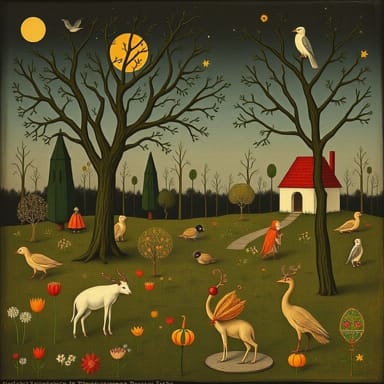
The ‘Garden of Earthly Delights’ by Hieronymus Bosch is one of the most fascinating, mysterious, and imaginative works in the history of Western art. Created around the year 1500, this triptych painting continues to spark discussion among scholars, artists, and viewers alike. With its dreamlike imagery, surreal landscapes, and symbolic details, the painting opens a window into the human mind, morality, and the spiritual beliefs of Bosch’s time. From heavenly paradise to chaotic hell, the painting’s complex visual language draws both admiration and curiosity from those who encounter it.
Understanding the Structure of the Triptych
The ‘Garden of Earthly Delights’ is structured as a triptych, meaning it consists of three panels: a left, center, and right panel. Each panel tells a different part of a symbolic story, unfolding like a visual narrative from creation to temptation and ultimately to punishment. When the triptych is closed, the outer panels display a gray-toned image of the earth during creation, interpreted by many as showing God’s early work before the emergence of life.
The Left Panel The Garden of Eden
The left panel portrays the Garden of Eden, with God presenting Eve to Adam. The setting is calm, harmonious, and full of fantastical animals. Many of the creatures depicted are hybrids part real, part imaginary. This scene represents innocence and divine order. However, even here, Bosch includes subtle hints of the coming fall of humanity. The animals exhibit strange behaviors, and the serene mood is tinged with oddities that suggest a deeper narrative.
The Center Panel The Garden of Earthly Delights
The central panel, which gives the painting its title, is the most visually overwhelming. It displays a surreal, lush world filled with nude figures engaged in a variety of pleasures dancing, bathing, eating, and erotic games. Fruits and birds, often exaggerated in size, dominate the environment. This section has been interpreted in multiple ways:
- As a warning about the dangers of sensual excess and temptation
- As a depiction of paradise lost, where humanity indulges freely before the inevitable fall
- As a representation of a dream or psychological state reflecting human desires
The figures in the central panel do not show shame or restraint. They appear carefree, yet the scene is chaotic and devoid of spiritual guidance. This dreamlike garden is abundant in pleasure but disconnected from divine morality.
The Right Panel Hell and Punishment
In stark contrast to the center, the right panel shows a nightmarish vision of hell. Darkness covers the landscape, and the figures are subjected to bizarre forms of torture. Musical instruments become tools of punishment, buildings are on fire, and monstrous creatures roam the scene. This chaotic realm suggests the consequences of earthly indulgence, showing how pleasure turns into torment when unrestrained by moral boundaries.
One particularly famous section in the hell panel is the so-called ‘Tree Man’ a strange human-tree hybrid with a hollow body, which many believe may be a self-portrait of Bosch. This part of the panel evokes deep discomfort, with its symbolic layers and imaginative horror. It stands as a powerful example of Bosch’s unique artistic voice.
The Artistic Style of Hieronymus Bosch
Bosch’s style is not easily categorized. While his contemporaries were influenced by Renaissance realism and classical ideals, Bosch ventured into the imaginative and symbolic. His use of color, form, and composition serves not only aesthetic purposes but also narrative and philosophical functions. The detail in each panel is astonishing. Even the smallest elements tiny birds, fruit, structures, or facial expressions carry symbolic weight.
Bosch rarely used conventional religious imagery. Instead, he filled his works with allegories and invented forms, blending religious themes with social criticism and psychological insight. The ‘Garden of Earthly Delights’ exemplifies this approach, where every figure and object may represent a sin, a warning, or a reflection of human folly.
Interpretations and Symbolism
Interpretations of the ‘Garden of Earthly Delights’ vary widely. Some scholars believe it was a moralistic piece, warning viewers against the dangers of lust and excess. Others view it as a celebration of human curiosity and imagination. Still others see it as a philosophical exploration of the choices that define human nature between obedience and disobedience, discipline and indulgence.
Key symbols repeated throughout the triptych include:
- Strawberries and cherries often interpreted as fleeting pleasures or temptations
- Birds symbols of the soul or, in some cases, agents of lust
- Shells and eggs fertility, birth, or transformation
- Musical instruments earthly delights, but also tools of punishment in hell
These elements were not randomly chosen. Bosch was deeply familiar with religious texts and medieval beliefs, and he used this knowledge to craft a visual experience rich with theological and psychological depth.
Cultural Impact and Legacy
The ‘Garden of Earthly Delights’ continues to inspire artists, musicians, writers, and philosophers. Its dreamlike quality and surreal visuals make it a forerunner of modern surrealism. Salvador DalÃ, Max Ernst, and other 20th-century surrealists cited Bosch as an influence. In contemporary culture, the painting appears in everything from fashion to album covers to virtual reality exhibitions.
Located in the Museo del Prado in Madrid, the triptych attracts thousands of visitors each year. Its enduring popularity speaks to its ability to engage across time and culture. No matter the era, viewers find themselves captivated by its mysteries.
Bosch’s Vision
The ‘Garden of Earthly Delights’ is more than just a painting it is a profound visual statement on the complexity of human existence. Bosch’s use of allegory, symbolism, and surreal imagery invites endless interpretation. While some see it as a moralistic warning, others view it as a mirror reflecting the human condition. What remains clear is that Bosch created a timeless work that challenges, fascinates, and enchants everyone who steps into its world.