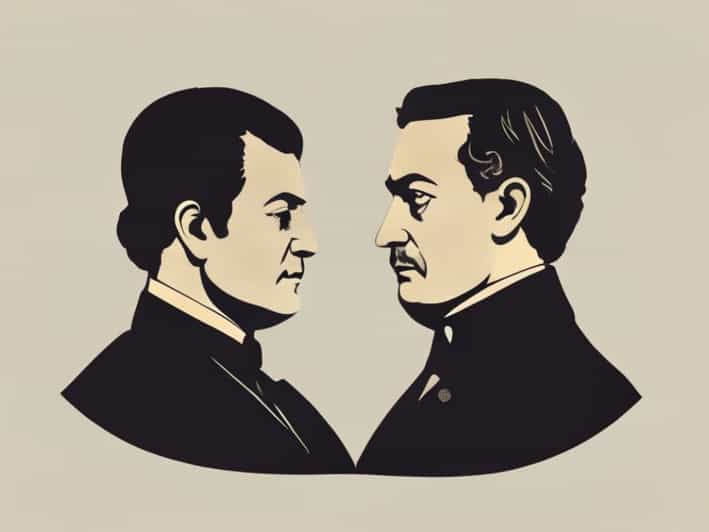
The political landscape of 19th-century Britain was shaped by two towering figures whose rivalry became legendary William Ewart Gladstone and Benjamin Disraeli. Their clash of ideologies, personalities, and policies dominated British politics for decades, leaving a lasting impact on the nation. Gladstone, the liberal reformer with a deep moral vision, and Disraeli, the conservative strategist with a flair for drama and rhetoric, represented contrasting approaches to governance. Their debates, elections, and legislative battles were not just political contests but epic confrontations that highlighted the tension between progress and tradition, reform and pragmatism. Understanding their rivalry offers insight into the evolution of modern British politics and the enduring appeal of principled yet charismatic leadership.
The Background of Gladstone and Disraeli
William Gladstone and Benjamin Disraeli were both influential members of the British Parliament, but they came from very different backgrounds and political philosophies. Gladstone, born in 1809 into a wealthy Scottish family, pursued a career shaped by morality and intellectual rigor. He believed in liberal reforms, fiscal responsibility, and the moral duty of government to promote justice and education. Disraeli, born in 1804 to a Jewish family in London, was a novelist-turned-politician whose conservatism emphasized tradition, social hierarchy, and the unifying role of the monarchy.
Gladstone’s Political Philosophy
Gladstone’s approach to politics was guided by a moral vision. He advocated for free trade, civil liberties, and the expansion of education. His belief in limited government intervention in some areas was balanced by a commitment to social reforms that addressed inequality and poverty. Gladstone’s leadership style was marked by meticulous preparation, moral reasoning, and a focus on parliamentary debate as a tool for shaping public policy. His four terms as Prime Minister were characterized by ambitious reforms in finance, education, and electoral law.
Disraeli’s Political Vision
Disraeli, on the other hand, prioritized pragmatism and political strategy. He believed in maintaining the strength and prestige of the British Empire while addressing social issues in a way that reinforced the existing social order. Disraeli’s concept of One Nation Conservatism sought to unite the aristocracy and working classes through social reforms that avoided class conflict. His charisma, rhetorical skill, and flair for dramatic public appearances made him a formidable opponent, capable of swaying both Parliament and the public to his vision.
Major Points of Conflict
The rivalry between Gladstone and Disraeli was rooted in their ideological differences and competing visions for Britain’s future. Several key issues defined their political battles, ranging from foreign policy to domestic reform and fiscal management.
Foreign Policy
Gladstone and Disraeli often clashed over foreign affairs. Gladstone was critical of imperialist expansion and military intervention, believing that Britain’s resources should be used responsibly and ethically. He opposed many of Disraeli’s colonial policies, arguing that they prioritized prestige over justice. Disraeli, in contrast, believed in a strong and assertive British Empire, exemplified by his purchase of the Suez Canal shares in 1875 and his support for military campaigns that enhanced Britain’s global influence.
Social and Domestic Reforms
Domestically, Gladstone focused on liberal reforms aimed at improving education, reducing corruption, and expanding suffrage. Disraeli’s conservatism did not oppose reform entirely but emphasized gradual change that preserved social stability. The two clashed in Parliament over bills such as the Reform Acts, which extended voting rights, and public health measures designed to address urban poverty. While Gladstone framed reforms in moral and ethical terms, Disraeli presented them as pragmatic solutions that maintained the social fabric.
Economic Policy
Economic issues were another battleground. Gladstone championed free trade and fiscal prudence, aiming to reduce government debt and limit taxation while ensuring social welfare. Disraeli supported strategic government intervention when it promoted national unity or social cohesion. Their debates over budgetary priorities, taxation, and public spending highlighted their fundamentally different approaches to economic management and governance.
The Personal Rivalry
The Gladstone-Disraeli clash was not just about policy; it was also intensely personal. The two men were highly aware of each other’s strengths and weaknesses, often engaging in pointed exchanges in Parliament. Their public speeches were carefully crafted to contrast moral principle against political acumen, intellectual rigor against strategic brilliance. Newspapers and pamphlets amplified the rivalry, turning parliamentary debates into spectacles that captured the public’s imagination.
Public Perception
The British public followed their rivalry with great interest. Gladstone was admired for his moral integrity and dedication to reform, while Disraeli captivated audiences with his wit, charm, and bold vision for Britain’s future. The contrast between the earnest, sometimes austere Gladstone and the flamboyant, calculating Disraeli created a narrative of moral struggle versus political pragmatism, which resonated with voters across the nation.
Elections and Parliamentary Battles
Throughout their careers, Gladstone and Disraeli faced off in several critical elections. Each used his platform to articulate contrasting visions, often framing the choice as a moral or strategic imperative for the country. Disraeli’s victories, such as the 1874 general election, demonstrated the appeal of his practical conservatism, while Gladstone’s returns to power reflected enduring support for his reformist and ethical approach. These electoral contests were seen as national referendums on the soul and direction of Britain itself.
Legacy of the Clash
The rivalry between Gladstone and Disraeli left a lasting imprint on British politics. It defined the contours of modern liberalism and conservatism, illustrating how personality, ideology, and strategy intersect in political leadership. Their debates shaped policy on suffrage, social reform, foreign affairs, and economic management, setting precedents that influenced future generations of politicians.
Impact on British Politics
- Established clear ideological divisions between liberal and conservative approaches.
- Promoted parliamentary debate as a central mechanism for political decision-making.
- Inspired future leaders to combine personal charisma with principled policy-making.
- Demonstrated the importance of public engagement and media in shaping political narratives.
Historical Significance
The Gladstone-Disraeli rivalry is remembered as a clash of titans not only because of their policy disagreements but also because of their contrasting leadership styles. Gladstone’s moralism and intellectual rigor challenged Disraeli’s theatrical pragmatism, creating a dynamic that continues to captivate historians and political enthusiasts. Their interactions highlight how individual personalities can influence national direction and public discourse.
The clash between Gladstone and Disraeli represents one of the most significant rivalries in British political history. It combined ideological battles, personal rivalry, and public spectacle to shape the course of 19th-century Britain. Gladstone’s commitment to moral reform and Disraeli’s pragmatic conservatism created a tension that drove policy innovation and parliamentary debate. Their legacies endure, providing lessons about leadership, political strategy, and the balance between principle and pragmatism. Understanding this clash of titans helps us appreciate the complexities of political life and the enduring impact of two individuals who shaped their nation through intellect, vision, and determination.