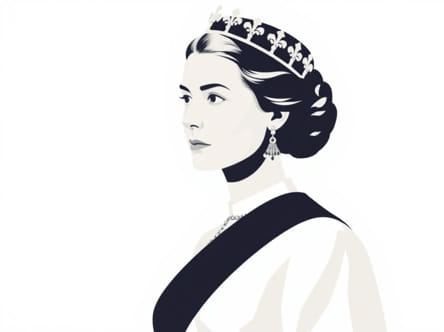
Grand Duchess Olga Alexandrovna of Russia was a remarkable figure in the twilight years of the Russian Empire. Born into the opulence of the Romanov dynasty, she lived through the empire’s downfall, revolution, exile, and eventual settlement in a faraway land. Her life reflects not only the dramatic changes in Russian history during the 20th century but also a personal journey of resilience, simplicity, and service. Unlike many royals, Olga adapted to her changing world with grace and humility, leaving a legacy of compassion and strength.
Early Life and Imperial Heritage
Olga Alexandrovna was born on June 13, 1882, at the Peterhof Palace near St. Petersburg, Russia. She was the youngest child of Emperor Alexander III and Empress Maria Feodorovna, and the younger sister of Nicholas II, the last Tsar of Russia. As a Grand Duchess, Olga enjoyed all the privileges of royalty, including access to world-class education, art, and high society. Her childhood was a mixture of courtly etiquette and a strong emphasis on Russian Orthodoxy and patriotism.
Personality and Interests
From a young age, Olga stood out from other members of the Romanov family. She was known for her down-to-earth nature, strong faith, and love of painting and animals. Unlike her siblings who embraced court life, Olga preferred simple living and the countryside. These traits would later help her adjust to the challenges of life after the revolution.
First Marriage and Unfulfilled Expectations
In 1901, at the age of 19, Olga was married to Duke Peter Alexandrovich of Oldenburg. Though the match was politically acceptable, it was not a union of love. The marriage remained unconsummated and deeply unhappy. Olga sought divorce for many years, facing great resistance due to the strict expectations placed on royal women. Eventually, the marriage was annulled in 1916, allowing her to move on with her life.
Marriage to Nikolai Kulikovsky
Olga had long been in love with a Russian officer, Nikolai Kulikovsky, and the two finally married after the annulment of her first marriage. This union was a true love match, and they had two sons, Tikhon and Gury. Kulikovsky would become Olga’s lifelong companion, and together they faced the trials of revolution and exile.
The Russian Revolution and Exile
The Bolshevik Revolution of 1917 changed everything for the Romanov family. Olga’s brother, Tsar Nicholas II, was forced to abdicate, and many members of the royal family were imprisoned or executed. Though Olga and her family were initially placed under house arrest, they managed to escape to southern Russia during the civil war. Eventually, they crossed into Denmark in 1920, thanks to her mother’s Danish royal connections.
Life in Denmark
In Denmark, Olga and her family lived modestly compared to her imperial upbringing. The Kulikovskys resided in rural areas where Olga painted to support the household income. Her works, often depictions of the Russian countryside, sold well in local markets. She also continued to engage in charitable work and remained a deeply religious woman.
Later Years in Canada
In 1948, fearing Soviet agents and political instability in Europe, Olga and her family emigrated to Canada. They settled in Ontario, where she led a quiet life on a small farm. Olga became a beloved figure in the local community, known for her warm demeanor and generosity. She gave up royal titles and protocol, embracing the role of a farmer’s wife with dignity and contentment.
Life in Ontario
Despite her royal roots, Olga did not seek luxury or attention in her later years. She milked cows, gardened, and lived simply. Her Canadian neighbors often marveled at her humility and grace. Over time, her identity as a Grand Duchess became known, but she remained unpretentious and approachable.
Death and Legacy
Grand Duchess Olga Alexandrovna died on November 24, 1960, in Toronto, Canada, at the age of 78. She was buried in York Cemetery, far from the palaces of her youth. Her life journey from royal grandeur to revolutionary escape, from rural Denmark to Canadian simplicity embodied the adaptability and inner strength of a woman shaped by history but not defeated by it.
Legacy and Memory
- Olga is remembered for her artistic talent, especially her paintings of Russian and Danish landscapes.
- Her biography provides historians with a unique personal view of the fall of the Romanovs and life in exile.
- She represents the survival and transformation of royalty in the modern era.
Significance in Russian History
While Grand Duchess Olga Alexandrovna may not have played a direct political role in Russian history, her experiences offer a human face to the decline of the Russian Empire. As the last surviving child of Alexander III and a witness to the rise of communism, she bridged the gap between two dramatically different Russias. Her correspondence and interviews have provided scholars with valuable insights into the Romanov family’s last years and the broader effects of the revolution.
Publications and Research
Several books and documentaries have been produced about Olga’s life, drawing on her memoirs and letters. She has become a subject of interest not only for her royal connections but also for her resilient spirit and the quiet dignity with which she lived through upheaval.
Grand Duchess Olga Alexandrovna of Russia lived through one of the most turbulent periods in Russian and European history. Her life story from the splendor of imperial palaces to a humble farm in Canada illustrates the strength of character and adaptability that defined her journey. While many of her royal relatives perished or remained tied to the lost world of aristocracy, Olga chose a path of simplicity, faith, and compassion. Her memory endures as a poignant reminder of the personal cost of revolution and the power of quiet resilience.