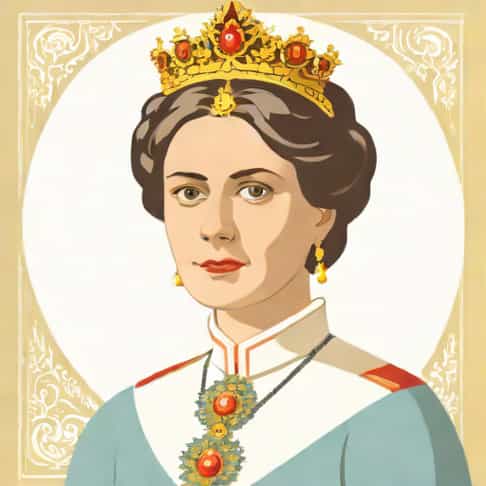
Grand Duchess Tatiana Nikolaevna of Russia was one of the most notable members of the last imperial family of Russia. Born into the Romanov dynasty, she was the second daughter of Tsar Nicholas II and Tsarina Alexandra Feodorovna. Her life was marked by privilege, responsibility, and tragedy, as she grew up during a time of political turmoil that ultimately led to the fall of the Russian monarchy. Tatiana was admired for her intelligence, elegance, and sense of duty, traits that made her a beloved figure both within her family and among the Russian people. This topic delves into the life, character, and legacy of Grand Duchess Tatiana Nikolaevna, exploring her upbringing, contributions to society, and her enduring historical significance.
Early Life and Family Background
Grand Duchess Tatiana Nikolaevna was born on June 10, 1897, in Peterhof, Russia, as the second daughter of Tsar Nicholas II and Tsarina Alexandra. She had three sisters-Olga, Maria, and Anastasia-and a younger brother, Alexei, who was the heir to the Russian throne. As a member of the Romanov family, Tatiana enjoyed a privileged upbringing with access to the best education, tutors, and cultural exposure. Her early life was filled with royal responsibilities, lessons in etiquette, and an emphasis on duty to the family and the Russian people.
Education and Interests
- Tatiana received education in languages, literature, history, and music, reflecting the traditional Romanov emphasis on well-rounded learning.
- She was particularly skilled in French and English, which were commonly spoken in the Russian imperial court.
- Tatiana developed an interest in nursing and social work, demonstrating her compassionate nature from a young age.
Her disciplined education and strong sense of responsibility were evident in her conduct, earning respect from her tutors and family alike.
Personality and Character
Grand Duchess Tatiana Nikolaevna was known for her elegance, intelligence, and strong-willed personality. Often described as poised and graceful, she also displayed a remarkable sense of duty and loyalty to her family and country. Tatiana was considered the most serious and responsible of the Romanov sisters, often taking on leadership roles among her siblings and assisting her mother in family matters. Her keen organizational skills and level-headed nature made her a stabilizing presence during the increasingly turbulent years before the Russian Revolution.
Relationships with Family and Court
- Tatiana shared a close bond with her mother, Tsarina Alexandra, and was often seen as the second mother to her younger siblings.
- She had a protective relationship with her younger brother, Alexei, especially due to his hemophilia, a condition that required constant care.
- Within the court, Tatiana was admired for her kindness and composure, often representing the family in public events and ceremonial duties.
Her combination of elegance and responsibility made Tatiana an influential figure among the Romanovs and within the Russian nobility.
Role During World War I
During World War I, Grand Duchess Tatiana Nikolaevna played an active role in supporting the war effort. She trained as a Red Cross nurse alongside her mother and sister Olga, caring for wounded soldiers in military hospitals. This period highlighted Tatiana’s sense of duty and compassion, as she worked long hours under challenging conditions. Her involvement in nursing also earned her respect from both the medical staff and the soldiers, showcasing a side of royalty dedicated to service rather than privilege alone.
Impact and Contributions
- Tatiana helped manage hospital wards and provide care for injured soldiers.
- She boosted morale through her presence and encouragement, inspiring both patients and staff.
- Her work demonstrated a balance between her royal status and humanitarian responsibilities.
Her contributions during World War I illustrated her commitment to helping others and reinforced her reputation as a compassionate and responsible member of the imperial family.
The Russian Revolution and Imprisonment
The Russian Revolution of 1917 drastically changed the course of Tatiana Nikolaevna’s life. Following the abdication of her father, Tsar Nicholas II, the Romanov family was placed under house arrest by the Bolsheviks. Initially confined to the Alexander Palace, Tatiana and her family faced increasing restrictions, isolation, and uncertainty about their fate. Despite the harsh conditions, Tatiana remained composed, offering support to her mother and siblings while attempting to maintain a sense of normalcy within the household.
Life in Captivity
- The family was eventually moved to Tobolsk and later to Yekaterinburg, where they were confined to the Ipatiev House.
- Tatiana displayed resilience and calm under extreme stress, assisting her mother with household duties and providing emotional support to her siblings.
- She maintained a journal and letters during captivity, which later became valuable historical documents providing insight into the final days of the Romanovs.
Her composure during imprisonment revealed her inner strength and unwavering sense of responsibility, even in the face of danger and uncertainty.
Death and Legacy
Tragically, Grand Duchess Tatiana Nikolaevna, along with her family, was executed by Bolsheviks on July 17, 1918, in the basement of the Ipatiev House. She was 21 years old. The execution marked the violent end of the Romanov dynasty and the imperial era in Russia. Despite the tragic circumstances of her death, Tatiana’s life continues to be remembered for her intelligence, grace, and devotion to family and country.
Historical Significance
- Tatiana’s life represents the final chapter of the Russian imperial family, providing insight into the social, political, and cultural changes of early 20th-century Russia.
- Her letters and memoirs from captivity have been preserved and studied by historians, offering a personal perspective on the revolution and the family’s final days.
- She remains a symbol of compassion, responsibility, and resilience, admired both in historical studies and popular culture.
The legacy of Grand Duchess Tatiana Nikolaevna is honored through biographies, documentaries, and public interest in the Romanov family. Her life story continues to educate and inspire people worldwide about the challenges, responsibilities, and human experiences of royalty during a period of profound change.
Grand Duchess Tatiana Nikolaevna of Russia was a remarkable figure whose life, though tragically short, left a lasting impact on history. From her early years in the Romanov family to her compassionate work during World War I and her resilience during captivity, Tatiana exemplified grace, intelligence, and dedication. Her tragic death alongside her family marks a significant moment in Russian history, yet her legacy endures through historical records, personal writings, and the admiration of those who study the Romanov dynasty. Grand Duchess Tatiana Nikolaevna remains a symbol of strength, responsibility, and compassion, embodying the complex human experience behind the grandeur of royalty.