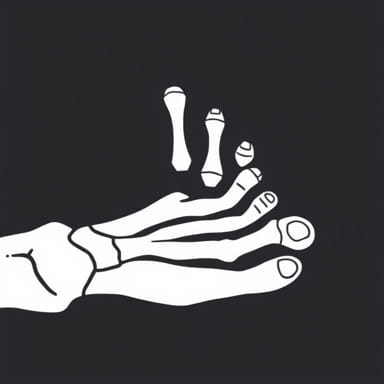
Fractures of the great toe, particularly those involving the distal phalanx, are common injuries that can result from a variety of trauma mechanisms, such as stubbing the toe, dropping heavy objects, or sports-related impacts. The great toe plays a crucial role in maintaining balance, supporting weight during walking, and providing propulsion during running, which makes injuries to this area significant in terms of function and mobility. Prompt diagnosis, accurate treatment, and proper rehabilitation are essential to restore full function and prevent long-term complications such as malunion, chronic pain, or deformity.
Anatomy of the Great Toe Distal Phalanx
The distal phalanx of the great toe is the terminal bone at the tip of the toe. It consists of a hard cortical shell surrounding cancellous bone and contains the nail bed on its dorsal surface. The distal phalanx supports the toenail and provides attachment for tendons and ligaments that facilitate fine motor function of the toe. Understanding the anatomy is crucial for evaluating fractures and planning treatment, especially since the nail bed and surrounding soft tissues are often involved in traumatic injuries.
Common Causes of Distal Phalanx Fractures
Fractures of the great toe distal phalanx typically occur due to
- Direct traumaDropping heavy objects on the toe or stubbing it against a hard surface.
- Sports injuriesActivities that involve kicking, sudden stops, or direct impact to the foot.
- Crush injuriesIncidents involving machinery, doors, or other compressive forces.
- Indirect traumaTwisting or hyperflexion of the toe leading to avulsion or intra-articular fractures.
Clinical Presentation
Patients with a distal phalanx fracture of the great toe typically present with
- Pain and tenderness at the tip of the toe, which worsens with pressure or movement.
- Swelling and bruising around the nail bed or dorsal aspect of the toe.
- Possible deformity or angulation of the toe tip.
- Subungual hematoma, indicated by discoloration beneath the toenail due to bleeding.
- Difficulty bearing weight or walking, particularly in cases involving severe displacement or pain.
Diagnosis
Accurate diagnosis of distal phalanx fractures involves both clinical examination and imaging studies
- Physical examinationAssessment of tenderness, swelling, nail bed injury, and toe alignment.
- X-ray imagingStandard anteroposterior, lateral, and oblique views are used to identify fracture type, displacement, and involvement of the joint surface.
- CT scan or MRIOccasionally employed for complex fractures or when soft tissue involvement is suspected.
Classification of Distal Phalanx Fractures
Distal phalanx fractures of the great toe can be classified based on fracture pattern, displacement, and soft tissue involvement
- Transverse fracturesHorizontal breaks across the bone, often caused by direct trauma.
- Oblique fracturesAngled fractures that may result from twisting or crush injuries.
- Comminuted fracturesBone splinters into multiple fragments, typically from high-impact trauma.
- Avulsion fracturesOccur when a tendon or ligament pulls a fragment of bone away.
- Intra-articular fracturesExtend into the joint, requiring careful management to preserve function.
Treatment Approaches
Management of great toe distal phalanx fractures depends on the fracture type, displacement, patient activity level, and presence of nail bed injury
Non-Surgical Management
- Buddy tapingTaping the injured toe to an adjacent toe to provide stability and limit movement.
- Protective footwearUsing stiff-soled shoes or toe splints to reduce pressure and allow healing.
- Pain managementAdministration of NSAIDs or acetaminophen to alleviate discomfort.
- MonitoringRegular follow-up with X-rays to ensure proper alignment and healing.
Surgical Management
Surgery may be indicated for fractures with significant displacement, open fractures, or those involving the nail bed or joint surface
- Open reduction and internal fixation (ORIF)Stabilizes bone fragments using screws, wires, or pins.
- Nail bed repairSurgical repair of damaged nail tissue to prevent permanent deformity.
- External fixationOccasionally used for complex or comminuted fractures.
Rehabilitation and Recovery
Recovery from a distal phalanx fracture requires careful attention to both bone healing and restoration of toe function
- Initial rest and limited weight-bearing to avoid further injury.
- Gradual mobilization to restore range of motion once the fracture is stable.
- Physical therapy exercises to improve strength, balance, and gait mechanics.
- Monitoring for complications such as malunion, delayed healing, or chronic pain.
Complications
While most great toe distal phalanx fractures heal without long-term issues, potential complications include
- Malunion or misalignment leading to altered gait mechanics.
- Chronic pain or sensitivity at the fracture site.
- Persistent subungual hematoma or nail deformities.
- Post-traumatic arthritis in intra-articular fractures.
- Infection, particularly in open or compound fractures.
Prevention
Preventing distal phalanx fractures involves both environmental precautions and personal protective measures
- Wearing appropriate footwear with protective toe caps in high-risk activities.
- Maintaining safe environments at home and work to avoid crush injuries.
- Using caution during sports or recreational activities that involve kicking or sudden stops.
- Regular foot care and attention to bone health, particularly in populations at risk for osteoporosis.
Great toe distal phalanx fractures are common injuries that can significantly affect mobility and quality of life. Accurate diagnosis, careful selection of treatment options, and structured rehabilitation are essential for optimal recovery. Non-surgical methods like buddy taping are effective for minor or non-displaced fractures, while surgical interventions may be required for complex or intra-articular injuries. Understanding the anatomy, mechanisms of injury, and potential complications ensures that patients receive appropriate care and can return to their daily activities with minimal long-term impairment. Early intervention, patient education, and adherence to post-injury guidelines are key factors in promoting effective healing and preventing functional limitations.