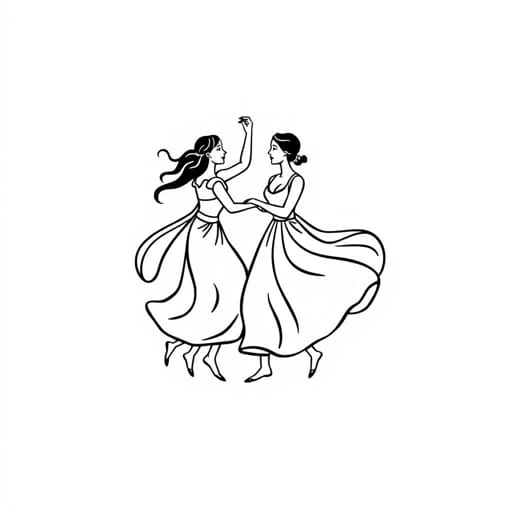
Dance played a central role in ancient Greek culture, serving as a form of expression, religious devotion, and social interaction. Among the various forms of dance, the Bacchanalian dance stands out for its unique combination of ritual, celebration, and theatricality. Rooted in the worship of Dionysus, the god of wine, fertility, and ecstasy, Bacchanalian dances were not merely entertainment but a spiritual and communal experience that brought participants closer to the divine. These dances reflected the Greeks’ appreciation for rhythm, movement, and symbolic expression, and they influenced art, theater, and later cultural traditions across Europe.
Origins of Greek Dance
Greek dance has origins that trace back to early religious and social practices. It was often performed during festivals, religious ceremonies, and communal gatherings. Unlike modern conceptions of dance as performance, ancient Greek dance emphasized participation and collective experience. Movements were closely linked to poetry, music, and storytelling, and dances often followed structured patterns that conveyed narrative or symbolic meaning. The Greeks recognized dance as a means of connecting the physical body with spiritual and emotional expression, making it an integral part of their cultural life.
Types of Greek Dance
Greek dances could be categorized in several ways, including war dances, festival dances, and ritual dances. War dances, such as the pyrrhichios, were energetic and martial in nature, training participants for combat. Festival dances celebrated seasonal events or honored particular gods, often performed with elaborate costumes and accompanied by music and singing. Ritual dances, such as the Bacchanalian dances, were tied to religious worship, offering participants a way to transcend ordinary life and achieve a heightened state of spiritual ecstasy. Each type of dance played a specific role in Greek society, reflecting both social cohesion and religious devotion.
The Bacchanalian Dance
Bacchanalian dances, associated with Dionysus, were among the most dynamic and emotionally charged forms of Greek dance. These dances were performed during festivals known as Bacchanalia, which celebrated fertility, wine, and the cycles of nature. Participants often engaged in frenzied movements, including spinning, jumping, and stamping, accompanied by drums, flutes, and lyres. The dances encouraged a release of inhibitions and a connection to the primal aspects of human emotion, aligning participants with the ecstatic and transformative powers of Dionysus.
Religious Significance
The Bacchanalian dance was more than just entertainment; it was a form of religious expression. By engaging in rhythmic movement and communal participation, dancers sought to honor Dionysus and experience divine presence. The dances symbolized renewal, fertility, and the cyclical nature of life and death. Participants sometimes wore masks and costumes representing mythological figures, further emphasizing the sacred and transformative aspects of the ritual. These elements allowed the dancers to temporarily transcend ordinary existence, entering a state of divine communion.
Characteristics of Bacchanalian Dance
- Ecstatic movements including spinning, leaping, and stamping.
- Use of musical accompaniment, particularly drums, flutes, and lyres.
- Involvement of masks, animal skins, and symbolic costumes.
- Group participation emphasizing communal experience over individual performance.
- Integration with poetry, hymns, and mythological storytelling.
The physicality of the dance, combined with the use of music and ritual objects, created an immersive environment where participants could lose themselves in rhythm and collective energy.
Influence on Greek Theater
Greek theater, especially tragedies and comedies, was deeply influenced by the traditions of dance, including Bacchanalian elements. Choral dances, for example, were used in plays to convey mood, provide commentary, or represent communal emotions. The energy, rhythm, and symbolic gestures of Bacchanalian dance informed theatrical movement, helping actors and choruses express dramatic themes effectively. Costumes, masks, and stage choreography often drew from ritual dances, demonstrating the enduring impact of these practices on artistic performance.
Cultural and Social Context
Bacchanalian dances were not solely religious; they also reinforced social bonds. By participating in shared rituals, members of Greek communities affirmed their collective identity and cultural values. The dances allowed people to experience communal joy, grief, and celebration in a structured yet emotionally liberating context. Additionally, these dances offered an opportunity for the expression of themes like fertility, renewal, and human passion, which were central to Greek mythology and worldview. The combination of entertainment, ritual, and social cohesion made the Bacchanalian dance a multi-layered cultural phenomenon.
Legacy of Greek and Bacchanalian Dance
The legacy of Greek dance, particularly Bacchanalian forms, extends far beyond antiquity. Renaissance artists and playwrights drew inspiration from these dances, incorporating expressive gestures, rhythmic patterns, and symbolic themes into visual and performing arts. Modern interpretations of Greek dance, seen in both theatrical productions and cultural festivals, continue to celebrate communal participation, expressive movement, and the integration of music and storytelling. The Bacchanalian spirit, emphasizing liberation, ecstasy, and spiritual connection, remains a powerful symbol in art, literature, and performance traditions.
Modern Interpretations
- Contemporary dance performances inspired by Greek ritual movements.
- Theatrical adaptations that incorporate Bacchanalian music, rhythm, and choreography.
- Academic studies examining the role of dance in social cohesion, religious expression, and mythology.
- Festivals and cultural events celebrating ancient Greek traditions, sometimes featuring reconstructed Bacchanalian dances.
These interpretations ensure that the cultural and spiritual significance of Greek dance continues to resonate, demonstrating its enduring influence on art, religion, and communal life.
Greek and Bacchanalian dance represents a remarkable fusion of artistry, ritual, and social engagement. Through energetic movement, musical accompaniment, and symbolic gestures, participants connected with both divine forces and communal identity. The Bacchanalian dance, in particular, offered a means of emotional release, spiritual elevation, and cultural continuity, reflecting the central role of dance in ancient Greek life. Its influence on theater, art, and modern performance underscores the enduring importance of these practices, demonstrating that dance in ancient Greece was far more than entertainment it was a vital expression of human experience, spirituality, and cultural cohesion. By studying and appreciating Greek and Bacchanalian dance, modern audiences gain insight into the values, beliefs, and artistic sophistication of one of history’s most influential civilizations.