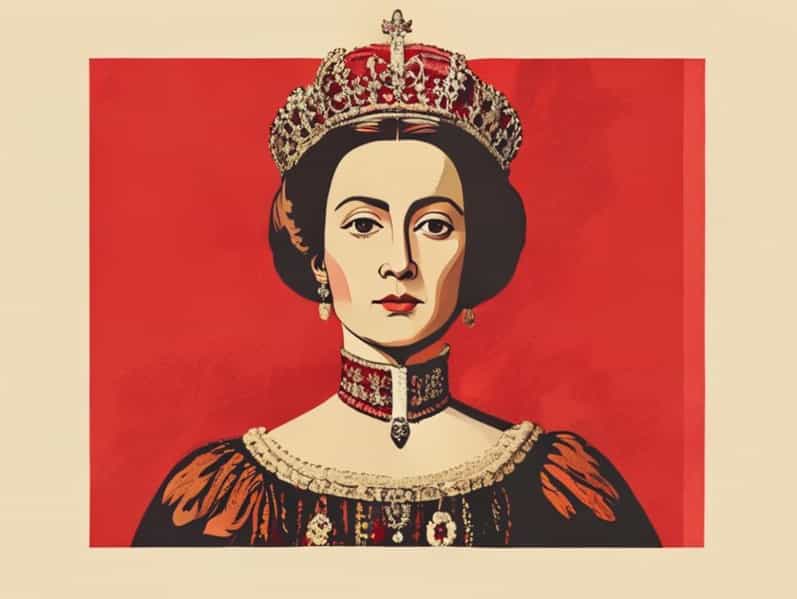
Catherine the Great is remembered as one of the most powerful and influential rulers in European history, yet her rise to the Russian throne was far from straightforward. Born as a minor German princess with no direct claim to the Russian crown, she transformed herself into Empress of Russia through intelligence, patience, political skill, and bold action. Understanding how Catherine the Great became czarina reveals a fascinating story of ambition, adaptation, and survival within the dangerous world of imperial politics.
Early Life and Background of Catherine the Great
Catherine the Great was born in 1729 as Sophie Friederike Auguste von Anhalt-Zerbst in the small German city of Stettin. Her family belonged to minor nobility, and although they had respectable lineage, they were not wealthy or powerful. From an early age, Sophie showed curiosity, discipline, and a strong desire to learn.
Her education included languages, history, philosophy, and religion, which later helped her navigate the complex intellectual and political environment of Russia. These early years laid the foundation for her future success, even though no one at the time could have predicted she would become czarina.
Arrival in Russia and Conversion to Orthodoxy
Sophie’s life changed dramatically when Empress Elizabeth of Russia sought a bride for her nephew and heir, Grand Duke Peter. Sophie was chosen partly because she posed no political threat and could be shaped to suit Russian interests.
Adapting to a New Culture
Upon arriving in Russia in 1744, Sophie worked hard to win the approval of the Russian court. She learned the Russian language, studied local customs, and embraced the culture wholeheartedly. This effort distinguished her from many foreign royals who resisted assimilation.
Religious Conversion and Name Change
One of the most important steps in her transformation was converting to the Russian Orthodox Church. After her conversion, she took the name Catherine Alexeievna. This act demonstrated loyalty to Russia and strengthened her acceptance among the people and clergy.
Marriage to Peter and Early Challenges
Catherine married Grand Duke Peter in 1745, but the marriage was deeply unhappy. Peter was immature, socially awkward, and openly admired Prussia, which was unpopular in Russia. The relationship lacked affection and trust, creating tension within the royal household.
Political Isolation and Survival
For many years, Catherine lived under close scrutiny and faced political danger. Despite this, she used her isolation wisely. She read extensively, formed quiet alliances, and observed court politics carefully.
Rather than openly challenging her husband, Catherine remained patient, understanding that survival depended on caution and strategic thinking.
The Death of Empress Elizabeth and Peter’s Rule
In 1762, Empress Elizabeth died, and Peter ascended the throne as Emperor Peter III. His reign was brief and deeply unpopular.
Unpopular Policies
Peter’s admiration for Prussia led him to withdraw Russia from a successful war, angering the military and nobility. He also introduced reforms that offended the Russian Orthodox Church and threatened traditional power structures.
These actions rapidly weakened his support, creating an opportunity for Catherine.
The Coup That Made Catherine the Great Czarina
The turning point in how Catherine the Great became czarina came through a carefully planned coup d’état. With the help of influential allies, Catherine moved decisively against her husband.
Support from the Guards and Nobility
Catherine secured the backing of the Imperial Guard, particularly the elite regiments stationed in St. Petersburg. She also gained support from key nobles who feared Peter’s leadership.
In July 1762, Catherine appeared before the guards, declared herself the rightful ruler, and was proclaimed empress.
Abdication and Death of Peter III
Peter III was forced to abdicate the throne and was soon imprisoned. Shortly afterward, he died under suspicious circumstances. Although Catherine denied involvement, his death removed any threat to her rule.
Legitimizing Her Power as Empress
After seizing power, Catherine faced the challenge of legitimizing her position. As a foreign-born woman who gained power through a coup, she needed to secure loyalty across the empire.
Coronation and Public Image
Catherine was formally crowned as Empress of Russia later in 1762. She carefully shaped her public image as a devoted ruler committed to Russia’s prosperity.
She emphasized her respect for Russian traditions and presented herself as a protector of the state.
Building Political Stability
To strengthen her authority, Catherine rewarded her supporters and reassured powerful institutions. She maintained strong relations with the military, nobility, and church, ensuring stability during the early years of her reign.
Intellectual Influence and Enlightenment Ideas
Catherine the Great’s rise to power was not only political but intellectual. She was deeply influenced by Enlightenment thinkers and sought to rule as an enlightened monarch.
Education and Reform
She promoted education, encouraged the arts, and supported legal reforms. These actions helped portray her as a progressive and capable leader.
Although not all reforms were fully implemented, her vision enhanced her reputation both in Russia and abroad.
Why Catherine’s Rise Was Unusual
The story of how Catherine the Great became czarina stands out because she lacked traditional claims to the throne.
- She was born outside Russia
- She was not a direct heir
- She gained power through a coup
- She ruled as a woman in a male-dominated society
Despite these challenges, she ruled for more than three decades, proving her political skill and resilience.
The Role of Personality and Strategy
Catherine’s success was driven by her personality. She was disciplined, observant, and adaptable. Rather than relying on force alone, she built alliances and understood human motivation.
Her ability to present herself as both Russian and imperial helped bridge the gap between her foreign origins and her adopted homeland.
Long-Term Impact of Her Accession
Catherine’s rise to power reshaped Russian history. Her reign expanded Russia’s territory, strengthened its international standing, and transformed its cultural life.
Her accession demonstrated that intelligence and preparation could overcome birth and circumstance.
Understanding how Catherine the Great became czarina reveals a remarkable journey from a minor German princess to one of history’s most famous rulers. Through cultural adaptation, political patience, strategic alliances, and decisive action, she seized an unexpected opportunity and secured her place on the Russian throne. Her story is not only about power but about vision, resilience, and the ability to navigate a complex world. Catherine the Great’s rise remains a powerful example of how leadership can emerge from unlikely beginnings.