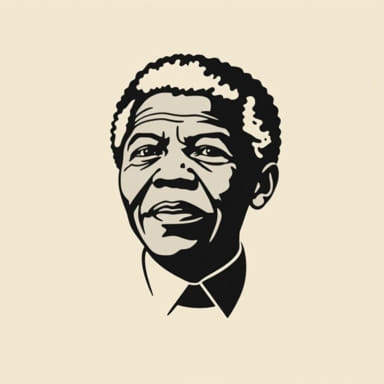
Nelson Mandela’s journey to ending apartheid in South Africa was one of extraordinary courage, resilience, and unwavering dedication to justice. For over four decades, he fought against a system of racial segregation and oppression that marginalized the majority of South Africans. From his early activism through his long imprisonment and eventual presidency, Mandela became the central figure in the dismantling of apartheid. His approach combined peaceful protest, armed resistance, international diplomacy, and reconciliation, making him a symbol of hope not only in South Africa but around the world.
The Rise of Apartheid and Mandela’s Early Resistance
Understanding Apartheid
Apartheid was a system of institutionalized racial segregation established in South Africa in 1948 by the National Party. It legally divided the population into racial categories White, Black, Coloured, and Indian restricting non-White South Africans from political participation, education, land ownership, and movement.
The system of apartheid was enforced through laws like the Group Areas Act, which segregated residential areas, and the Bantu Education Act, which limited educational opportunities for Black South Africans. These laws created a deeply unequal society, with White South Africans enjoying full rights and privileges while the majority lived in poverty and under surveillance.
Mandela Joins the African National Congress (ANC)
Nelson Mandela’s activism began when he joined the African National Congress (ANC) in 1944. He was a founding member of the ANC Youth League, which aimed to challenge apartheid through more radical and direct methods. Mandela quickly became a prominent voice within the movement, advocating for equality, civil rights, and national unity.
From Peaceful Protest to Armed Struggle
The Defiance Campaign and Treason Trial
In the early 1950s, Mandela played a key role in organizing the Defiance Campaign, a mass civil disobedience movement where volunteers deliberately violated apartheid laws. He was also involved in drafting the Freedom Charter, a visionary document calling for a non-racial, democratic South Africa.
In 1956, Mandela and 155 others were arrested and charged with treason, leading to a lengthy trial that ended in acquittal. Despite legal setbacks, Mandela’s stature grew both nationally and internationally as a leader of resistance.
Formation of Umkhonto we Sizwe
Following the Sharpeville Massacre in 1960, where 69 peaceful protesters were killed by police, the ANC was banned. Mandela concluded that peaceful protest alone would not end apartheid. In 1961, he co-foundedUmkhonto we Sizwe(‘Spear of the Nation’), the ANC’s armed wing, which carried out sabotage operations targeting government infrastructure.
Mandela justified these actions as a necessary response to state violence. He aimed to avoid civilian casualties while demonstrating the seriousness of the anti-apartheid cause. His efforts to secure support abroad took him across Africa and to Europe, raising awareness about the struggle in South Africa.
Imprisonment and International Solidarity
The Rivonia Trial and Life Sentence
In 1962, Mandela was arrested and eventually put on trial with other ANC leaders in what became known as the Rivonia Trial. In 1964, he was sentenced to life imprisonment for conspiracy to overthrow the state. His defiant speech from the dock, where he declared he was prepared to die for a free South Africa, became legendary.
Mandela spent 27 years in prison, most of them on Robben Island. Though isolated, he remained a powerful symbol of resistance. His imprisonment sparked global outrage, and anti-apartheid movements gained momentum around the world.
Global Pressure on the Apartheid Regime
During the 1970s and 1980s, international pressure against apartheid intensified. Countries imposed sanctions, corporations divested from South Africa, and the United Nations passed resolutions condemning apartheid. Protesters across the globe demanded Mandela’s release and an end to racial oppression.
- Economic sanctions damaged the South African economy
- Cultural and sports boycotts isolated the country internationally
- Global campaigns elevated Mandela as a symbol of justice
This international solidarity, combined with internal resistance, weakened the apartheid regime significantly by the late 1980s.
Negotiation and the Road to Democracy
Mandela’s Release and the Beginning of Talks
In 1990, President F.W. de Klerk released Mandela from prison, signaling the start of a new era. The government unbanned the ANC and other political organizations. Mandela, now in his 70s, began negotiating with the regime to dismantle apartheid and establish a democratic system.
These negotiations were delicate and fraught with challenges. Violence between political groups threatened to derail progress. But Mandela’s leadership and ability to foster dialogue were instrumental in maintaining focus on the goal of democracy.
The Role of Reconciliation
Mandela emphasized reconciliation over revenge. He understood that lasting peace could only come from a unified South Africa. He met with former enemies, calmed fears among White South Africans, and promoted a vision of equality and forgiveness.
In 1993, Mandela and De Klerk were jointly awarded the Nobel Peace Prize for their efforts to end apartheid peacefully. The following year, South Africa held its first democratic elections.
The Birth of a New Nation
Mandela Becomes President
On May 10, 1994, Nelson Mandela was inaugurated as South Africa’s first Black president. The election marked the official end of apartheid and the beginning of a multiracial democracy. His government focused on healing a divided nation through truth, justice, and reconciliation.
One of his most important initiatives was the Truth and Reconciliation Commission, which investigated past human rights abuses. Instead of punishing every perpetrator, the commission emphasized uncovering the truth and giving victims a voice.
Legacy of Nelson Mandela
Mandela served one term as president, stepping down in 1999 to make way for a new generation of leaders. He continued to work on global issues, including HIV/AIDS awareness and peacebuilding. His legacy remains one of compassion, strength, and unwavering commitment to justice.
Today, Nelson Mandela is remembered as the man who led South Africa from the darkness of apartheid into the light of democracy. His story continues to inspire movements for freedom and equality around the world.
The Power of Persistence and Peace
Nelson Mandela ended apartheid not through violence or vengeance, but through courage, strategic leadership, and a deep belief in justice. His approach combined political resistance, international advocacy, and moral authority. Over decades of sacrifice, he became the face of a movement that reshaped a nation. By choosing unity over division, and forgiveness over hatred, Mandela helped build a new South Africa one where democracy, human rights, and dignity were finally possible for all. His journey proves that even the most entrenched systems of oppression can be dismantled through persistence, principle, and peaceful resolve.