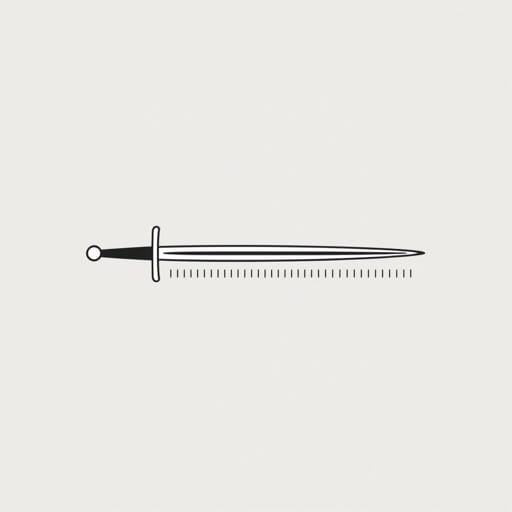
The rapier is one of the most recognizable swords of the Renaissance era, celebrated for its slender design, speed, and association with dueling and courtly refinement. Unlike heavier medieval weapons used on battlefields, the rapier was built for precision and elegance. A frequent question among history and fencing enthusiasts is: how long is a rapier? To answer this, one must consider the various types of rapiers, historical changes over time, and the purpose behind the weapon’s design. Length was not just an aesthetic or functional choice, but also reflected social, cultural, and practical needs during its peak popularity between the 16th and 17th centuries.
Understanding the Rapier
What Is a Rapier?
A rapier is a long, slender sword with a sharply pointed blade and a complex hilt, designed primarily for thrusting attacks rather than slashing. It emerged in the late 15th century and became popular throughout Europe, especially in countries like Spain, Italy, and France. Unlike earlier arming swords, which were meant for cutting and chopping, the rapier emphasized finesse, technique, and single combat.
The rapier was not typically used in military combat, but rather in civilian self-defense and dueling. This purpose shaped its physical characteristics, especially its length and weight. The length of a rapier played a crucial role in both offense and defense during a duel.
Typical Length of a Rapier
Blade Length
The blade of a traditional rapier usually ranges from90 cm to 120 cm(approximately 35 to 47 inches). This long reach allowed fencers to keep opponents at a distance while still delivering deadly accurate thrusts. In some cases, especially in the 17th century, blades grew even longer up to130 cm(over 51 inches) as the art of fencing evolved to favor greater reach and distance control.
Overall Length
Including the hilt and pommel, the total length of a rapier can reach between110 cm and 140 cm(about 43 to 55 inches). The hilt adds an additional 20 to 30 cm, depending on its design, which often included ornate guards, knuckle bows, and side rings to protect the hand.
Handle Length
The grip of a rapier is generally around10 to 15 cmlong, designed to accommodate a single hand. Some later variants might include slightly longer grips to allow for better balance or control, but they remained one-handed weapons.
Factors That Influence Rapier Length
Geographic Variation
The length of a rapier could vary depending on regional fencing traditions. For example:
- Spanish rapiers(often used in the Destreza fencing style) favored longer blades for extended reach and circular movement strategies.
- Italian rapierstended to be slightly shorter and more agile, emphasizing quick, linear thrusts in their fencing manuals.
- French stylesbegan transitioning into smallswords by the late 17th century, with shorter, lighter blades for court dueling.
Purpose of the Weapon
The intended use also influenced rapier length. A sword used for formal duels might be longer, maximizing reach and psychological advantage. A sword used for everyday self-defense or travel might be shorter, easier to conceal, and more manageable in tight spaces.
Owner’s Height and Arm Length
Some fencing masters recommended that a rapier’s blade should roughly match the length from the wielder’s foot to their navel or even armpit. This custom fit ensured that the fencer could fully extend and control the weapon during engagements. As a result, taller individuals often carried longer rapiers.
Comparison with Other Swords
Rapier vs. Arming Sword
Arming swords from the medieval period usually measured around75 to 90 cmin blade length and were designed for cutting. Rapiers were significantly longer and narrower, specializing in thrusting attacks rather than slashing.
Rapier vs. Small Sword
The small sword, which evolved from the rapier in the late 17th century, had a much shorter blade, usually under85 cm. It was lighter, faster, and better suited for the fashion and dueling etiquette of the Enlightenment era.
Balancing Reach and Maneuverability
Why Not Make It Even Longer?
While a longer blade provides greater reach, it also requires more skill and strength to wield effectively. Excessively long swords become harder to control, especially in fast-paced duels. The balance between reach and speed was critical for effective fencing, and this is why rapiers rarely exceeded 130 cm in blade length.
Importance of Weight and Balance
Most rapiers weighed between1.1 kg and 1.6 kg(approximately 2.5 to 3.5 pounds), despite their length. This lightweight design was achieved through narrow blades and carefully crafted hilts. Proper weight distribution allowed the wielder to move quickly, maintain precision, and defend against counter-attacks.
Rapier Use in Historical Fencing
Fencing Manuals and Schools
Historical fencing masters such as Ridolfo Capo Ferro, Salvator Fabris, and Jerónimo Sánchez de Carranza published influential manuals that taught rapier technique. These guides often specified optimal blade lengths for different techniques and recommended training exercises to build control over the weapon’s reach and point accuracy.
Modern HEMA Practice
In Historical European Martial Arts (HEMA) communities today, practitioners use reproduction rapiers of varying lengths, depending on the fencing style and personal preference. For safety, these training weapons may be slightly shorter and include blunted tips and protective gear.
So, how long is a rapier? Most historically accurate rapiers feature blades between 90 cm and 120 cm, with total lengths ranging up to 140 cm. The exact length depends on factors like region, purpose, historical period, and user physique. This iconic sword was designed for precision, elegance, and efficiency, striking a careful balance between reach and maneuverability. Understanding the dimensions of the rapier helps illuminate not only its technical capabilities but also the cultural and martial values of the time in which it thrived.