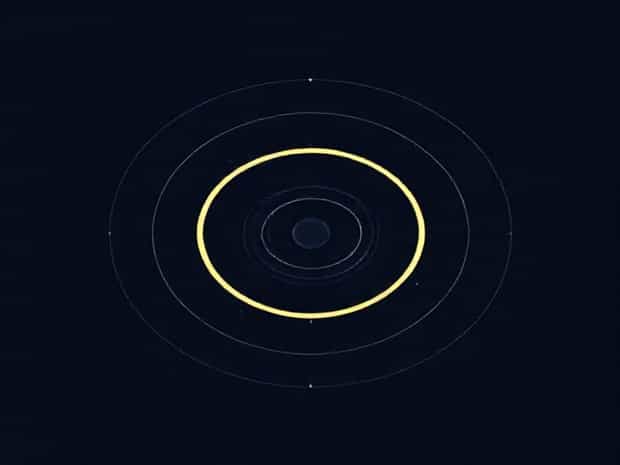
Understanding the vast distances in space is a fundamental aspect of astronomy and astrophysics. Distances between celestial objects are so immense that conventional units like kilometers or miles become impractical. Astronomers, therefore, use specialized units such as the astronomical unit (AU) and the light year (ly) to express these enormous spans. One common question arises when comparing these units how many astronomical units are in a light year? Grasping this relationship not only helps in understanding the scale of the universe but also provides context for measurements of distances between stars, planets, and galaxies.
Defining an Astronomical Unit
An astronomical unit is a standard unit of measurement in astronomy, primarily used to describe distances within our solar system. One AU is defined as the average distance between the Earth and the Sun. This unit provides a convenient scale for measuring the distances of planets, asteroids, and comets in relation to the Sun. Specifically, 1 AU is approximately 149,597,870.7 kilometers or about 92,955,807.3 miles. The adoption of the AU allows astronomers to simplify calculations of planetary orbits, spacecraft trajectories, and solar system dynamics.
Applications of the Astronomical Unit
- Measuring planetary distances within the solar system.
- Calculating orbital mechanics and trajectories of spacecraft.
- Providing a baseline for comparing distances of objects in our solar neighborhood.
Defining a Light Year
A light year represents the distance that light travels in one Earth year through a vacuum. Since light moves at a constant speed of approximately 299,792 kilometers per second (or about 186,282 miles per second), a light year covers an enormous distance over the course of a year. In metric terms, one light year is roughly 9.4607 trillion kilometers, or 5.879 trillion miles. Light years are particularly useful for measuring distances between stars, galaxies, and other cosmic objects outside the solar system, where using astronomical units would result in unwieldy large numbers.
Significance of the Light Year
- Describes distances to stars and galaxies beyond the solar system.
- Helps astronomers understand the scale and structure of the universe.
- Provides context for observing phenomena such as supernovae, nebulae, and exoplanets.
Converting Light Years to Astronomical Units
To determine how many astronomical units are in a light year, it is necessary to express both units in terms of a common measure, such as kilometers. As previously noted, 1 AU is approximately 149,597,870.7 kilometers, while 1 light year is approximately 9.4607 trillion kilometers. By dividing the distance of a light year by the length of one astronomical unit, we obtain the number of AUs contained in a light year.
Step-by-Step Calculation
- Distance of 1 light year in kilometers 9,460,730,472,580.8 km
- Distance of 1 astronomical unit in kilometers 149,597,870.7 km
- Number of AUs in 1 light year = 9,460,730,472,580.8 km ÷ 149,597,870.7 km
- Result â 63,241 astronomical units
This calculation shows that one light year is roughly 63,241 times the distance from the Earth to the Sun. Expressing distances in astronomical units becomes impractical beyond the solar system, which is why light years or parsecs are preferred for interstellar and intergalactic scales.
Practical Examples in Astronomy
Understanding the relationship between light years and astronomical units helps put cosmic distances into perspective. For instance, the nearest star system to Earth, Alpha Centauri, is about 4.37 light years away. Converting this to astronomical units
- Distance in light years 4.37 ly
- Distance in AUs 4.37 Ã 63,241 â 276,500 AUs
While 276,500 AUs is an enormous distance, expressing it in light years simplifies communication and comprehension. Similarly, the distance to the center of our Milky Way galaxy is approximately 26,000 light years, which translates to roughly 1.64 billion astronomical units. These conversions illustrate why astronomers prefer light years or parsecs for expressing interstellar distances rather than AUs, which are more suited for the solar system scale.
Importance of Knowing This Conversion
Understanding how many astronomical units are in a light year has several important implications
- It provides perspective on the vastness of the universe compared to the solar system.
- Helps in calculating distances for interstellar travel in theoretical and science fiction contexts.
- Facilitates scientific discussions and educational explanations of cosmic scales.
- Enables astronomers to convert between different units depending on context, enhancing clarity in research and publications.
Educational and Research Applications
In classrooms and research, teaching the conversion between light years and astronomical units helps students and scientists appreciate the magnitude of space. It encourages comprehension of concepts like the speed of light, the time it takes for light to travel from distant stars, and the relative positions of celestial objects. This understanding is critical for fields such as astrophysics, cosmology, and space exploration planning.
Limitations and Considerations
While converting light years to astronomical units is straightforward mathematically, it is important to recognize practical limitations. The astronomical unit is a solar system-specific measurement, and applying it to interstellar distances results in very large numbers, which are cumbersome to use. Additionally, distances in space are not static; due to cosmic expansion, objects can move relative to each other, affecting precise calculations over long time scales. Therefore, light years remain the preferred unit for expressing interstellar distances.
The astronomical unit and the light year serve distinct purposes in astronomy, with the former ideal for solar system scales and the latter for interstellar distances. By understanding the conversion between these units approximately 63,241 astronomical units per light year scientists and enthusiasts can better grasp the immensity of the cosmos. This knowledge not only provides perspective on the distances between stars and galaxies but also enhances comprehension of astronomical phenomena and supports practical applications in navigation, research, and education. Appreciating the scale of the universe through such conversions underscores the remarkable achievements of humanity in measuring, understanding, and exploring the vast expanse beyond our solar system.