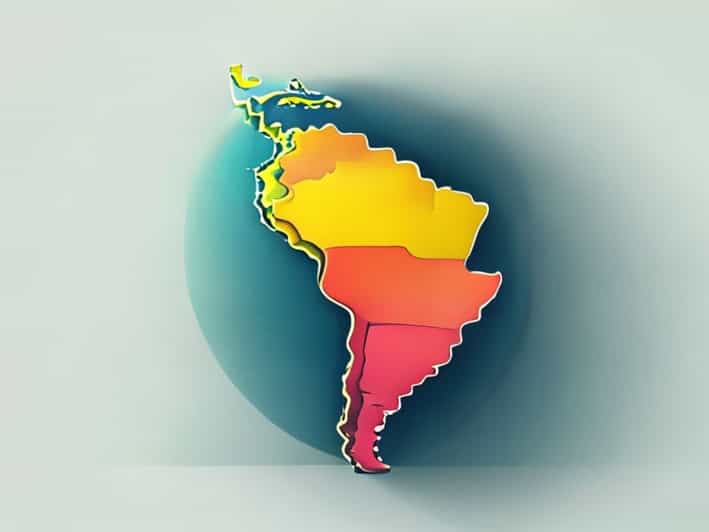
Many people around the world are curious about South America, a continent known for its rich cultures, diverse landscapes, and fascinating history. One of the most common questions asked in geography classes and casual conversations alike is how many countries are in South America. While the question sounds simple, the answer becomes more interesting when you explore what defines a country, how territories are classified, and how history shaped the modern political map of the continent.
Understanding South America as a Continent
South America is one of the seven continents of the world and is located primarily in the Southern Hemisphere, with a small portion in the Northern Hemisphere. It is bordered by the Pacific Ocean to the west, the Atlantic Ocean to the east, North America to the northwest, and Antarctica to the south.
The continent is known for iconic natural features such as the Amazon Rainforest, the Andes Mountains, and the Amazon River. Alongside its natural wonders, South America is home to independent nations, overseas territories, and culturally distinct regions that sometimes cause confusion when counting countries.
How Many Countries Are in South America?
There are 12 independent countries in South America. These countries are recognized as sovereign states with their own governments, borders, and international recognition. In addition to these countries, there is also one territory that is not an independent nation.
When people ask how many countries are in South America, the most accurate and widely accepted answer is twelve.
List of Countries in South America
The 12 countries in South America are spread across the continent, each with its own unique identity, language influences, and history. Most of them were colonized by European powers, mainly Spain and Portugal.
The 12 Countries of South America
- Argentina
- Bolivia
- Brazil
- Chile
- Colombia
- Ecuador
- Guyana
- Paraguay
- Peru
- Suriname
- Uruguay
- Venezuela
Each of these nations is internationally recognized and plays a role in South American politics, economics, and culture.
What About French Guiana?
One reason people sometimes get confused about how many countries are in South America is the presence of French Guiana. French Guiana is located on the northeastern coast of the continent and borders Brazil and Suriname.
However, French Guiana is not an independent country. It is an overseas department of France, meaning it is considered part of France and the European Union. Because of this status, it is not counted among the countries of South America, even though it is geographically part of the continent.
Languages Spoken Across South American Countries
Language diversity also reflects the political makeup of South America. Most South American countries speak Spanish due to Spanish colonization. Brazil stands out as the largest country on the continent and the only one where Portuguese is the official language.
Guyana and Suriname are linguistic exceptions. Guyana’s official language is English, while Suriname’s is Dutch. Indigenous languages are also widely spoken throughout the continent, often alongside official languages.
Why South America Has 12 Countries
The number of countries in South America is the result of centuries of colonization, independence movements, and political changes. Most South American countries gained independence during the early 19th century, following revolutions against Spanish and Portuguese rule.
Despite sharing similar colonial histories, the regions developed into separate nations due to geography, local leadership, and cultural differences. Mountain ranges, rivers, and vast distances made centralized control difficult, contributing to the formation of multiple independent states.
Population Differences Between Countries
Although there are 12 countries in South America, their populations vary greatly. Brazil is the most populous country, with more than half of the continent’s total population. Smaller countries like Uruguay and Suriname have much lower population numbers.
This population diversity influences economic power, regional influence, and cultural presence within South America.
Examples of Population Range
- Brazil has over 200 million people
- Argentina has tens of millions of residents
- Suriname has fewer than one million people
Geographic Diversity Among South American Countries
Each country in South America has distinct geographic features. Chile stretches along the Pacific coast with deserts, mountains, and glaciers. Bolivia and Paraguay are landlocked, while countries like Colombia and Venezuela have coastlines on both the Caribbean Sea and the Pacific Ocean.
This geographic diversity shapes how each country develops economically and culturally, from agriculture and mining to tourism and trade.
Political and Economic Cooperation
The countries of South America often work together through regional organizations and trade agreements. These efforts aim to improve economic cooperation, political dialogue, and regional stability.
Despite differences in government systems and economic development, the 12 countries share many regional goals and challenges, including environmental protection, infrastructure development, and social equality.
Common Misconceptions About South American Countries
A common misconception is that Central American or Caribbean nations are part of South America. In reality, Central America is part of North America, and Caribbean nations belong to the Caribbean region.
Another misunderstanding involves counting territories or dependencies as countries. While places like French Guiana are located in South America, they are not sovereign nations and therefore are not included in the total number of countries.
Why the Question Matters
Understanding how many countries are in South America helps build geographic awareness and cultural understanding. It also encourages people to explore the unique identities of each nation rather than viewing the continent as a single, uniform place.
This knowledge is useful for students, travelers, and anyone interested in global affairs. Knowing the correct number of South American countries helps avoid confusion and promotes more accurate discussions.
South America in the Global Context
With its 12 countries, South America plays an important role on the world stage. The continent contributes significantly to global food production, biodiversity, and natural resources. Countries like Brazil and Argentina have major influence in agriculture, while others are known for oil, minerals, or tourism.
The continent’s political and economic relationships extend far beyond its borders, making it an important region in international relations.
A Clear Answer With Rich Meaning
So, how many countries are in South America? The clear and accurate answer is twelve. These countries represent a wide range of cultures, languages, landscapes, and histories, all sharing the same continent but offering very different experiences.
Understanding this number is just the beginning. Each country adds its own story to the broader narrative of South America, making the continent one of the most diverse and fascinating regions in the world.