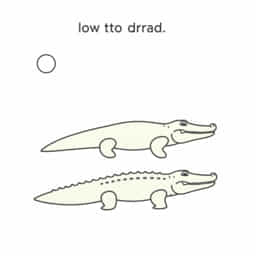
Learning how to draw a crocodile can be a fun and rewarding artistic challenge, whether you’re a beginner or an experienced illustrator. With their scaly skin, sharp teeth, and powerful tail, crocodiles are fascinating animals that make for interesting drawing subjects. You don’t need to be a professional artist to get started; with a little patience and attention to detail, anyone can create a lifelike or cartoon-style crocodile drawing. This guide will walk you through step-by-step techniques to help you sketch, outline, and shade your own crocodile while improving your general drawing skills along the way.
Materials You Will Need
Before you begin drawing your crocodile, gather the necessary tools. These basic materials will help ensure you get the best results as you learn how to draw a crocodile from scratch.
- Sketching pencils (preferably HB, 2B, and 4B)
- Eraser (kneaded or standard)
- Drawing paper or sketchpad
- Fine liner or black pen (optional for inking)
- Colored pencils or markers (optional for coloring)
Understanding Crocodile Anatomy
To draw a crocodile accurately, it helps to understand the basic structure of its body. Crocodiles are reptiles with long, muscular bodies, short legs, and thick, scaled skin. Their tails are strong and wide, used for swimming. The head is elongated, with eyes on top and a long snout filled with sharp teeth. Paying attention to these details will make your crocodile look more realistic.
Key Features to Note:
- Long snout with visible teeth
- Short, sturdy legs with clawed feet
- Scaly skin texture along the body and tail
- Eyes and nostrils placed high on the head
Step-by-Step Instructions on How to Draw a Crocodile
Step 1: Draw the Basic Shapes
Start with simple shapes to map out the crocodile’s body. Use light pencil strokes:
- Draw a long horizontal oval for the body
- Attach a circle or rounded rectangle at one end for the head
- Add a thick tail shape extending from the body, tapering to a point
- Sketch small ovals for the limbs at the appropriate locations
These shapes serve as a framework and can be adjusted as you refine your sketch.
Step 2: Outline the Head and Snout
Now begin detailing the head:
- Extend the head shape into a long, narrow snout
- Draw a curved line along the mouth area
- Add small triangle shapes along the edge for visible teeth
- Place the eyes slightly above the snout on either side
Make sure the snout looks strong and slightly flat, characteristic of real crocodiles.
Step 3: Define the Body
Next, shape the crocodile’s body using the basic oval:
- Refine the body’s sides into a muscular, slightly curved form
- Add a jagged or bumpy line down the spine to indicate armored scales
- Continue shaping the body into the thick tail, adding ridges if desired
Step 4: Add the Legs and Feet
Draw the limbs in more detail:
- Each leg should be short and thick, attached close to the body
- Add claws to the ends of the feet, using curved triangle shapes
- Position the front legs forward and the back legs slightly behind the body
Keep the stance low to the ground, as crocodiles have a sprawled posture.
Step 5: Draw the Tail
Refine the tail by:
- Adding curves and tapering it gradually to a point
- Sketching segmented, scale-like ridges along the top for texture
The tail is one of the crocodile’s most powerful features, so make sure it looks muscular and flexible.
Step 6: Add Skin Texture and Details
Use small, repetitive patterns to simulate the crocodile’s scaly skin:
- Draw tiny oval or diamond shapes along the body and limbs
- Add rough shading around the joints and neck to suggest folds of skin
- Use short lines around the eyes, nose, and mouth for expression
For a cartoon version, you can simplify these patterns into stylized marks.
Inking and Coloring the Drawing (Optional)
Inking Your Crocodile
If you want to give your crocodile drawing a clean, finished look, you can ink over the pencil sketch using a fine liner or black pen. Trace the main outlines carefully, and feel free to stylize as needed. Once the ink is dry, gently erase any remaining pencil marks.
Coloring Your Drawing
Crocodiles are usually shades of green, brown, or gray. Use colored pencils, markers, or watercolors to add depth:
- Use darker tones along the back and tail
- Add lighter shades on the belly and underside
- Blend different greens or browns to mimic natural coloration
- Use a yellow or amber color for the eyes, and black for the pupils
Tips for Improving Your Crocodile Drawing
- Study reference photos of real crocodiles for better realism
- Experiment with different poses, such as swimming or lying in the sun
- Practice drawing crocodile heads separately to improve facial detail
- Try cartoon or comic versions to build style and character
Common Mistakes to Avoid
When drawing a crocodile, beginners often make a few errors. Being aware of these can help improve your final result:
- Making the legs too long remember, crocodiles have short, strong legs
- Drawing the snout too thin or too short aim for a wide, powerful mouth
- Overlooking skin texture adding scales brings your drawing to life
- Forgetting perspective use overlapping limbs and shading to create depth
Practicing Different Styles
Once you’ve mastered a basic crocodile drawing, challenge yourself by trying different styles. Realistic drawings require more attention to anatomy and detail, while cartoon styles allow for exaggerated features and bold outlines. You can also explore digital drawing tools if you prefer working on a tablet or computer. No matter your style, continuing to sketch crocodiles from different angles will help sharpen your observation and drawing skills.
Learning how to draw a crocodile is a creative process that helps improve your artistic ability while deepening your appreciation for wildlife. With just a few basic shapes, careful observation, and some practice, you can create a drawing that captures the strength and character of this impressive reptile. Whether you choose a realistic approach or go for a fun cartoon version, the key is to enjoy the process and keep refining your skills over time. Drawing a crocodile isn’t just about lines on paper it’s about understanding form, expression, and nature through art.