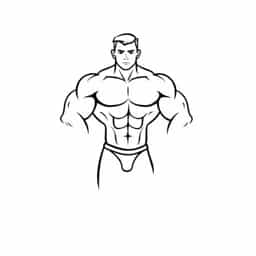
Drawing a muscleman requires a good understanding of human anatomy, proportions, and how muscles connect and flex during movement. Whether you’re interested in comic book characters, athletes, or simply want to learn how to draw a muscular male figure, mastering this subject takes time, observation, and practice. The muscular male body emphasizes definition, power, and form, which makes it a popular subject in both realistic and stylized illustration. This guide will walk you through the step-by-step process of how to draw a muscleman, from basic shapes to final shading.
Understanding Muscle Structure
Before you begin drawing, it’s essential to understand the basics of the muscular system. A muscleman’s physique typically includes well-developed chest muscles (pectorals), defined arms (biceps, triceps), broad shoulders (deltoids), strong abdominal muscles, and powerful legs (quadriceps, hamstrings, and calves).
Focus on these key muscle groups:
- Pectorals: The chest area, usually broad and rounded
- Deltoids: Rounded shoulder muscles
- Biceps and Triceps: Front and back muscles of the upper arm
- Abdominals: ‘Six-pack’ muscles along the midsection
- Quadriceps and Calves: Muscles on the front of the thigh and lower leg
Materials You’ll Need
To start drawing a muscleman, gather these basic tools:
- Sketching pencil (HB for outlines, 2B or 4B for shading)
- Eraser (kneaded or regular)
- Sketchpad or drawing paper
- Blending tool (optional, for shading)
Step-by-Step Guide on How to Draw a Muscleman
Step 1: Draw the Skeleton Framework
Start with a basic stick figure or skeleton to map out the pose. Draw an oval for the head, a line down the middle for the spine, and guidelines for the arms and legs. Add circles at the joints (shoulders, elbows, knees) to help plan the posture. This framework helps keep the body balanced and proportionate.
Step 2: Add Body Mass with Shapes
Now build the structure by using basic shapes to represent muscles. Use ovals and rectangles to block out the chest, shoulders, and thighs. The chest can be represented by a broad trapezoid, while the arms and legs should be cylinders with tapering ends.
At this stage, don’t worry about details. The goal is to create a rough silhouette of the muscleman’s physique, focusing on size, symmetry, and proportion.
Step 3: Define the Torso and Chest
Refine the chest area by adding the pectoral muscles. These should look like thick, overlapping ovals across the upper chest. From the chest, draw the abdominal muscles. Start with a vertical line and break it into symmetrical blocks to form a six-pack. Keep the waist narrower than the chest to emphasize the muscular build.
Step 4: Shape the Arms and Shoulders
Draw rounded shoulders (deltoids) connecting to the upper arms. The biceps (front) and triceps (back) should curve outward and taper toward the elbow. For the forearms, extend the lines down from the elbow and taper again toward the wrists. Be sure to mirror this on both arms and maintain proportion based on the perspective and pose.
Step 5: Sketch the Legs and Thighs
The thighs are some of the largest muscles on the body. Use curved lines to form the quadriceps, making them thick at the top and narrower near the knee. For the lower leg, sketch the calves as bulbous shapes that taper down to the ankle. Keep the feet simple at this point, using triangular shapes to indicate placement.
Step 6: Add Muscle Definition
Now that the body shape is in place, start defining the muscles. Use curved lines to carve out individual muscle groups. For the chest, draw lines between the pectorals. For the arms, indicate the split between the biceps and triceps. On the abs, clearly outline each muscle block. Draw muscle fibers lightly to suggest texture and volume.
Don’t overdo the lines muscles should look smooth and integrated, not outlined like armor. Use anatomy references to ensure accuracy and balance.
Step 7: Draw the Face and Head
Draw the head using the initial oval. Add facial features such as eyes, nose, and mouth. For a muscleman, the jawline is usually strong and defined. Add neck muscles (sternocleidomastoids) from behind the ears down to the collarbone to complete the strong appearance.
Step 8: Outline the Final Drawing
Go over your sketch with a darker pencil or pen to outline the finalized form. Clean up unnecessary or overlapping lines. Make sure the proportions are balanced check if the arms match in size, the legs are symmetrical, and the torso connects properly to the limbs. Erase any guide marks you no longer need.
Step 9: Add Shading and Depth
Shading helps bring your drawing to life. Determine where the light source is coming from, then add shadows accordingly. Shade under the pectorals, below the arms, along the inner thighs, and around the abs. Use a softer pencil or blending tool for smoother transitions between light and shadow.
Darken the areas with deep shadows and lightly shade the areas where muscles curve away from the light. Keep highlights in areas like the top of the chest, shoulders, and upper thighs.
Tips for Drawing a Realistic Muscleman
- Study anatomy references: Use real-life or digital anatomy guides to understand how muscles look and connect.
- Use soft curves: Muscles are not rigid; use curved lines to suggest flow and motion.
- Practice different poses: Try dynamic poses like flexing or jumping to improve your understanding of movement.
- Avoid over-muscling: Even though you’re drawing a strong figure, muscles should be balanced and not exaggerated to the point of looking unnatural.
- Keep the spine in mind: Always align the body parts with the spine to maintain realistic posture.
Common Mistakes to Avoid
Even with guidelines, there are common errors to watch for:
- Over-exaggeration: Muscles that are too large or incorrectly shaped can ruin the realism.
- Flat drawings: Without shading, your muscleman may appear two-dimensional.
- Ignoring proportion: Even muscular figures need correct body ratios arms shouldn’t be longer than thighs, for example.
- Lack of reference: Guessing anatomy often leads to mistakes. Always refer to photos or 3D models.
Adding Clothes or Accessories
After you’ve completed the basic body, consider adding clothing like gym shorts, gloves, or a tank top. Draw clothes to follow the body’s form without covering too much of the muscle definition. Adding accessories like weights, belts, or even a background gym scene can enhance your drawing.
Practicing Muscleman Drawing Regularly
Drawing a muscleman takes repetition. Practice drawing the same pose multiple times to refine your lines and shapes. Study professional illustrations or bodybuilding photos for inspiration and anatomy accuracy. Try sketching simplified versions quickly (gesture drawing) to improve your sense of movement and proportion.
Learning how to draw a muscleman is a rewarding way to develop your figure drawing and anatomy skills. By starting with basic shapes, refining muscle structure, and practicing shading techniques, you can create a strong, dynamic male figure that looks lifelike and powerful. With consistent practice and a focus on detail, your artwork will become more expressive and anatomically correct. Keep challenging yourself with new poses, lighting conditions, and styles to grow as an artist.