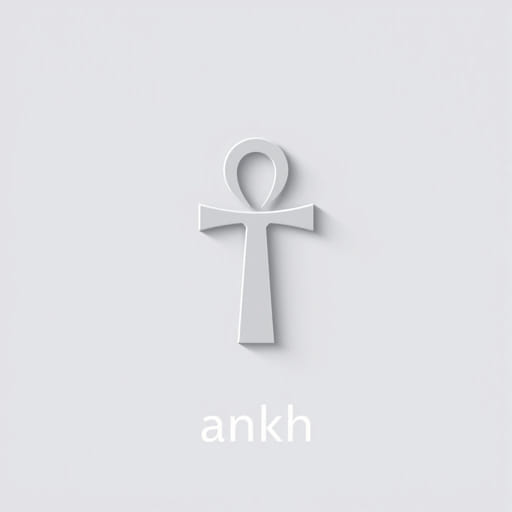
The word ‘Ankh’ is often encountered when studying ancient Egyptian culture, art, or spirituality, and it’s a term that raises curiosity both in its meaning and pronunciation. Though it may appear simple, the correct way to pronounce ‘Ankh’ can be confusing for English speakers unfamiliar with ancient languages. Understanding how to pronounce ‘Ankh’ properly not only enhances verbal communication but also shows respect for the cultural significance behind the symbol. Whether you’re discussing mythology, participating in a history discussion, or referencing it in a speech or documentary, getting the pronunciation right adds authenticity and clarity to your message.
Understanding the Word Ankh
Before diving into pronunciation, it’s helpful to understand what ‘Ankh’ represents. The ankh is an ancient Egyptian hieroglyphic symbol that means life or breath of life. It is often seen in tomb paintings, carvings, and statues, carried by deities or given by gods to pharaohs. Because of its spiritual and cultural importance, pronouncing it properly is essential when speaking about Egyptian history or symbolism.
Breakdown of the Word
The spelling of ‘Ankh’ is short but unique, consisting of four letters: A-N-K-H. Each letter contributes to its distinct sound. While the ‘A’ and ‘N’ are familiar to English speakers, the ‘K-H’ combination at the end might be where things get tricky.
- A: This is pronounced like the ‘a’ in ‘father.’
- N: A typical English ‘n’ sound, like in ‘no.’
- K: A hard ‘k’ sound, as in ‘kite.’
- H: This part represents a breathy or aspirated ‘h’ that blends with the ‘k,’ producing a unique guttural sound.
Correct Pronunciation of Ankh
Phonetically, ‘Ankh’ is most accurately pronounced asahngk(rhyming with ‘honk’ but with a more pronounced ‘k-h’ ending). The ‘kh’ at the end is not just a typical English ‘h’ sound; it’s closer to a voiceless uvular fricative or a soft guttural sound that comes from the back of the throat, somewhat like the ch in German Bach or Scottish loch.
Step-by-Step Pronunciation Guide
Here’s a step-by-step method to help pronounce Ankh correctly:
- Step 1: Start with ah open your mouth as if saying father.
- Step 2: Add n immediately after the sound should flow naturally.
- Step 3: End with kh make a throaty, breathy k-h sound. Do not make it overly harsh, but it should be audible.
When spoken smoothly, it sounds like ahngk, with a short and soft yet clear ending. Avoid saying ‘ank’ as in ‘thank’ or ankh as if the ‘h’ is silent, as these are incorrect or oversimplified versions.
Common Mispronunciations
Due to the unfamiliar combination of letters, ‘Ankh’ is often mispronounced. Here are some examples of frequent mistakes and why they are inaccurate:
- Ank: This version leaves out the h sound entirely. While it may sound easier to say, it omits a key part of the pronunciation and distorts the word’s origin.
- An-kee: Some mistakenly add an extra vowel sound at the end, perhaps influenced by English spelling habits. However, ‘Ankh’ ends in a consonant blend, not a vowel.
- An-ch: Confusing the ‘kh’ with the English ‘ch’ results in a completely different sound and meaning.
Sticking to the ‘ahngk’ pronunciation ensures the word retains its authentic tone and structure.
Why Pronunciation Matters
Pronouncing ‘Ankh’ correctly is more than just a linguistic concern it’s about cultural awareness and respect. Mispronouncing sacred or historically important words can diminish their meaning or convey unintended disrespect. Especially in academic, spiritual, or artistic contexts, clarity and correctness in speech help maintain the integrity of the subject matter.
Furthermore, accurate pronunciation contributes to better communication and understanding. If you’re participating in a discussion or presentation involving Egyptian mythology or symbology, knowing how to say ‘Ankh’ properly demonstrates credibility and attentiveness to detail.
Tips to Improve Pronunciation
If you find the kh sound difficult, here are some tips that may help:
- Practice with similar sounds: Try saying words from other languages that use guttural sounds, such as loch (Scottish) or Bach (German).
- Record yourself: Say the word and play it back to hear how close you are to the correct pronunciation.
- Break it into parts: Master the ah and n first, then add the kh sound slowly until you can say it fluidly.
- Watch native or scholarly speakers: Look for linguists or history educators pronouncing the word and try to mimic their tone and cadence.
Contextual Use of Ankh
The word ‘Ankh’ is not just a linguistic term it’s a rich cultural icon. In speech, it’s often used in the context of:
- Describing Ancient Egyptian artifacts: The statue held an ankh in its hand.
- Explaining religious symbolism: The ankh symbolized eternal life.
- Artistic interpretations: Her painting featured the Eye of Horus and the ankh.
Being able to pronounce it correctly in these settings adds weight and sincerity to your expression.
Mastering the pronunciation of ‘Ankh’ may seem like a small task, but it can greatly improve your fluency and confidence when engaging in historical or cultural discussions. Pronounced as ahngk, the word carries both phonetic complexity and deep meaning. By understanding its structure, avoiding common mispronunciations, and practicing its guttural ending, you’ll be able to say it accurately and with purpose. Whether you’re reading about ancient Egypt, giving a presentation, or simply expanding your vocabulary, correct pronunciation shows appreciation for the roots of the word and the culture it represents.