Writing clear and engaging sentences often involves adding extra details or explanations. One simple and effective way to include these without interrupting the flow of the main sentence is by using parentheses. Parentheses also known as round brackets can help you present additional information in a concise, readable way. Understanding how to use parentheses correctly will improve your grammar, enhance your writing style, and help you avoid confusing or overly long sentences. This guide will walk you through the key rules and tips for using parentheses in a sentence.
What Are Parentheses?
Definition and Basic Function
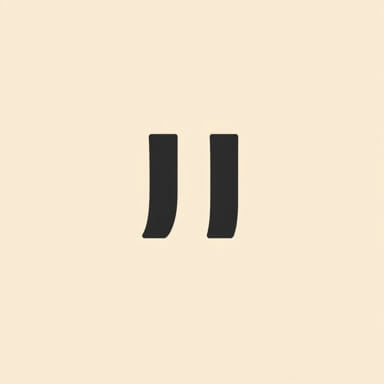
Parentheses are punctuation marks used to enclose extra information within a sentence. They look like this( ). The information placed inside parentheses is usually not essential to the sentence’s core meaning, but it offers clarification, examples, dates, or brief asides that the writer wants to share with the reader.
Example
- She finally arrived at the station (ten minutes late) and boarded the train.
The phrase ten minutes late adds context to her arrival but is not necessary for the sentence to be complete.
When to Use Parentheses
1. To Add Extra Information
Parentheses are often used to add a detail, clarification, or personal note without breaking the sentence’s rhythm.
- My brother (the one who lives in Seattle) is visiting next week.
- She adopted a dog (a golden retriever) from the animal shelter.
2. To Clarify Acronyms or Abbreviations
When introducing an acronym, it’s common to write the full term first, followed by the abbreviation in parentheses.
- The World Health Organization (WHO) plays a crucial role in global health.
3. To Indicate Dates or Numbers
Parentheses are useful for showing years or numerical details in formal or academic writing.
- Shakespeare was born in Stratford-upon-Avon (1564) and became one of the most famous playwrights in history.
4. To Insert Personal Thoughts or Comments
Writers sometimes use parentheses for personal asides or editorial comments in informal writing.
- I wasn’t sure if I should go (honestly, I was too tired), but I went anyway.
5. To Cite Sources or References
In academic writing, parentheses are often used to give in-text citations.
- Global warming is accelerating due to increased emissions (Smith, 2022).
Grammar Rules for Parentheses
Placement in a Sentence
Parenthetical information can appear at the beginning, middle, or end of a sentence. Wherever it is placed, make sure it doesn’t interrupt the flow or make the sentence confusing.
Examples
- (Despite the rain) the match continued as scheduled.
- The results (although not final) were promising.
- She submitted the report on time (with no revisions).
Correct Punctuation with Parentheses
One of the most common errors with parentheses involves punctuation. The punctuation that belongs to the main sentence should remain outside the parentheses unless the content inside is a complete sentence.
Correct
- He went to the conference (which was held in Paris) and presented his findings.
Incorrect
- He went to the conference, (which was held in Paris), and presented his findings.
When the Parenthetical Is a Full Sentence
If the content inside the parentheses forms a complete sentence, the punctuation should go inside the parentheses.
- She accepted the offer. (It was exactly what she had hoped for.)
Alternatives to Parentheses
Using Commas or Dashes
In some cases, you might consider commas or em dashes instead of parentheses, depending on the tone and formality of your writing.
Parentheses
- The CEO (who had only joined last year) announced her resignation.
Commas
- The CEO, who had only joined last year, announced her resignation.
Em dashes
- The CEO who had only joined last year announced her resignation.
Each punctuation style gives a slightly different emphasis. Parentheses make the information feel more like a side note, while commas and dashes suggest it is more integrated into the sentence.
Common Mistakes to Avoid
1. Overusing Parentheses
Using too many parentheses can make your writing look cluttered and disorganized. If you find yourself inserting multiple sets of parentheses in one sentence, consider rewriting the sentence or breaking it up.
2. Nesting Parentheses
You should avoid placing one set of parentheses inside another. If needed, use square brackets inside regular parentheses.
Incorrect
- He gave me his feedback (which was mostly positive (though he had a few critiques)).
Correct
- He gave me his feedback (which was mostly positive [though he had a few critiques]).
3. Making Parenthetical Content Too Long
If the parenthetical content is longer than the sentence itself, it’s likely better to write it as a separate sentence or rephrase your idea.
Tips for Using Parentheses Effectively
- Be briefUse parentheses for short clarifications or additions.
- Maintain clarityEnsure the sentence still makes sense without the parenthetical.
- Match toneAvoid parentheses in very formal writing unless required (e.g., citations).
- ProofreadAlways check your punctuation and placement when using parentheses.
Examples of Parentheses in Different Contexts
In Conversation or Informal Writing
- I planned to wake up early (didn’t happen) and go for a run.
- We stopped at the new café (finally!) for lunch.
In Professional Writing
- The company launched its latest product (Model X) in June.
- The event will begin at 300 PM (doors open at 230).
In Technical or Academic Contexts
- The equation (E = mc²) represents the relationship between energy and mass.
- The findings were conclusive (Johnson et al., 2021).
Knowing how to use parentheses in a sentence correctly can greatly enhance your writing. They offer a useful way to insert extra information, add explanations, or give readers more context without disrupting the sentence structure. Whether you are writing casually or formally, parentheses help organize your ideas and make your writing more readable. Use them thoughtfully and sparingly, and always make sure the core sentence remains clear and grammatically correct even if the parenthetical content is removed. Mastering parentheses is a small but powerful step toward becoming a more effective and confident writer.