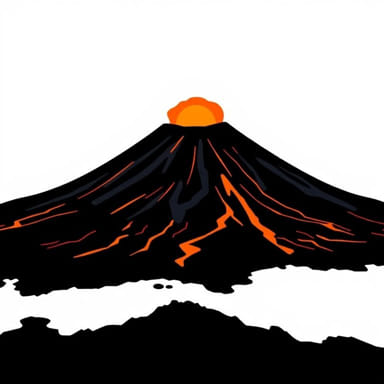
Located on the Big Island of Hawaii, Kilauea is one of the world’s most fascinating and active volcanoes. Unlike many volcanoes that erupt sporadically, Kilauea has maintained a nearly continuous state of activity for decades, making it a key site for volcanologists and a popular destination for curious travelers. Beyond its fiery displays and molten lava flows, Kilauea is deeply rooted in Hawaiian culture and mythology, and its geological activity has played a major role in shaping the island’s landscape. With its combination of scientific significance and cultural depth, Kilauea offers an array of interesting facts that make it truly unique among the Earth’s volcanoes.
Location and Geology of Kilauea
Part of the Hawaiian Hotspot
Kilauea is located on the southeastern side of the Big Island of Hawaii. It is part of the Hawaiian volcanic chain, formed by a stationary hotspot beneath the Pacific Plate. As the tectonic plate moves northwest over the hotspot, magma rises to the surface and creates volcanoes like Kilauea and its neighboring giant, Mauna Loa.
Though it appears smaller in size compared to Mauna Loa, Kilauea is geologically significant because it is one of the youngest volcanoes in the region estimated to be between 210,000 and 280,000 years old and it is still growing.
Shield Volcano Characteristics
Kilauea is a classic example of a shield volcano. Unlike stratovolcanoes, which have steep sides and violent eruptions, shield volcanoes have broad, gentle slopes and tend to produce fluid lava that flows easily. This characteristic makes Kilauea’s eruptions relatively predictable and less explosive, although still capable of significant damage.
Remarkable Eruption History
Nearly Continuous Activity
One of the most interesting facts about Kilauea is its long-lasting eruptive behavior. From 1983 to 2018, it experienced a near-continuous eruption from the Puʻu ʻŌʻō vent on its eastern rift zone. This 35-year eruption was one of the longest in recorded history and contributed significantly to the Big Island’s growth by adding new landmass along the coast.
The eruption finally ended in 2018 after a dramatic increase in activity, which included a summit collapse, powerful earthquakes, and the destruction of hundreds of homes in the Puna district.
The 2018 Eruption
The 2018 eruption was one of the most destructive in Kilauea’s modern history. Lava fountains reached up to 300 feet high, and lava flows covered over 13 square miles. Several new fissures opened up in residential areas, and more than 700 homes were lost. The event also reshaped the island’s coastline and significantly altered the summit crater, Halemaʻumaʻu, which doubled in depth.
Cultural and Spiritual Significance
Pele, the Hawaiian Goddess of Fire
In Hawaiian mythology, Kilauea is believed to be the home of Pele, the volcano goddess. She is said to reside in the Halemaʻumaʻu crater, and her presence is deeply respected by local communities. Many Hawaiians believe that eruptions are manifestations of Pele’s power and that she both creates and destroys as part of a natural cycle.
It’s customary for visitors to show respect when visiting volcanic sites, and many people leave offerings near the crater. There is also a long-standing belief that taking rocks or lava from the volcano as souvenirs can bring misfortune, a story that has led many tourists to mail the rocks back after experiencing bad luck.
Importance in Hawaiian Culture
Kilauea is not just a natural wonder but a cultural treasure. For Native Hawaiians, the volcano represents a living connection to their ancestors and their gods. Traditional chants, stories, and rituals surrounding the volcano have been passed down for generations, and many cultural practitioners continue to honor these customs today.
Scientific Research and Monitoring
Hawaiian Volcano Observatory
Kilauea is one of the most closely monitored volcanoes in the world, thanks to the Hawaiian Volcano Observatory (HVO), which was established in 1912. The observatory uses a variety of tools, including seismographs, GPS, satellite imagery, and gas sensors to track the volcano’s behavior.
Scientists at the HVO work to predict eruptions, assess hazards, and provide information to the public and emergency services. The data collected from Kilauea has greatly advanced our understanding of volcanic systems globally.
Natural Laboratory for Volcanology
Because of its accessibility and frequent activity, Kilauea serves as a natural laboratory for studying volcanic processes. Researchers from around the world come to study its eruptions, lava flows, gas emissions, and seismic activity. Kilauea has contributed valuable knowledge to fields like plate tectonics, magma dynamics, and eruption forecasting.
Ecological Impact and Natural Recovery
Lava Creating New Land
Each eruption at Kilauea literally reshapes the island. Lava flows from the volcano can extend the shoreline, create new landscapes, and fill in valleys. This process of land formation is ongoing, with the island of Hawaii growing larger over time.
While lava destroys everything in its path, it also lays the foundation for new ecosystems. Over decades, plants begin to grow on cooled lava, gradually transforming barren rock into fertile ground that supports life.
Resilience of Local Ecosystems
The unique volcanic environment of Kilauea has given rise to specialized ecosystems that adapt to extreme conditions. Native plants and insects often colonize new lava fields, and certain species thrive in sulfur-rich soil or areas affected by volcanic gases. The recovery of these ecosystems after an eruption demonstrates nature’s remarkable ability to heal and evolve.
Tourism and Visitor Experience
Hawaiʻi Volcanoes National Park
Kilauea is a central feature of Hawaiʻi Volcanoes National Park, a UNESCO World Heritage site. The park offers a range of experiences, from scenic drives and hiking trails to guided tours and cultural programs. Visitors can see steam vents, lava tubes, and during periods of activity glowing lava at night.
The park is also home to the Kīlauea Visitor Center and the Thomas A. Jaggar Museum (currently closed due to damage from the 2018 eruption), where people can learn about geology, history, and the cultural importance of the volcano.
Volcano Watching
Watching Kilauea erupt is one of the most popular attractions in Hawaii. Depending on the eruption site, visitors can safely view lava flows from designated areas. However, park officials and scientists continuously monitor conditions to ensure public safety, as volcanic environments can change rapidly.
Kilauea is more than just a volcano it’s a living force that shapes the land, influences culture, and inspires both awe and respect. Its nearly constant activity, geological uniqueness, cultural significance, and scientific value make it one of the most interesting volcanoes on Earth. Whether viewed as a natural wonder or a sacred site, Kilauea offers a window into the dynamic processes that form our planet and the deep connections people can have with nature. With every eruption and every new layer of lava, the story of Kilauea continues to unfold, reminding us of the power and beauty of the Earth’s inner forces.