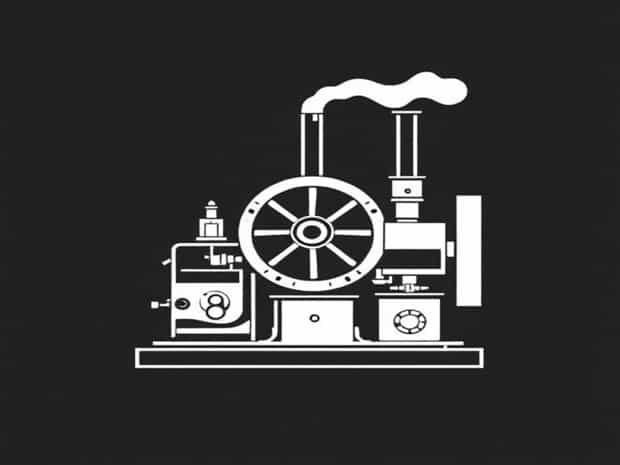
James Watt is widely recognized as one of the most influential inventors in history, primarily for his groundbreaking improvements to the steam engine. His work transformed the steam engine from a relatively inefficient and cumbersome device into a practical and powerful machine that could drive the Industrial Revolution. Before Watt’s innovations, steam engines were limited in their capabilities, often slow and energy-consuming, and mostly used for pumping water out of mines. Watt’s improvements addressed these issues, making steam engines more efficient, reliable, and suitable for a wide range of industrial applications.
The Early Steam Engine
The concept of the steam engine existed long before James Watt began his work. Early engines, such as those developed by Thomas Newcomen in the early 18th century, were primarily used for pumping water from mines. While Newcomen’s engine was a remarkable step in engineering, it was inefficient. It consumed large amounts of coal because the cylinder had to be repeatedly heated and cooled during each cycle. This constant loss of energy limited its practical use in other industries, and the engines were expensive to operate.
Watt’s Background and Initial Observations
James Watt was a Scottish inventor and mechanical engineer born in 1736. His work initially focused on repairing scientific instruments at the University of Glasgow. During one such repair task, Watt observed a Newcomen steam engine and noticed its inefficiency. He realized that if he could separate the condensation process from the main cylinder, the engine could conserve much more energy. This observation marked the beginning of his quest to improve the steam engine.
Key Improvements Made by James Watt
Separate Condenser
One of Watt’s most significant contributions was the invention of the separate condenser. In traditional steam engines, steam was condensed in the same cylinder where it was heated. This meant that the cylinder had to be cooled and reheated repeatedly, wasting energy. Watt introduced a separate chamber to condense the steam, allowing the main cylinder to remain hot. This dramatically improved fuel efficiency, reducing coal consumption by nearly 75% in some cases.
Rotative Motion
Watt also adapted the steam engine to produce rotary motion rather than just vertical motion. Earlier engines primarily produced reciprocating motion, which was suitable for pumping but limited for industrial applications. By attaching a sun-and-planet gear system to the piston, Watt enabled the engine to turn a wheel, making it capable of driving machinery such as textile looms, mills, and other industrial equipment. This innovation was a turning point for mechanized production and expanded the practical applications of steam power.
Throttle Valve and Governor
Another important innovation was the throttle valve, which allowed operators to control the flow of steam into the engine, improving performance and efficiency. Watt also introduced the centrifugal governor, which automatically regulated engine speed. This was essential for industrial use because it maintained a steady and reliable power output, preventing damage to machinery and improving safety in factories.
Collaboration with Matthew Boulton
James Watt partnered with industrialist Matthew Boulton in 1775. This partnership was crucial for bringing Watt’s improved steam engines to market. Boulton provided the capital, business expertise, and manufacturing capabilities necessary to produce engines on a larger scale. Together, they established Boulton & Watt, a company that became synonymous with high-quality steam engines. Their engines were installed in factories, mines, and mills across Britain and eventually the world, helping to accelerate the pace of industrialization.
Impact on Industry
The improved steam engine had a profound impact on multiple industries. In mining, it allowed for deeper mines because water could be pumped out more efficiently. In manufacturing, factories could be located away from water sources because engines provided a reliable and controllable power source. The textile industry, in particular, saw massive growth as mechanized looms and spinning machines could now operate consistently. Steam engines also transformed transportation, laying the groundwork for the development of steamships and locomotives.
Legacy of James Watt
James Watt’s contributions to steam engine technology extended beyond mere mechanical improvements. His work exemplified the importance of combining scientific observation with practical engineering. Watt was meticulous in analyzing the thermodynamics of the engine, which led to innovations that not only improved efficiency but also set the stage for future advances in mechanical engineering and energy use.
Watt and Measurement of Power
In recognition of his contributions, the unit of power, the watt, was named after him. This unit measures the rate of energy transfer, symbolizing the lasting influence of his work on both engineering and science. By enhancing the efficiency and versatility of the steam engine, Watt not only fueled industrial growth but also provided a foundation for modern energy systems.
Watt’s Influence on Innovation
Beyond his technical achievements, James Watt inspired a culture of innovation. His careful experimentation, attention to detail, and practical problem-solving approach became a model for inventors and engineers. Watt’s improved steam engine demonstrated that technological innovation could drive economic development, change societies, and expand human capabilities in unprecedented ways.
James Watt’s improvements to the steam engine were transformative. By introducing the separate condenser, rotary motion, throttle valve, and governor, he made the steam engine more efficient, versatile, and widely applicable. His collaboration with Matthew Boulton ensured that these innovations reached industries around the world, powering the Industrial Revolution and reshaping the modern economy. Watt’s legacy endures not only in the steam engines that revolutionized industry but also in the principles of efficiency and innovation that continue to influence engineering today. The story of James Watt illustrates how careful observation, creativity, and practical engineering can combine to produce solutions that fundamentally change the course of history.