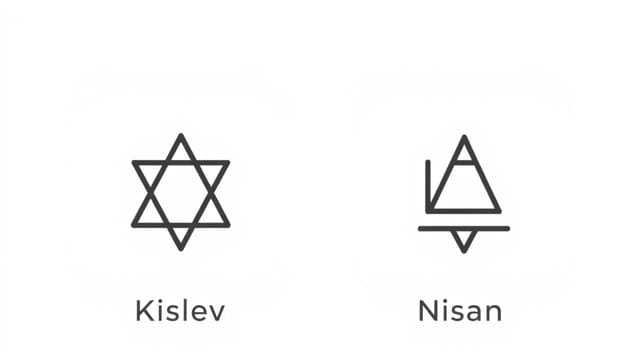
The Jewish calendar is a deeply meaningful and complex system that blends lunar and solar cycles to mark sacred time. Two of its months, Kislev and Nisan, stand out not only for their position within the Hebrew year but also for their religious and historical importance. Kislev is known as a month of miracles and dreams, while Nisan is considered the beginning of redemption and renewal. These two months, though separated by the cold of winter and the bloom of spring, are connected by profound symbolism and timeless traditions. Understanding Kislev and Nisan within the Jewish calendar offers deeper insight into Jewish faith, festivals, and the rhythm of spiritual life.
The Structure of the Jewish Calendar
The Jewish calendar is lunisolar, meaning it is based on the phases of the moon but adjusted to keep in sync with the solar year. Each month begins with the new moon, and a regular year contains twelve months. To ensure festivals remain in their proper seasons, a leap month, Adar II, is added seven times every 19 years. This system keeps Nisan in the spring and Tishrei in the fall, preserving the agricultural and religious structure of Jewish life.
Position of Kislev and Nisan in the Year
Kislev is the ninth month of the Jewish calendar, typically falling in November or December. Nisan is the first month of the Hebrew religious year and usually occurs in March or April. Although Tishrei is considered the beginning of the civil year due to Rosh Hashanah, Nisan is the head of months in the Torah, marking the spiritual beginning of time for the Jewish people.
Kislev: A Month of Light and Dreams
Kislev is associated with hope, faith, and miracles. It is most well-known for the festival of Hanukkah, which begins on the 25th of Kislev. Hanukkah commemorates the rededication of the Second Temple in Jerusalem and the miracle of the oil that lasted eight days. As such, Kislev is spiritually tied to themes of resilience and divine intervention.
Key Themes and Customs in Kislev
- Hanukkah: A time of joy, candle-lighting, and remembrance of miracles. Each night, one additional candle is lit on the menorah.
- Dreams: According to tradition, many of the Torah portions read during Kislev involve dreams, especially those of Joseph, reinforcing Kislev’s association with vision and prophecy.
- Cold and Light: The month usually brings colder days, making the light of Hanukkah candles even more symbolic.
The spiritual energy of Kislev invites introspection and hope, making it a perfect time to reflect on past struggles and prepare the heart for future growth.
Nisan: The Month of Redemption
Nisan holds a foundational place in Jewish tradition. It is the month in which the Israelites were freed from Egyptian slavery, and it begins the spiritual calendar year. The word Nisan is believed to derive from the Hebrew word ‘nes,’ meaning miracle, and it is a month filled with divine revelation and freedom.
Passover and the Story of Exodus
The central event of Nisan is the holiday of Passover (Pesach), which begins on the 15th of the month and lasts for seven or eight days, depending on tradition. Passover recalls the Exodus from Egypt, symbolizing liberation and divine faithfulness.
- The Seder: A ceremonial meal held on the first two nights of Passover. It includes symbolic foods, storytelling, and ritual questions.
- Matzo: Unleavened bread eaten during the week of Passover to remember the haste with which the Israelites fled Egypt.
- Spring Cleaning: Homes are thoroughly cleaned to remove all chametz (leaven), a practice representing spiritual cleansing.
Nisan is seen as a month when spiritual energy is ripe for new beginnings. The themes of birth and redemption make it a fitting time for personal renewal and commitment to growth.
Spiritual Connections Between Kislev and Nisan
Although several months apart, Kislev and Nisan are deeply linked through their themes of divine presence and transformation. Kislev, in the depths of winter, teaches trust in hidden miracles, while Nisan, in the bloom of spring, celebrates revealed redemption.
In mystical thought, Kislev represents the concealed miracle, like the oil that burned beyond natural limits. Nisan, in contrast, reveals the miracle openly, through the parting of the Red Sea and the escape from bondage. Together, they show a spiritual progression from faith in the unseen to celebration of the manifest.
From Darkness to Light
Kislev’s darkness is pierced by the light of Hanukkah candles, and it sets the emotional and spiritual stage for the freedom that arrives in Nisan. The journey from inner trust in Kislev to outward liberation in Nisan mirrors many personal and communal journeys in Jewish history and in individual lives.
Modern Observances and Relevance
Today, Kislev and Nisan continue to play vital roles in Jewish identity and spiritual practice. Hanukkah has become a widely celebrated festival, often taking on additional significance in multicultural societies as a time to proudly affirm Jewish heritage. Passover remains one of the most widely observed Jewish holidays, bringing families together across the globe for meaningful rituals and traditions.
Educational and Cultural Impact
- Schools and Synagogues: Kislev and Nisan are often times of vibrant activity in Jewish educational settings, with students learning about historical events and spiritual lessons.
- Community Gatherings: These months foster unity through shared meals, ceremonies, and traditions.
- Philanthropy and Outreach: Many communities organize charitable events during these times to align with the themes of giving and renewal.
The months of Kislev and Nisan in the Jewish calendar are rich with meaning, history, and spiritual depth. Kislev teaches the value of inner faith and resilience, while Nisan celebrates visible liberation and collective triumph. By understanding the significance of these months, both individually and in relationship to one another, one gains a fuller picture of the Jewish understanding of time not just as a cycle of seasons, but as a journey of the soul from darkness to light, from hope to redemption.
In the modern world, these sacred months continue to inspire, offering timeless wisdom and guiding individuals toward deeper spiritual awareness and communal connection. Whether lighting a Hanukkah candle or reading the Haggadah at Passover, the months of Kislev and Nisan offer opportunities to reconnect with tradition, with community, and with the eternal rhythms of the Jewish calendar.