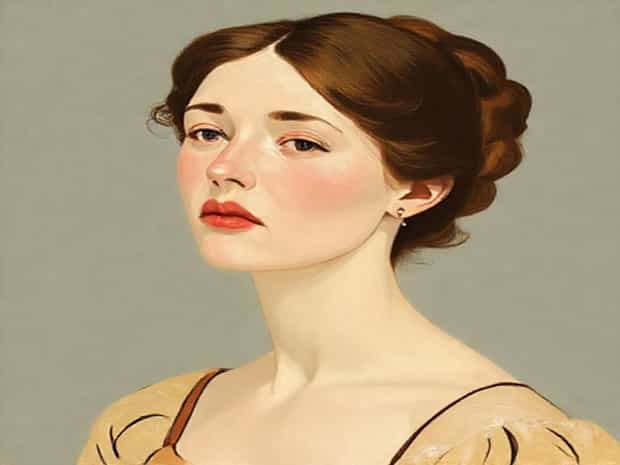
Mary Cassatt’s self-portrait is a remarkable representation of her talent, individuality, and the challenges she faced as a female artist in the late 19th century. Known for her impressionist works that often focused on women and children, Cassatt used her self-portrait to convey her identity and artistic sensibilities. This painting provides insight into her techniques, her approach to capturing human expression, and her engagement with the Impressionist movement. Studying her self-portrait allows viewers to understand the balance she struck between personal introspection and broader artistic experimentation, highlighting her unique contributions to art history.
Background of Mary Cassatt
Mary Cassatt was born in 1844 in Pennsylvania, United States, and later became one of the few American artists to join the French Impressionists. Her work is celebrated for its focus on domestic life, particularly the intimate relationships between mothers and children. Cassatt’s interest in modern life, combined with her mastery of pastel, oil, and printmaking techniques, positioned her as a significant figure in 19th-century art. Her self-portrait reflects both her confidence as an artist and the broader cultural context in which she worked, at a time when women were striving for recognition in a male-dominated art world.
Artistic Training and Influences
Cassatt studied art in Paris and was influenced by both traditional academic training and emerging Impressionist ideas. She encountered the works of Degas, Monet, and Renoir, and absorbed their techniques of light, color, and composition. However, she maintained a distinct voice, focusing on nuanced emotional expression and the everyday lives of women. Her self-portrait demonstrates her ability to combine these influences, using composition, brushwork, and color to communicate both her presence and her artistic philosophy.
Composition and Style of the Self-Portrait
In her self-portrait, Cassatt presents herself with a calm and introspective demeanor. The composition often centers on her face and upper body, highlighting her gaze and facial features with precision and subtlety. Unlike some of her contemporaries who used self-portraits for grandiose or dramatic statements, Cassatt’s approach is understated, emphasizing authenticity and self-reflection. This focus on simplicity allows viewers to connect with her personality and artistic identity without distraction.
Use of Color and Light
Cassatt’s self-portrait demonstrates her mastery of color and light. Soft, natural hues create a harmonious palette, while gentle contrasts highlight the contours of her face and clothing. The lighting is carefully arranged to enhance depth and dimension, drawing attention to key features without overwhelming the composition. This technique reflects her broader Impressionist sensibilities, which favored capturing the effects of light and atmosphere over rigid realism.
Brushwork and Technique
The brushwork in Cassatt’s self-portrait is both delicate and expressive. She applies paint in a way that suggests texture and form without excessive detail, allowing the viewer’s eye to complete the image. This approach aligns with her broader body of work, in which she used fluid, dynamic brushstrokes to convey movement and emotion. In her self-portrait, this technique adds a sense of immediacy and intimacy, emphasizing her personal connection to the artwork.
Symbolism and Personal Expression
Cassatt’s self-portrait is more than a visual likeness; it conveys her identity, aspirations, and artistic philosophy. Her pose, expression, and attire reflect her status as a professional woman and artist in a period when female autonomy was limited. The self-portrait communicates confidence, introspection, and determination, symbolizing her commitment to her craft and her place within the Impressionist movement.
Representation of Female Identity
As a woman in a male-dominated art world, Cassatt’s self-portrait carries significance beyond individual expression. It challenges conventional representations of women in art, presenting the artist as an independent, thoughtful professional rather than an objectified subject. By portraying herself with dignity and self-awareness, Cassatt contributes to a broader narrative about women’s evolving roles in society and the arts.
Reception and Impact
Mary Cassatt’s self-portrait has been recognized as a powerful statement of her artistic and personal identity. Art historians appreciate the work for its combination of technical skill, expressive brushwork, and psychological depth. The portrait also provides insight into Cassatt’s contributions to Impressionism and her efforts to capture intimate, everyday experiences with authenticity and sensitivity. Over time, the self-portrait has become a key example of how female artists navigated social and professional challenges while creating enduring art.
Legacy in Art History
The self-portrait is part of Cassatt’s broader legacy as an innovator in portraiture, domestic scenes, and printmaking. It exemplifies her ability to blend traditional techniques with Impressionist experimentation, and it serves as a testament to her influence on future generations of artists. The work continues to inspire scholars, students, and art lovers, highlighting the importance of self-representation, personal narrative, and artistic individuality in the history of art.
Techniques for Analyzing the Self-Portrait
- Observe the use of color and light to understand mood and focus.
- Examine brushstrokes to appreciate texture and movement.
- Consider the pose and expression as indicators of personal identity.
- Analyze the background and composition to explore the relationship between subject and space.
- Compare with her other works to identify stylistic consistencies and innovations.
Educational and Cultural Significance
Cassatt’s self-portrait is frequently studied in art history courses for its technical excellence and cultural implications. It provides a window into the challenges faced by female artists in the 19th century and their strategies for asserting professional authority. Additionally, the portrait illustrates the broader themes of Impressionism, including light, color, and everyday life, making it an essential example for understanding the movement’s objectives and aesthetics.
Influence on Modern Portraiture
Mary Cassatt’s approach to self-portraiture has influenced contemporary portrait artists who seek to balance realism, emotion, and personal identity. Her ability to convey individuality while engaging with broader artistic movements provides a model for integrating personal narrative with technical innovation. Today, her self-portrait continues to inspire artists and viewers, demonstrating the enduring power of thoughtful self-representation in art.
Mary Cassatt’s self-portrait is a masterful combination of technical skill, personal expression, and cultural significance. Through careful composition, subtle color use, and expressive brushwork, Cassatt captures her identity as a woman and an artist, reflecting both her personal experiences and her engagement with Impressionist ideals. The portrait challenges traditional notions of female representation, celebrates artistic individuality, and continues to influence both scholarship and contemporary practice. Studying this self-portrait allows viewers to appreciate Mary Cassatt’s enduring contributions to art, offering insight into her life, vision, and the broader historical and cultural context of her work.