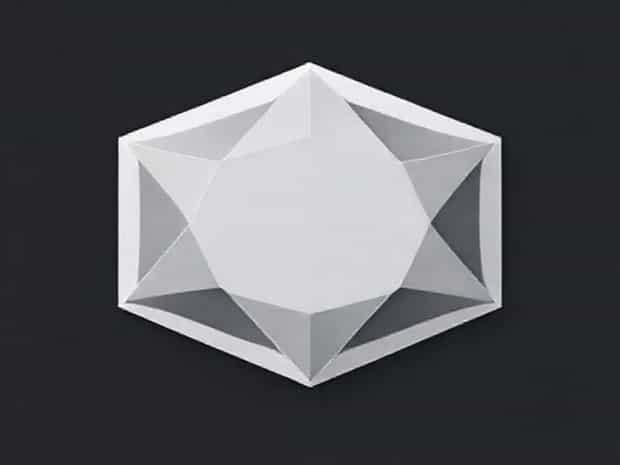
A pentagonal prism is a three-dimensional geometric shape that has fascinated mathematicians, students, and designers for centuries. It is a type of prism with two parallel and congruent pentagonal bases connected by rectangular faces. Understanding the meaning of a pentagonal prism is important in geometry, mathematics education, architecture, and various engineering applications. This shape demonstrates both symmetry and structure, offering insight into volume, surface area, and spatial reasoning. Its unique properties make it a versatile object for mathematical exploration, problem-solving, and practical applications, from classroom learning to real-world design.
Definition of a Pentagonal Prism
A pentagonal prism is a solid geometric figure with two congruent pentagonal faces as its bases and five rectangular faces connecting the corresponding sides of these pentagons. The term prism refers to any solid that has two parallel, congruent bases joined by rectangular or parallelogram faces. In the case of a pentagonal prism, the bases specifically have five sides, which gives it unique characteristics compared to triangular, hexagonal, or rectangular prisms. The pentagonal prism is classified as a polyhedron, meaning it is a three-dimensional shape with flat faces, straight edges, and vertices where edges meet.
Key Characteristics of a Pentagonal Prism
Understanding the properties of a pentagonal prism is essential for geometry and practical applications
- FacesA pentagonal prism has seven faces two pentagonal bases and five rectangular lateral faces.
- EdgesIt has 15 edges in total. Five edges form each pentagonal base, and five vertical edges connect the bases.
- VerticesThere are 10 vertices, with five on each pentagonal base.
- SymmetryThe shape exhibits reflective symmetry across certain planes and rotational symmetry around the axis connecting the bases.
- VolumeThe volume of a pentagonal prism can be calculated by multiplying the area of the pentagonal base by the height (distance between the bases).
- Surface AreaThe surface area includes the areas of the two pentagonal bases and the five rectangular faces, making it a combination of polygonal and rectangular calculations.
Mathematical Significance
In mathematics, pentagonal prisms serve as a fundamental example of a prism in three-dimensional geometry. They are used to teach concepts such as volume, surface area, Euler’s formula, and spatial visualization. The shape helps students understand the relationship between two-dimensional polygons and three-dimensional solids. By studying pentagonal prisms, learners develop critical thinking skills that are applicable in higher-level geometry, trigonometry, and engineering mathematics.
Calculating Volume
The volume of a pentagonal prism is determined using the formula
Volume = Area of base à Height
Where the area of the pentagonal base can be calculated using various methods, including dividing the pentagon into triangles or using a known formula for regular pentagons. Once the area is found, multiplying it by the height of the prism gives the total volume, which is useful in both theoretical and practical applications.
Calculating Surface Area
The surface area of a pentagonal prism includes the areas of the two pentagonal bases plus the areas of the five rectangular faces
Surface Area = 2 à Area of base + Perimeter of base à Height
This formula illustrates how geometry connects the two-dimensional properties of the base with the three-dimensional aspects of the prism, helping students and professionals solve real-world spatial problems.
Applications of Pentagonal Prisms
Beyond mathematics classrooms, pentagonal prisms appear in architecture, design, crystallography, and various engineering contexts. Their geometric properties make them ideal for constructing stable structures, designing decorative elements, and modeling natural phenomena.
Architecture and Design
Architects and designers use pentagonal prisms to create unique and aesthetically pleasing shapes in buildings, furniture, and art installations. The combination of pentagonal bases and rectangular faces allows for modular construction, efficient space utilization, and visual appeal. This shape can also inspire innovative roof designs, window structures, or sculptural elements that balance stability and creativity.
Crystallography and Chemistry
In crystallography, certain crystals form prism-like shapes, including pentagonal prisms, reflecting the internal arrangement of atoms and molecules. Studying these shapes helps scientists understand the symmetry, bonding, and properties of materials. In chemistry, modeling molecules or compounds as polyhedra, including pentagonal prisms, assists in visualizing spatial relationships and predicting chemical behavior.
Engineering and Manufacturing
Engineers and manufacturers utilize pentagonal prisms when designing components that require precise angles, stable bases, and uniform edges. They can be used in packaging, mechanical parts, or construction materials where geometric precision is necessary. Understanding the properties of pentagonal prisms ensures efficiency, accuracy, and structural integrity in these applications.
Visualization and Educational Value
For students, visualizing a pentagonal prism helps develop spatial reasoning and geometric intuition. Physical models, diagrams, and 3D software allow learners to rotate, manipulate, and explore the shape from different angles. This hands-on interaction reinforces understanding of faces, edges, vertices, and the relationship between 2D and 3D geometry. Teachers often use pentagonal prisms as examples to demonstrate formulas for volume, surface area, and symmetry, making abstract concepts more tangible and engaging.
Practical Classroom Activities
- Building ModelsStudents can construct physical models using cardboard or paper to observe faces, edges, and vertices.
- Exploring FormulasCalculate volume and surface area using real dimensions to connect theory with practice.
- Comparative AnalysisCompare pentagonal prisms with other prisms, such as triangular or hexagonal, to understand geometric differences and applications.
- 3D Visualization SoftwareUse digital tools to rotate and analyze the prism, enhancing understanding of spatial relationships.
Metaphorical and Symbolic Uses
Beyond mathematics and practical applications, the pentagonal prism can also be interpreted metaphorically. Its stability, symmetry, and structured form make it a symbol of balance, order, and strength. Artists, writers, and designers may use the prism to represent harmony, structural integrity, or even the combination of complexity and simplicity, reflecting its geometric properties in symbolic contexts.
The meaning of a pentagonal prism encompasses its definition as a three-dimensional geometric solid with two pentagonal bases and five rectangular faces, its mathematical properties, and its practical applications across multiple disciplines. Understanding its characteristics, including volume, surface area, edges, and vertices, allows students, educators, engineers, and designers to explore both theoretical and real-world uses. From classrooms to architecture, crystallography, and engineering, the pentagonal prism serves as an important example of geometry’s relevance in everyday life. Its combination of symmetry, structure, and visual appeal ensures that it remains a fascinating subject for study, teaching, and application, making the pentagonal prism a valuable and versatile geometric shape.