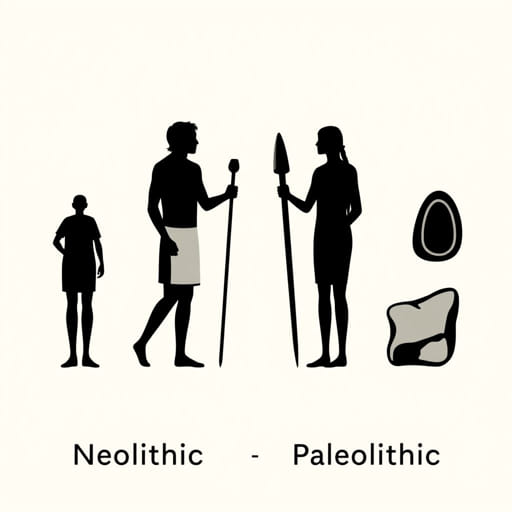
The Neolithic and Paleolithic periods are two of the most significant eras in human history, shaping early human society and culture in profound ways. Although these periods are often contrasted due to their differences in lifestyle, technology, and development, they also share key similarities. Understanding the parallels between the Neolithic and Paleolithic ages helps illuminate how early humans adapted to their environments, survived challenges, and laid the foundations for modern civilization. This topic explores the shared traits of these prehistoric times, highlighting their mutual contributions to human progress.
Overview of the Paleolithic and Neolithic Eras
Paleolithic Era
The Paleolithic period, or Old Stone Age, dates from approximately 2.5 million years ago to around 10,000 BCE. It was characterized by a hunter-gatherer lifestyle, where humans relied on hunting animals and gathering wild plants for food. Tools made from stone were the primary technology, and people lived in small, nomadic groups. Shelter was often temporary, and survival depended on mobility and resourcefulness.
Neolithic Era
The Neolithic period, or New Stone Age, began around 10,000 BCE and lasted until roughly 3,000 BCE, depending on the region. This era marked the advent of agriculture, permanent settlements, and significant advancements in technology. People began to domesticate plants and animals, develop pottery, and build more durable structures. Despite these changes, the Neolithic period maintained certain cultural and societal continuities with its Paleolithic predecessor.
Similarities in Daily Life and Survival
Dependence on Natural Resources
Both Neolithic and Paleolithic people heavily depended on their surrounding environment. In both periods, access to water, fertile land, game animals, and edible plants dictated where communities settled or traveled. Although Neolithic communities farmed, their crops were still highly affected by weather and climate, just as Paleolithic hunters and gatherers depended on seasonal cycles.
Use of Stone Tools
Stone remained a crucial material for tools in both periods. Paleolithic tools were primarily chipped stones used for hunting, cutting, or scraping. In the Neolithic period, stone tools became more refined and polished but still represented the continuation of a tradition that began during the Paleolithic. The gradual evolution of stone technology reflects a continuity in practical problem-solving using available materials.
Art and Symbolism
Artistic expression was present in both the Paleolithic and Neolithic ages. Paleolithic cave paintings, carvings, and figurines indicate that early humans had symbolic thought and spiritual beliefs. In the Neolithic era, art evolved to include pottery decoration, megalithic structures like Stonehenge, and permanent religious sites. These artistic forms demonstrate a shared human desire to represent the world, tell stories, and perhaps express religious ideas.
Spiritual Beliefs and Rituals
Burial Practices
Both eras show evidence of ritualistic burial practices. In the later stages of the Paleolithic period, graves often included tools, animal bones, and other offerings, suggesting a belief in an afterlife. Neolithic burials also contained grave goods, and burial sites were sometimes communal. These shared practices indicate a spiritual awareness and respect for the dead that persisted across both ages.
Connection to Nature
Spirituality in both periods was closely linked to the natural world. Paleolithic people likely worshiped natural elements like animals, sun, and water, while Neolithic societies often built shrines or temples aligned with celestial bodies. This continuity reflects the deep bond between early humans and their environment, guiding their religious and cultural expressions.
Social Structure and Community
Role of Family Units
In both the Paleolithic and Neolithic periods, family and kinship units were central to survival. Groups were organized around blood relations, and tasks such as food gathering, hunting, and childcare were shared within the group. Although Neolithic villages were larger and more settled, the concept of working together within a group remained unchanged from earlier times.
Cooperation and Division of Labor
Both periods required cooperation for survival. In the Paleolithic age, hunting large game involved coordinated group efforts. Similarly, Neolithic agriculture required joint work for planting, irrigation, and harvesting. These societies developed forms of labor division based on gender, age, and skill, reflecting a shared pattern of social organization across time.
Technological Innovation and Adaptation
Innovative Use of Environment
Humans in both periods demonstrated remarkable adaptability. Paleolithic people developed tools and fire to survive in cold climates, while Neolithic farmers built irrigation systems and storage facilities to improve agricultural productivity. This continuity in innovation shows that humans consistently sought to improve their conditions using the resources at hand.
Craftsmanship and Toolmaking
Though the level of complexity differed, craftsmanship was valued in both ages. Paleolithic artisans shaped flint into precise tools, while Neolithic people developed pottery, weaving, and improved weaponry. These skills were passed through generations, indicating the beginnings of education and specialized knowledge, traits common to both periods.
Communication and Language
Development of Early Language
Though written records did not exist in either period, spoken language was likely well developed by the late Paleolithic and certainly present in the Neolithic. The ability to communicate complex ideas, organize hunts, and teach new skills indicates a shared reliance on language for community building and knowledge transmission.
Storytelling and Oral Traditions
Storytelling was a vital tradition in both periods. Through oral narratives, early humans preserved history, myths, and cultural values. This practice was essential for maintaining identity and social cohesion and reflects the cognitive continuity of humans across different stages of development.
Lasting Impact of Shared Characteristics
Foundation of Human Culture
The similarities between the Neolithic and Paleolithic periods laid the groundwork for future civilizations. The use of tools, development of language, and formation of social bonds created a strong foundation upon which later societies would build more advanced systems. Despite changes in economy or technology, the essential elements of human life remained consistent.
Continuity of Human Spirit
Perhaps the most profound similarity between the Neolithic and Paleolithic periods is the unbroken thread of human spirit curiosity, adaptability, creativity, and the need for connection. Whether hunting mammoths or planting wheat, early humans faced the world with determination and resilience that continues to inspire us today.
While much emphasis is placed on the differences between the Paleolithic and Neolithic eras, their similarities offer valuable insight into the unchanging aspects of human life. From reliance on natural resources and shared social structures to spiritual beliefs and tool use, both periods reflect the fundamental nature of early human civilization. Exploring these commonalities deepens our understanding of human history and the enduring qualities that have shaped our species over thousands of years.