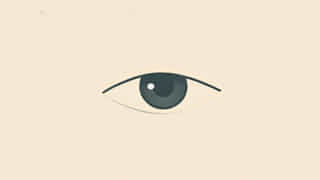
Paul Klee, a Swiss-German painter and theorist, once described his artistic process with the words One eye sees, the other feels. This phrase, both poetic and profound, encapsulates the duality of his creative vision where rational observation meets emotional interpretation. Klee’s work is often viewed through the lens of abstraction and modernism, but it is his unique perspective on perception and emotion that truly defines his legacy. To understand Klee is not simply to look at his paintings, but to feel them, to let the visual language awaken a deeper sense of meaning within the viewer.
Understanding the Duality of Vision
When Paul Klee said one eye sees, the other feels, he wasn’t merely referring to a physical phenomenon. Rather, he was expressing the core of his artistic philosophy. The eye that ‘sees’ relates to the structured, analytical, and technical side of art its forms, colors, composition. The eye that ‘feels’ delves into intuition, emotion, and the spiritual resonance of the work.
Perception Beyond the Surface
For Klee, perception was not just about accurate depiction. Instead, it was about revealing inner truths, the invisible rhythms of life. His paintings often bypass realism entirely, favoring symbolic forms, abstract gestures, and childlike simplicity. This visual language invites the viewer to experience art as a multidimensional expression part intellect, part soul.
The Role of Emotion in Visual Art
Klee believed that emotional engagement was essential to the act of creation. The artist, he claimed, should not just reproduce what is visible but must make the invisible visible. Feelings, ideas, and even memories could be transcribed onto canvas in ways that defy literal interpretation. His paintings evoke dreamlike states, where the logical blends with the lyrical, and geometry dances with spontaneity.
Klee’s Artistic Evolution
Paul Klee’s career was marked by constant experimentation. From his early involvement with Der Blaue Reiter to his teaching at the Bauhaus, Klee embraced a wide range of influences. He was deeply inspired by music, nature, and the art of children and the mentally ill each informing his use of symbols and forms.
From Figuration to Abstraction
Though trained in traditional drawing, Klee quickly grew disillusioned with academic norms. He turned instead toward abstraction, using bold lines, whimsical shapes, and color fields to evoke emotion and mystery. Many of his works, such as Twittering Machine and Senecio, seem deceptively simple at first glance, but upon closer inspection, they reveal layers of conceptual depth.
Color as Language
One of Klee’s most groundbreaking contributions was his exploration of color theory. Influenced by Goethe and his own experiments, Klee used color not just as decoration but as a tool for expression. In his work, colors communicate emotions and moods. Warm hues might suggest joy or vitality, while cooler tones convey tranquility or melancholy. His sensitivity to color proves that one eye indeed feels.
The Metaphor of the ‘Feeling Eye’
In a world increasingly dominated by science and reason, Klee’s feeling eye was a powerful counterpoint. It acknowledged the validity of intuition and the importance of empathy in interpreting the world. He saw the artist not as a mirror, but as a medium a conduit between unseen forces and visible reality.
Art as a Spiritual Medium
Klee’s works often suggest metaphysical themes. He was fascinated by the concept of the soul and the spiritual realm. His paintings incorporate motifs such as angels, stars, and mysterious architectural forms that hint at otherworldliness. These elements aren’t random they reflect a belief that art can transcend the material and reach into the divine.
Symbols and Signs in Klee’s Work
Many of Klee’s paintings include hieroglyphic-like marks or mysterious pictographs. These symbols, though invented, carry a universal quality that suggests meaning beyond language. They draw the viewer into an interpretive act, engaging both the eye that sees and the one that feels. This interplay creates a personal relationship between the artwork and the observer.
Klee’s Influence on Modern Art
The legacy of Paul Klee can be seen in numerous movements, from Abstract Expressionism to contemporary graphic design. Artists across the globe have drawn inspiration from his fearless innovation and his insistence that art must communicate more than what meets the eye.
Teaching at the Bauhaus
As a teacher at the Bauhaus, Klee influenced a generation of young artists and architects. His lectures emphasized the importance of structure, color dynamics, and emotional resonance. He often used poetic language in his notes, encouraging students to see art as an organic process. His pedagogical impact is still studied today.
Global Artistic Dialogue
Because of his wide-ranging interests and stylistic diversity, Klee’s art resonates across cultures. His fascination with North African landscapes, his admiration for non-Western art forms, and his open approach to visual experimentation allowed his work to serve as a bridge between traditions. His vision was both deeply personal and universally human.
The Enduring Power of a Feeling Eye
Even today, Klee’s philosophy challenges how we engage with visual art. In an era of digital images and rapid consumption, taking time to feel rather than just see has become an act of resistance. Klee’s paintings remind us that art is not only about representation, but also about connection, reflection, and transformation.
Experiencing Klee in the Present
Visiting a Paul Klee exhibition, or even viewing his work in a book or online, is often a quiet revelation. His art doesn’t shout; it whispers, it sings, it speaks in silent tones to the part of us that seeks meaning beyond words. Whether it’s the playful geometry of Castle and Sun or the ethereal quality of Ad Parnassum, his paintings invite slow, careful contemplation. One eye may analyze the structure, but the other is drawn to the emotion embedded within the forms.
Paul Klee’s phrase one eye sees, the other feels is more than a poetic observation it is a manifesto. It speaks to the dual nature of human perception and the multifaceted role of the artist. Klee’s work continues to engage, puzzle, and move audiences because it doesn’t cater solely to logic or emotion, but instead weaves them together in a harmonious dance. In the end, his art teaches us to trust our feelings as much as our eyes, and in doing so, it opens a richer, more profound way of experiencing the world.