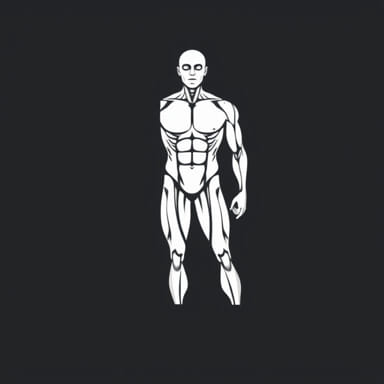
The external oblique muscle is one of the most important muscles of the abdominal wall. It plays a key role in trunk rotation, lateral flexion, and overall core stability. Its contribution to posture, breathing, and movement makes it vital for both athletic performance and daily activities. A thorough understanding of its origin, structure, and functional significance helps in clinical practice, physiotherapy, sports training, and anatomy education. One of the foundational aspects of this muscle is its anatomical origin, which provides the starting point for its mechanical action.
Overview of the External Oblique Muscle
Location and Orientation
The external oblique is the most superficial of the three flat abdominal muscles. It is positioned on the lateral and anterior parts of the abdomen, covering the sides of the torso and extending from the ribs down to the pelvis. It lies superficial to the internal oblique and transverse abdominal muscles.
Structure and Shape
The muscle fibers of the external oblique run in a downward and medial direction, forming a hands-in-pockets orientation. This fiber direction is significant in understanding how the muscle functions and interacts with adjacent anatomical structures.
Origin of the External Oblique Muscle
Primary Origin Points
The external oblique muscle originates from theexternal surfaces of the fifth to twelfth ribs. These origin points are spread across the lower thoracic cage, anchoring the muscle firmly to the rib bones.
- Ribs 512: The muscle originates via eight separate slips, each attached to one of these ribs.
- Interdigitation: The upper slips interdigitate with the serratus anterior muscle, while the lower slips interdigitate with the latissimus dorsi.
This broad origin allows the external oblique to influence both the movement of the trunk and the stability of the lower ribs during respiration and motion.
Anatomical Significance of the Origin
Because the external oblique arises from a wide span of ribs, it has a large surface area for force generation. This design allows for effective contraction during a variety of trunk movements, including:
- Trunk flexion
- Rotation to the opposite side
- Lateral bending of the torso
Muscle Fiber Direction from Origin
From their origin on the ribs, the muscle fibers travel obliquely downward and medially toward their insertion points on the linea alba, pubic tubercle, and anterior iliac crest. This diagonal orientation plays a critical role in rotational and lateral stability.
Insertion and Functional Connection
Insertion Points
After originating from the ribs, the fibers of the external oblique converge and insert into:
- Linea alba: A fibrous structure running down the midline of the abdomen
- Pubic tubercle: A bony prominence on the pubic bone
- Anterior half of the iliac crest: The top of the hip bone
Aponeurosis
The lower portion of the muscle forms a broad, flat tendon called an aponeurosis. This structure contributes to the formation of the rectus sheath and the inguinal ligament, both of which are essential for abdominal support and protection.
Functions Related to the Origin
Trunk Movements
The location of the origin on the ribs allows the external oblique to perform powerful trunk movements:
- Flexion: Bending the trunk forward
- Rotation: Twisting the trunk to the opposite side of the active muscle
- Lateral flexion: Bending the trunk sideways
Postural Support
The origin on the ribs helps stabilize the thoracic cage, especially during activities that require core engagement such as lifting, twisting, or maintaining posture. The external oblique also assists in compressing abdominal contents, aiding in actions like forced expiration, coughing, and bowel movements.
Coordination with Other Muscles
The external oblique works closely with:
- Internal oblique: Lies just underneath and runs in the opposite direction, aiding in trunk rotation and compression
- Rectus abdominis: Helps in trunk flexion
- Transversus abdominis: Assists in abdominal compression and core stability
The origin on the ribs allows seamless integration with these muscles to provide coordinated and efficient movement.
Clinical Relevance of the Origin
Injury and Strain
Muscle strain in the external oblique often occurs at or near the origin, especially in athletes involved in twisting or swinging motions (e.g., tennis players, golfers). Symptoms may include localized pain over the lower ribs and difficulty rotating the torso.
Palpation and Examination
Clinicians may palpate the external oblique near its rib origin to assess muscle tone, detect tenderness, or identify asymmetry. This area is also relevant in diagnosing abdominal wall injuries or hernias.
Surgical Considerations
During certain abdominal surgeries, the external oblique may be incised or retracted. Knowledge of its origin helps surgeons avoid excessive damage and ensures proper muscle reattachment and healing.
Training and Strengthening
Targeted Exercises
Several exercises engage the external oblique, especially from its rib origin:
- Side crunches
- Russian twists
- Standing oblique bends
- Bicycle crunches
These exercises strengthen the muscle fibers from the origin at the ribs down to the pelvis, improving posture, balance, and athletic performance.
Stretching Techniques
Stretching the external oblique involves side bends and rotational stretches that lengthen the muscle from its rib origin. Gentle stretching improves flexibility and reduces the risk of injury.
Development and Variation
Embryological Origin
The external oblique muscle develops from the mesodermal layer of the embryo, like most skeletal muscles. It starts forming during early fetal development and differentiates as part of the lateral body wall musculature.
Anatomical Variations
While the general origin from ribs 512 is consistent, minor anatomical variations in muscle fiber attachments or interdigitation with neighboring muscles can occur. These variations are usually asymptomatic but may be observed in detailed anatomical studies or during surgery.
The origin of the external oblique muscle at the external surfaces of ribs 5 through 12 is crucial to its structure, function, and role in human movement. From this broad and strategic starting point, the muscle extends downward to contribute to core stability, trunk rotation, and lateral flexion. Whether in clinical settings, athletic training, or anatomical study, understanding this origin provides valuable insight into how the external oblique supports and moves the body. Its role in health, performance, and rehabilitation highlights its importance in both everyday life and specialized physical activities.