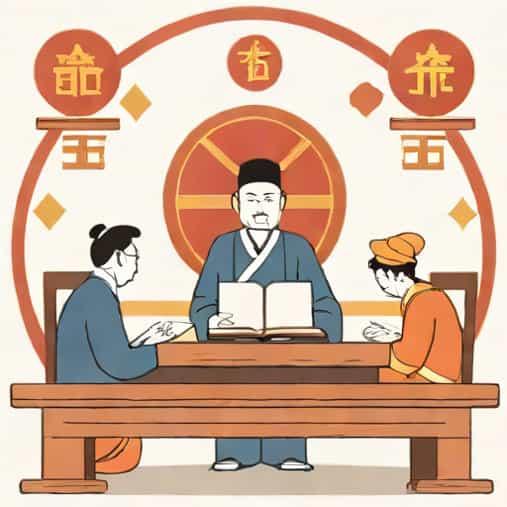
The civil service exam and Confucianism have been deeply intertwined in shaping the administrative and cultural landscape of China for centuries. The civil service examination system, established to select government officials based on merit rather than birthright, was heavily influenced by Confucian principles. This system not only provided a pathway for social mobility but also ensured that bureaucrats were educated in moral philosophy, ethics, and governance aligned with Confucian ideals. Understanding the role of Confucianism in the civil service exam sheds light on how education, morality, and governance were interconnected in traditional Chinese society.
The Origins of the Civil Service Exam
The civil service examination system, known as the keju system, was formalized during the Sui (581-618 CE) and Tang (618-907 CE) dynasties. Its purpose was to identify talented individuals capable of serving in government positions. Prior to the establishment of the exams, government positions were often inherited or granted based on noble status, which limited opportunities for capable commoners. The introduction of examinations opened a meritocratic path, allowing educated individuals, regardless of family background, to enter public service.
Structure of the Exam
The civil service exam was highly structured, with multiple levels that tested candidates on Confucian classics, poetry, calligraphy, and essay writing. The exams were divided into local, provincial, and national levels, and successful candidates could advance to higher administrative positions. The focus on Confucian texts ensured that officials were not only competent in governance but also imbued with moral and ethical values that were central to Confucian thought.
Confucianism and Its Principles
Confucianism, founded by Confucius in the 5th century BCE, emphasizes ethics, morality, social harmony, and proper governance. Key principles include filial piety, loyalty, righteousness, and benevolence. These values were considered essential for governing a state effectively, as rulers and officials were expected to act with moral integrity and lead by example. Confucian philosophy places great importance on education, self-cultivation, and ethical leadership, making it a natural foundation for the civil service examination system.
Moral and Ethical Education
The civil service exam tested candidates not only on literary and analytical skills but also on their understanding of moral and ethical principles derived from Confucianism. Key texts, such as the Analects, the Book of Mencius, and the Classic of Rites, provided guidance on how to conduct oneself ethically in both public and private life. By grounding the exams in these texts, the state ensured that officials were trained to prioritize justice, integrity, and the welfare of the people.
Social Harmony and Governance
Confucianism emphasizes social harmony and the proper ordering of relationships, from family to state. Civil servants educated in Confucian thought were expected to apply these principles in governance, maintaining order, and promoting the common good. Policies were ideally shaped by moral reasoning, and officials were encouraged to act as ethical role models for the populace. This philosophical framework reinforced the idea that government was a moral institution as well as an administrative one.
The Role of the Civil Service Exam in Society
The civil service exam served multiple functions beyond selecting government officials. It acted as a social equalizer, a cultural unifier, and a mechanism for disseminating Confucian values throughout the empire.
Pathway for Social Mobility
The examination system provided commoners with an opportunity to rise in social and political status based on merit. Talented individuals from modest backgrounds could achieve prestigious positions if they excelled in the exams. This meritocratic aspect reinforced the value of education and encouraged a culture of learning across social classes. Families invested heavily in the education of their children, hoping that success in the exams would secure social advancement and political influence.
Promotion of Confucian Ideals
By focusing on Confucian texts, the civil service exams promoted the spread of Confucian values throughout Chinese society. Scholars and officials trained in these principles acted as educators, advisors, and moral exemplars. Their actions and decisions were expected to reflect Confucian virtues, thereby reinforcing social norms and ethical standards across the population. The exam system effectively ensured that the principles of Confucianism were embedded in governance and daily life.
Standardization of Government Competence
The civil service exams helped standardize the selection of capable officials. Candidates were assessed on their knowledge of classical texts, analytical skills, and ability to write coherent and persuasive essays. This uniformity ensured that officials across different regions shared a common educational and philosophical foundation, which contributed to consistent administration and governance. The alignment of moral and administrative competence with Confucian principles was intended to reduce corruption and promote effective leadership.
Impact on Chinese History and Culture
The influence of the civil service exam and Confucianism extended far beyond the bureaucracy. It shaped Chinese educational systems, social structures, and cultural values for centuries.
Educational Emphasis
The exam system reinforced the central role of education in Chinese society. Schools, academies, and tutoring systems developed to prepare students for the rigorous examinations. This emphasis on learning nurtured a literate, knowledgeable, and philosophically informed elite capable of guiding both local and imperial administration. Education became a highly respected pursuit, and scholarly achievement was seen as a reflection of moral virtue.
Meritocracy and Governance
Merit-based selection through exams influenced governance by creating a bureaucracy theoretically staffed by competent and morally educated officials. While nepotism and favoritism sometimes persisted, the civil service exam established a model where intellectual ability and ethical understanding were prioritized. This system allowed for more stable administration, reduced the dominance of hereditary aristocracy, and contributed to the long-term resilience of the Chinese state.
Enduring Cultural Legacy
The legacy of the civil service exams and Confucian education continues to influence modern societies in East Asia. Countries such as China, South Korea, and Vietnam have historically adopted variations of Confucian-based examinations to select civil servants. Beyond formal governance, the emphasis on education, moral integrity, and ethical leadership remains a cultural hallmark, reflecting the enduring impact of Confucian principles in shaping societal values.
Challenges and Criticisms
Despite its achievements, the civil service exam system faced criticism and challenges. The focus on rote memorization of classical texts sometimes limited creativity and practical problem-solving skills. Additionally, preparing for the exams required significant time and resources, favoring those from wealthier families and perpetuating social inequality in certain cases. Nevertheless, the integration of Confucian ethics into the examination process provided a moral framework that guided the governance and administration of the empire.
Modern Perspectives
Today, the civil service exam and Confucian ideals are studied as part of China’s historical development. Scholars examine how this system contributed to social stability, bureaucratic competence, and cultural continuity. While contemporary civil service systems worldwide have evolved beyond Confucian-based exams, the principles of meritocracy, ethical leadership, and the value of education remain highly relevant.
The civil service exam and Confucianism played a crucial role in shaping Chinese governance, society, and culture. By selecting officials based on knowledge of Confucian texts, moral integrity, and analytical ability, the exam system ensured that the bureaucracy reflected ethical principles and scholarly competence. This system promoted social mobility, standardized government administration, and embedded Confucian values throughout society. Despite its limitations, the civil service exam exemplifies the enduring influence of Confucianism on education, governance, and cultural identity. Understanding this historical interplay provides valuable insights into how philosophy, education, and merit-based selection can collectively shape effective and ethical governance systems.