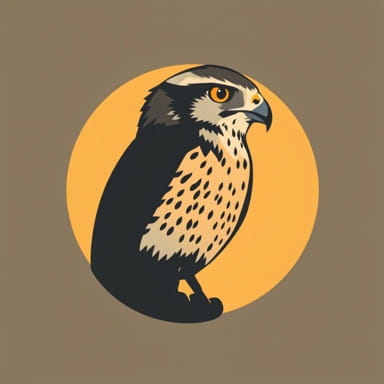
Known for their agility and speed, sharp-shinned hawks are among the most fascinating birds of prey found across North and Central America. Their stealthy hunting behavior, small size, and sharp talons make them formidable predators in wooded habitats. Belonging to a specific genus within the Accipitridae family, these hawks offer valuable insight into raptor evolution, behavior, and conservation. Exploring the sharp-shinned hawk genus not only reveals their scientific classification but also deepens our understanding of their ecological significance and how they differ from other hawks within their family group.
Taxonomic Classification
Understanding the Genus Accipiter
Sharp-shinned hawks belong to the genusAccipiter, which is a group of small to medium-sized hawks often referred to as woodland or true hawks. This genus is characterized by short, broad wings and long tails, adaptations that support maneuverability through dense forests.
- Kingdom: Animalia
- Phylum: Chordata
- Class: Aves
- Order: Accipitriformes
- Family: Accipitridae
- Genus: Accipiter
- Species:Accipiter striatus(Sharp-shinned hawk)
The genusAccipitercontains more than 50 species worldwide, including the goshawk and Cooper’s hawk. Among them, the sharp-shinned hawk is the smallest and is commonly found throughout North America.
Characteristics of the Genus Accipiter
Shared Morphological Traits
All members of theAccipitergenus share distinct anatomical features that make them excellent forest hunters. These traits have evolved to support silent flight and quick acceleration, essential for ambushing prey.
- Rounded wings for fast maneuverability
- Long, narrow tails used for sharp directional changes
- Hooked beaks for tearing flesh
- Keen eyesight for spotting prey from a distance
These features make sharp-shinned hawks efficient at chasing and capturing small birds in flight, often surprising them midair in thick foliage.
Behavioral Adaptations
The behavior ofAccipiterhawks reflects their evolutionary adaptations. They are typically solitary, secretive, and extremely agile. Sharp-shinned hawks display many of these genus-wide characteristics.
- Silent stalkers that wait patiently before striking
- Rely on surprise and speed rather than soaring
- Build nests in densely forested areas to avoid predators
These behavioral traits are consistent across mostAccipiterspecies, though they can vary slightly depending on habitat and geographic location.
Sharp-shinned Hawk Specifics
IdentifyingAccipiter striatus
The sharp-shinned hawk (Accipiter striatus) is one of the most common members of its genus in North America. Despite its small size, it is a powerful hunter. It is often confused with the slightly larger Cooper’s hawk, another member of the same genus.
- Size: 9 to 13 inches in length with a wingspan of 17 to 22 inches
- Plumage: Slate gray upperparts, with reddish-barred underparts
- Eyes: Bright yellow to red-orange as they age
- Tail: Squared-off tip with dark bands
These birds are more frequently seen during migration seasons, when they pass through open areas on their way to and from Central America.
Distribution and Habitat
Sharp-shinned hawks are found in a variety of wooded environments, including coniferous forests, deciduous woodlands, and even suburban parks with enough cover for nesting and hunting.
- Breeding range includes Canada and northern United States
- Wintering range extends into Central America and the Caribbean
- Prefer dense canopies for nesting to avoid detection
Their adaptability to different forest types has helped them maintain stable populations despite some environmental challenges.
Diet and Hunting Techniques
Prey Preferences
Like others in theAccipitergenus, sharp-shinned hawks feed primarily on smaller birds. Their quick bursts of speed and stealth make them highly successful hunters in complex environments.
- Common prey includes sparrows, finches, and warblers
- Occasionally feed on insects, rodents, and reptiles
- Known to hunt near bird feeders, taking advantage of concentrations of prey
These hawks often use a strategy of concealment followed by a short, explosive chase, relying on their reflexes and precision to capture fast-moving prey.
Feeding Behavior
Once a sharp-shinned hawk captures its prey, it carries it to a secluded perch to pluck feathers and eat. Their strong talons are crucial in subduing live prey quickly and efficiently.
- Usually eat alone and in private
- Often consume prey headfirst
- Can cache uneaten portions in branches
This methodical and secretive feeding style is typical of theAccipitergenus and contributes to the difficulty of observing them in the wild.
Breeding and Life Cycle
Nesting Behavior
Sharp-shinned hawks are known for their careful nesting habits. Nest sites are typically located high in coniferous or mixed forests, built well out of human sight.
- Nests constructed from sticks and lined with bark or greenery
- Located 20 to 60 feet above the ground
- Females lay 3 to 5 eggs, incubated for about 30 days
After hatching, chicks are fed by both parents, although the female handles most brooding while the male hunts and brings food.
Juvenile Development
Young sharp-shinned hawks fledge about 3 to 4 weeks after hatching. During this time, they rapidly develop their hunting skills by observing their parents and practicing flight in safe areas.
- Juveniles have brown plumage with streaked underparts
- They become independent within a few weeks after fledging
- Reach maturity within one year
Once fully grown, they begin to establish their own hunting territories and follow the same migratory patterns as adults.
Conservation and Threats
Population Status
Sharp-shinned hawks are currently not considered endangered, but they are monitored due to their sensitivity to environmental changes. Being top predators, they are indicators of ecosystem health.
- Stable populations throughout much of their range
- Protected under the Migratory Bird Treaty Act in the U.S.
- Occasional declines due to habitat loss and pesticide exposure
Long-term data from bird banding stations and migration counts help track changes in population trends and ensure conservation efforts remain effective.
Conservation Efforts
Ongoing conservation programs aim to protect forested habitats, reduce pesticide use, and educate the public about raptor ecology.
- Forest preservation is key to breeding success
- Public awareness discourages illegal trapping
- Citizen science initiatives help monitor migration routes
Understanding the sharp-shinned hawk’s genus, behavior, and ecological role can help build support for long-term raptor conservation.
The sharp-shinned hawk, a member of the genusAccipiter, is a remarkable bird of prey that showcases nature’s efficiency in design and behavior. Its place within the broader taxonomy of raptors highlights important evolutionary traits shared with its relatives, while its specific lifestyle illustrates the adaptability and intelligence of forest-dwelling hawks. By preserving their habitats and learning more about their genus, we not only protect these fascinating birds but also contribute to the health and balance of forest ecosystems worldwide.