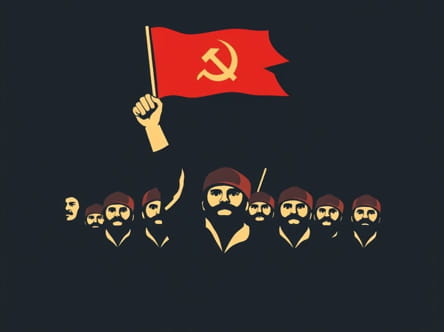
Leninist communism emerged as a revolutionary ideology in the early 20th century, transforming the political landscape of Russia and influencing leftist movements across the world. At its core, Leninism advocated for a vanguard party to lead the proletariat revolution, a dictatorship of the proletariat, and centralized planning. The supporters of Leninist communism were not limited to Russia but extended throughout Europe, Asia, Africa, and Latin America. These individuals, groups, and parties believed in Marxist-Leninist principles and worked to implement them through revolution, governance, and ideological propagation.
Key Characteristics of Leninist Communism
Ideological Foundations
Leninism built upon the writings of Karl Marx and Friedrich Engels, but Vladimir Lenin adapted their ideas to the conditions of Tsarist Russia. He emphasized the necessity of a tightly organized party, professional revolutionaries, and violent revolution to seize power from the bourgeoisie. Leninist supporters believed that only through such measures could socialism be established and the working class be liberated.
Global Influence
Lenin’s ideas became the official ideology of the Soviet Union after the 1917 October Revolution. As a result, many communist parties around the world adopted Leninism, creating an international network of supporters who aligned with the Soviet model.
Prominent Supporters in Russia
Bolsheviks
The primary supporters of Leninist communism were the Bolsheviks, a faction of the Russian Social Democratic Labour Party. The Bolsheviks, under Lenin’s leadership, led the October Revolution and formed the foundation of the Soviet state.
- Leon Trotsky A key Bolshevik leader, Trotsky was instrumental in organizing the Red Army and promoting world revolution.
- Joseph Stalin Initially a loyal supporter of Lenin, Stalin rose to power after Lenin’s death and implemented a version of Leninism known as Stalinism.
- Grigory Zinoviev Head of the Communist International (Comintern) and a close ally of Lenin.
- Lev Kamenev Member of Lenin’s inner circle and an early supporter of the Soviet state.
Supporters in Other Nations
Europe
Leninist communism found widespread support in European countries, particularly in the aftermath of World War I and II, as many workers and intellectuals sought alternatives to capitalism and fascism.
- Rosa Luxemburg Although critical of certain Leninist tactics, she supported the proletarian revolution and shared common Marxist ideals.
- Ernst Thälmann Leader of the German Communist Party, a strong proponent of Leninist principles.
- Palmiro Togliatti Head of the Italian Communist Party and supporter of the Soviet line.
- Georges Marchais Prominent leader of the French Communist Party during the Cold War era.
Asia
Leninist communism was particularly influential in Asia, inspiring numerous revolutions and communist governments.
- Mao Zedong Leader of the Chinese Communist Party who adapted Leninism into Maoism for China’s conditions.
- Ho Chi Minh Vietnamese revolutionary who led the fight against colonial rule and later established a Leninist state in North Vietnam.
- Kim Il-sung Founder of North Korea and a staunch follower of Soviet-style communism.
- Pol Pot Leader of the Khmer Rouge in Cambodia, who implemented an extreme and violent form of Leninist-Marxist ideology.
Latin America
In Latin America, Leninist ideals gained traction among revolutionary movements fighting against dictatorship and imperialism.
- Fidel Castro Cuban revolutionary leader who established a communist government aligned with the USSR.
- Che Guevara Argentine Marxist revolutionary who promoted Leninist principles throughout Latin America and Africa.
- Salvador Allende While more moderate, he drew influence from Marxist-Leninist ideology in Chile’s democratic socialist experiment.
Africa
Several African leaders embraced Leninist communism as a pathway to post-colonial development and state-building.
- Agostinho Neto Leader of Angola’s MPLA, a Marxist-Leninist party backed by the USSR.
- Samora Machel First President of Mozambique, aligned with Soviet policies and principles.
- Thomas Sankara President of Burkina Faso who admired Marxist-Leninist ideals and applied them in his revolutionary governance.
Organizations and Institutions
The Comintern
The Communist International, or Comintern, was founded in 1919 under Lenin’s direction to spread world revolution. It provided ideological and logistical support to communist parties worldwide and was instrumental in coordinating Leninist supporters.
Communist Parties
Throughout the 20th century, numerous communist parties declared allegiance to Leninist communism, including:
- Communist Party of the Soviet Union (CPSU)
- Communist Party of China (CPC)
- Communist Party of Vietnam (CPV)
- Communist Party of Cuba (PCC)
- Workers’ Party of Korea (WPK)
Legacy of Leninist Communism
Enduring Influence
Despite the collapse of the Soviet Union, Leninist ideology continues to influence governments and parties in several countries. The Communist Party of China remains the ruling party in the world’s most populous nation, while Cuba and North Korea still follow versions of Leninist governance.
Criticism and Controversy
Leninist communism has been criticized for promoting authoritarianism, suppressing dissent, and causing economic inefficiency. However, its supporters argue that it was a necessary response to capitalist exploitation and imperialism.
Modern Revival
In the 21st century, leftist movements in various countries occasionally reference Leninist principles, particularly those emphasizing anti-imperialism, class struggle, and state-led economic planning.
Supporters of Leninist communism shaped the global political order throughout the 20th century. From revolutionary leaders and political parties to workers’ movements and intellectuals, these supporters played a crucial role in spreading and implementing Leninist ideas. While the influence of Leninism has diminished in some parts of the world, its legacy remains significant in shaping political ideology, governance, and historical discourse worldwide.