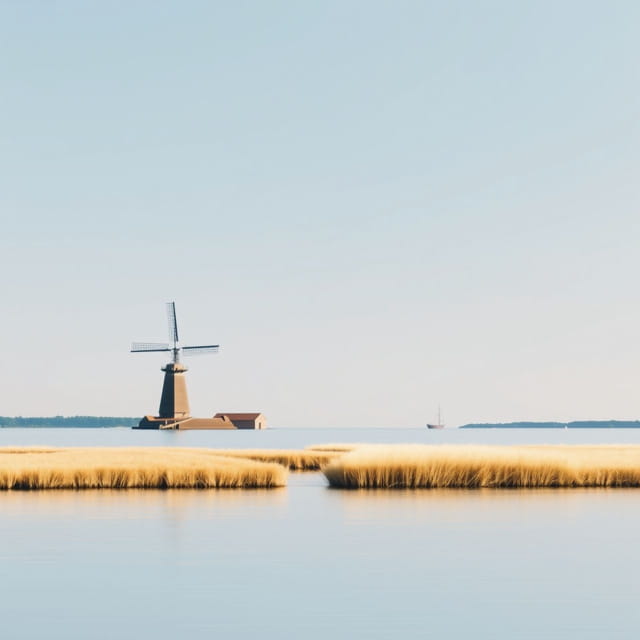
The IJsselmeer, Zuiderzee, and the historic town of Enkhuizen represent a unique and captivating part of the Netherlands. This area holds a rich history, shaped by the Dutch people’s enduring relationship with water. Once an inland sea known as the Zuiderzee, the region was transformed in the 20th century into the freshwater lake now called the IJsselmeer. Enkhuizen, situated on the western edge of this former sea, developed as a significant port and fishing center, and today it still preserves much of its maritime heritage. Exploring these interconnected locations provides insight into Dutch water management, regional history, and cultural identity.
The Transformation from Zuiderzee to IJsselmeer
Historical Background of the Zuiderzee
The Zuiderzee was once a shallow bay of the North Sea, stretching deep into the heart of the Netherlands. For centuries, it played a crucial role in Dutch trade, fishing, and naval power. Towns like Enkhuizen, Hoorn, and Medemblik flourished along its shores. However, the Zuiderzee was also a source of devastating floods, especially during storm surges that penetrated the low-lying lands.
In the late 19th and early 20th centuries, the Dutch began considering how to reduce the risk of flooding and reclaim land for agriculture. The solution came in the form of the Zuiderzee Works, one of the most ambitious engineering projects in Dutch history.
Creation of the IJsselmeer
In 1932, the Afsluitdijk a massive causeway was completed, effectively cutting off the Zuiderzee from the North Sea. This caused the saltwater sea to slowly turn into a freshwater lake, which was renamed the IJsselmeer. Over time, several polders were created, expanding usable land for farming and settlement. The transition marked a monumental shift in the Netherlands’ geography, economy, and water management systems.
The Significance of Enkhuizen
Maritime Heritage and Historic Role
Enkhuizen was one of the most important cities during the Dutch Golden Age. In the 17th century, it served as a major port for the Dutch East India Company (VOC). Its harbor bustled with ships trading goods from Asia, Africa, and the Americas. Fishing, particularly for herring, also contributed to its prosperity. The wealth accumulated during this period is still visible in the town’s architecture, including canals, warehouses, and merchant houses.
Modern-Day Enkhuizen
Today, Enkhuizen is a charming and well-preserved town that attracts visitors with its rich cultural offerings. The Zuiderzeemuseum is a major attraction, where visitors can learn about life around the Zuiderzee before it became the IJsselmeer. The museum includes an open-air section with traditional buildings, craftspeople in period dress, and exhibits showing how people lived and worked in coastal communities.
- The Drommedaris, a 16th-century defense tower
- The Westerkerk, a large Protestant church dating back to 1470
- Harbors and marinas that remain active for sailing and leisure boating
Enkhuizen’s railway and ferry connections make it accessible and a convenient base for exploring the IJsselmeer region.
Life Around the IJsselmeer
Ecology and Environment
As a freshwater lake, the IJsselmeer supports a different ecosystem than the former Zuiderzee. It provides an essential habitat for numerous bird species, both migratory and native. The lake also plays a crucial role in regulating water levels in the central Netherlands. It serves as a reservoir and buffer zone during periods of heavy rainfall or drought, reflecting the sophistication of Dutch hydraulic engineering.
Recreation and Tourism
The IJsselmeer is popular for recreational activities, including sailing, fishing, and birdwatching. Towns along the lake offer waterfront promenades, beaches, and marinas. Enkhuizen, in particular, serves as a gateway to water-based adventures. Boats regularly depart from its harbors to nearby destinations such as Medemblik and Stavoren, providing scenic views and cultural exchanges between historic towns.
Legacy of the Zuiderzee Works
Engineering Marvels
The transformation of the Zuiderzee into the IJsselmeer is considered a triumph of Dutch engineering. The Afsluitdijk remains one of the most iconic structures in the country. Stretching over 30 kilometers, it serves not only as a dam but also as a roadway connecting the provinces of North Holland and Friesland. Its construction required advanced techniques and long-term planning, setting a global example for large-scale water projects.
Social and Economic Impact
Beyond protecting the inland regions from floods, the IJsselmeer project brought new opportunities. The creation of polders provided land for farming and housing. However, it also marked the end of traditional fishing practices in the Zuiderzee, affecting many communities. Towns like Enkhuizen adapted by shifting toward tourism and heritage preservation. Today, the region benefits from a blend of historical value and modern innovation.
Preserving History and Looking Forward
Cultural Importance
Efforts to preserve the legacy of the Zuiderzee and the town of Enkhuizen continue through museums, events, and education. Local festivals often celebrate maritime traditions, and historical ships are maintained and displayed in harbors. Storytelling, guided tours, and school programs help pass this knowledge to future generations.
Climate Change and Water Management
As climate change brings rising sea levels and extreme weather, the lessons learned from the IJsselmeer and Zuiderzee become more relevant. Dutch engineers continue to innovate in adaptive water management, often drawing inspiration from the success of the Zuiderzee Works. Projects focus on flexible dikes, smart water systems, and international collaboration in the face of global challenges.
The story of the IJsselmeer, the former Zuiderzee, and the town of Enkhuizen is one of transformation, resilience, and ingenuity. From its origins as a treacherous sea to its current form as a vital freshwater lake, this region showcases the Dutch people’s long-standing relationship with water. Enkhuizen stands as a living reminder of the past, while also embracing the future with open arms. Whether for its historical depth, environmental value, or scenic charm, this corner of the Netherlands continues to inspire and educate visitors from around the world.