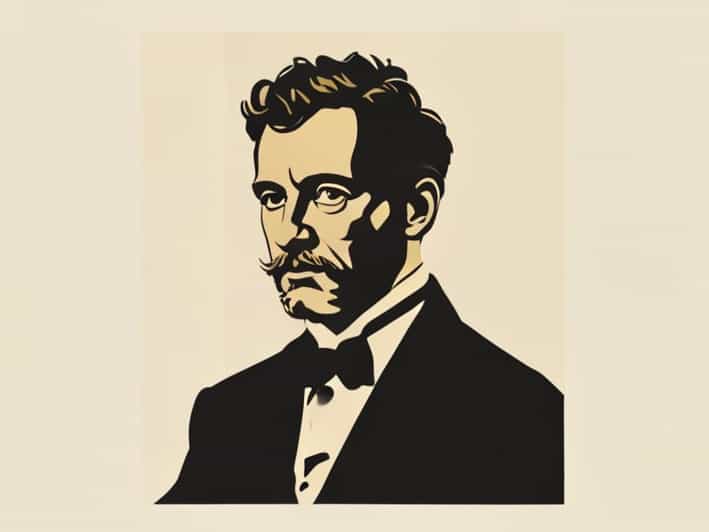
Gerard Manley Hopkins is widely regarded as one of the most innovative and distinctive poets of the Victorian era, whose work has continued to influence modern poetry. His poetry stands out for its complex use of language, rhythmic inventiveness, and spiritual depth. Hopkins’ works often explore themes of nature, religion, and the intense emotions of the human experience, combining his Jesuit faith with keen observation of the natural world. Understanding his poetical works provides insight not only into the development of English literature but also into the spiritual and artistic struggles of a deeply reflective mind.
The Life and Context of Gerard Manley Hopkins
Born in 1844 in Stratford, Essex, Gerard Manley Hopkins grew up in a well-educated, culturally rich family. He attended Oxford University, where he excelled academically and developed an early passion for poetry. His later conversion to Catholicism and decision to join the Jesuit order profoundly shaped his poetic voice. Hopkins lived a relatively secluded life devoted to religious service, yet his imagination and sensitivity to the natural world allowed him to craft poetry of remarkable intensity. His spiritual beliefs were intertwined with his artistic expression, making his poetry deeply personal and reflective of his religious devotion.
Innovative Style and Language
One of the most striking aspects of Hopkins’ poetry is his unique style, particularly his use of sprung rhythm, a technique he developed to break away from traditional metrical patterns. Unlike conventional meter, sprung rhythm focuses on stressed syllables while allowing variable numbers of unstressed syllables, creating a natural, speech-like cadence. This innovation allowed Hopkins to convey emotion and meaning with greater flexibility and musicality. His use of imagery is equally inventive, often drawing on intense natural detail to reflect spiritual truths.
Major Themes in Hopkins’ Poetry
Hopkins’ poetry explores several recurring themes that reflect both his personal concerns and broader human experience. Nature is a central motif, often depicted with vivid detail and used to illustrate spiritual ideas. Religious devotion is another dominant theme, as many of his poems examine the presence of God in the natural world and in human life. Additionally, Hopkins frequently meditates on suffering, mortality, and the tension between worldly struggles and spiritual aspirations.
Notable Poems
- The WindhoverCelebrated for its intricate imagery and dynamic rhythm, this poem reflects Hopkins’ awe at a falcon in flight and interprets it as a symbol of divine power and grace.
- Pied BeautyThis poem praises the variety and beauty of the natural world, highlighting Hopkins’ skill in blending observation with spiritual reflection.
- God’s GrandeurHere, Hopkins meditates on the presence of God in the world, contrasting human exploitation with the resilience of divine creation.
- Carrion ComfortA deeply introspective poem that addresses despair, struggle, and the poet’s ultimate submission to divine will.
The Role of Nature in Hopkins’ Work
Hopkins’ poetry often draws on nature as a mirror for spiritual and emotional truths. His careful observation of landscapes, weather, and animals serves both as a source of inspiration and as a medium for exploring theological ideas. Unlike many Victorian poets who treated nature in a sentimental or romanticized way, Hopkins combined scientific accuracy with spiritual intensity. The richness of his imagery allows readers to see the natural world through a lens that is both precise and transcendent, where every detail reflects a deeper significance.
Religious and Spiritual Dimension
Hopkins’ Jesuit faith profoundly shaped his poetic vision. His works frequently meditate on the presence of God in everyday life, emphasizing the sanctity of creation and the human responsibility to recognize and honor divine order. This spiritual dimension gives his poetry a contemplative quality, inviting readers to reflect on their own relationship with faith, morality, and the natural world. In many ways, Hopkins’ religious perspective provides a lens through which his observations of nature and human emotion gain profound depth and resonance.
Legacy and Influence
Although much of Hopkins’ poetry was unpublished during his lifetime, his work gained significant recognition in the early twentieth century. Today, he is celebrated for his technical innovation, linguistic creativity, and spiritual intensity. Hopkins’ influence can be seen in modernist poetry and in writers who value rhythmic experimentation and rich imagery. Scholars continue to study his manuscripts and letters, revealing the meticulous care he took in crafting each line and the thoughtful integration of religious and aesthetic concerns.
Critical Reception
Initially, Hopkins’ work was considered unconventional, and many critics were unsure how to respond to his innovative rhythms and dense imagery. Over time, however, his reputation grew, with critics acknowledging his mastery of language and his ability to fuse technical innovation with deep emotional and spiritual insight. Today, Hopkins is regarded as a central figure in English poetry, whose works continue to challenge and inspire both readers and writers.
Key Characteristics of Hopkins’ Poetry
- Sprung RhythmA unique metrical system that enhances musicality and emotional expression.
- Intense ImageryDetailed depictions of nature that carry symbolic and spiritual significance.
- Religious ThemesPoems often reflect Hopkins’ Jesuit beliefs and spiritual contemplation.
- Emotional DepthExploration of struggle, joy, and the complexity of human experience.
- Innovative LanguageCreative diction, alliteration, and internal rhyme contribute to his distinctive voice.
Gerard Manley Hopkins remains one of the most remarkable poets in English literature, notable for his inventive use of language, rhythmic experimentation, and spiritual insight. His works reveal a profound engagement with the natural world and a deep exploration of human emotion and divine presence. By studying his poetical works, readers gain insight into the intricate relationship between faith, art, and the human experience. Hopkins’ legacy continues to inspire and challenge poets, scholars, and readers alike, ensuring that his vision and voice endure as a vital part of literary history.