In physics and engineering, the study of waves is fundamental to understanding phenomena such as sound, light, and electrical signals. When analyzing wave behavior, one interesting scenario arises when two sinusoidal waves of the same frequency interact. This situation is common in acoustics, electronics, and optics, and understanding it provides insight into concepts like interference, phase difference, and amplitude modulation. By exploring the principles behind two sinusoidal waves of the same frequency, we can better comprehend how waves combine, how energy is distributed, and how practical applications such as signal processing or noise cancellation function in real-world systems.
Understanding Sinusoidal Waves
A sinusoidal wave is a smooth, periodic oscillation that can be described mathematically using sine or cosine functions. These waves are characterized by their amplitude, frequency, and phase. The amplitude determines the maximum displacement of the wave, the frequency indicates how often the wave cycles per second, and the phase determines the wave’s initial position relative to a reference point. Sinusoidal waves are essential in physics because they represent the simplest form of oscillatory motion and form the basis for more complex waveforms through superposition.
Mathematical Representation
Two sinusoidal waves of the same frequency can be represented mathematically as
- wave 1 y1(t) = A1sin(Ït + Ï1)
- wave 2 y2(t) = A2sin(Ït + Ï2)
Here, A1and A2are the amplitudes, Ï is the angular frequency, t is time, and Ï1and Ï2are the initial phases. Since both waves share the same frequency, Ï, their interaction is determined primarily by their amplitudes and phase difference.
Superposition of Waves
The principle of superposition states that when two or more waves overlap in space, the resulting displacement is the sum of the individual displacements. For two sinusoidal waves of the same frequency, this principle can be applied to determine the resultant wave. The resulting amplitude and phase depend on the magnitudes and phase difference between the original waves. Understanding this principle is crucial for predicting interference patterns and energy distribution in various physical systems.
Constructive and Destructive Interference
Interference occurs when two waves combine, resulting in a modification of the overall amplitude. There are two primary types of interference
- Constructive interferenceThis happens when the waves are in phase or have a phase difference of multiples of 2Ï. Their amplitudes add up, resulting in a larger amplitude for the resultant wave.
- Destructive interferenceThis occurs when the waves are out of phase by Ï (180 degrees). Their amplitudes subtract, potentially cancelling each other out if they are equal in magnitude.
The constructive and destructive effects can be calculated using vector addition of amplitudes or by applying trigonometric identities to the wave functions. This analysis is crucial in fields such as acoustics, where sound waves combine, and in electronics, where signal waves interact.
Phase Difference and Its Effect
The phase difference between two sinusoidal waves of the same frequency is the angular difference between their peaks and troughs. This difference, denoted as ÎÏ = Ï2â Ï1, plays a central role in determining the resultant wave’s characteristics. Even if two waves have the same amplitude, their phase difference can dramatically alter the combined wave’s behavior, leading to partial interference patterns or complete cancellation in some cases.
Calculating the Resultant Wave
The resultant wave y(t) from two sinusoidal waves of the same frequency can be expressed as
y(t) = â(A1² + A2² + 2A1A2cosÎÏ) sin(Ït + ÏR)
Here, ÏRis the resultant phase, which can be calculated using
ÏR= arctan((A1sinÏ1+ A2sinÏ2)/(A1cosÏ1+ A2cosÏ2))
This formula shows that both amplitude and phase contribute to the final shape of the wave. Engineers and scientists use these calculations to design systems where precise wave interference is critical, such as in radio communications or optical devices.
Applications in Real Life
Two sinusoidal waves of the same frequency appear in many practical contexts. Understanding their interaction is essential for multiple technological and scientific applications
Acoustics
In sound engineering, combining two sinusoidal waves of the same frequency can produce beats or amplify sound. Musicians and audio engineers manipulate phase differences to create desired audio effects or reduce noise. Constructive interference can enhance volume, while destructive interference can cancel unwanted sound, forming the basis of noise-cancelling headphones.
Electronics and Communication
In electronics, signals are often transmitted as sinusoidal waves. Engineers must consider phase relationships when combining signals, as incorrect phasing can lead to signal distortion or cancellation. Radio, television, and telecommunication systems rely on precise control of wave superposition to ensure signal clarity. Frequency synchronization and phase adjustment are key aspects of circuit design and signal processing.
Optics
In optics, light waves can also be represented as sinusoidal oscillations of electromagnetic fields. Two coherent light waves of the same frequency can interfere to produce patterns of brightness and darkness, known as interference fringes. Applications include interferometers, holography, and laser technology. By understanding the phase relationship between waves, scientists can manipulate light to measure distances, study material properties, and create advanced imaging techniques.
Visualization and Graphical Interpretation
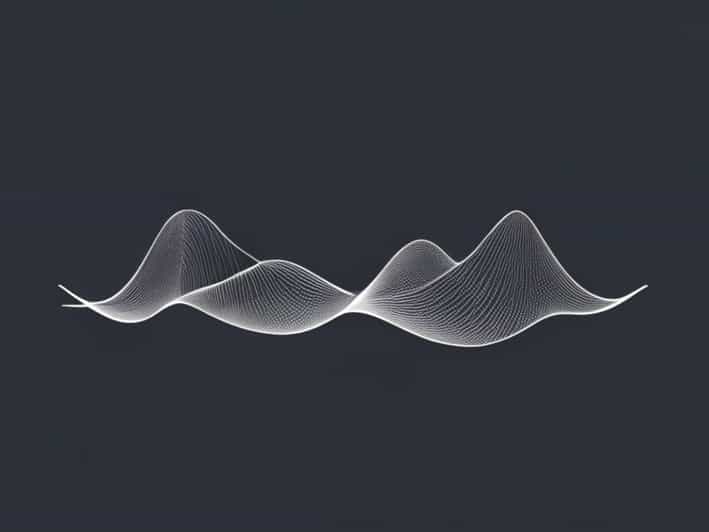
Graphically representing two sinusoidal waves of the same frequency helps in understanding their combined effect. By plotting the individual waves and their resultant, one can observe constructive and destructive interference clearly. Peaks align during constructive interference, creating a higher amplitude, while they cancel during destructive interference. Visualization is particularly helpful in educational settings and in designing experiments or devices that rely on wave superposition.
Key Observations
- Two waves of the same frequency but different amplitudes create a resultant wave whose amplitude lies between the sum and difference of the individual amplitudes.
- Phase difference directly influences the resultant amplitude and phase of the combined wave.
- Understanding these relationships is essential in physics, engineering, and applied sciences.
Two sinusoidal waves of the same frequency provide a fundamental case study in wave behavior, illustrating how amplitude, phase, and frequency interact to produce a resultant wave. The principles of superposition, constructive and destructive interference, and phase difference are central to understanding many physical phenomena, from sound and light to electrical signals. Mastery of these concepts is crucial in multiple disciplines, including acoustics, optics, and electronics, where precise control of wave interaction is necessary. By analyzing these waves mathematically, graphically, and conceptually, students and professionals can predict and manipulate wave behavior, applying these insights to a wide range of real-world technologies and experiments.