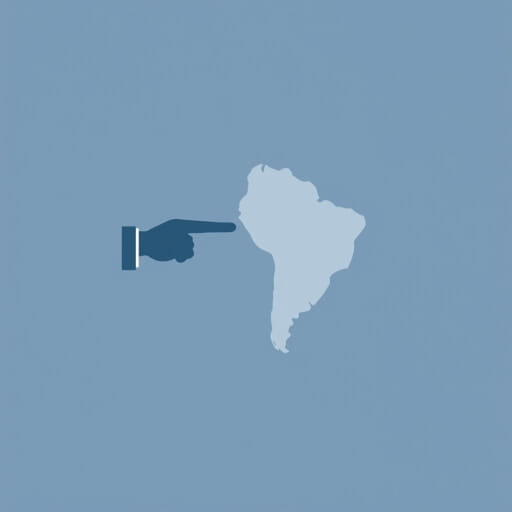
Throughout the 19th and 20th centuries, United States intervention in Latin America shaped the region’s political landscape in ways that continue to echo today. From military occupations and covert CIA operations to economic influence and diplomatic pressure, the U.S. has played a major role in the affairs of countries like Cuba, Nicaragua, Panama, Chile, and many more. These interventions were often justified under the banner of protecting democracy, halting communism, or safeguarding American interests. However, they frequently led to instability, authoritarian regimes, and long-term resentment among Latin American populations.
Monroe Doctrine and Early Interventions
Foundations of U.S. Foreign Policy in the Americas
The foundation of American intervention in Latin America began with the Monroe Doctrine, announced in 1823. This policy declared that the Western Hemisphere was under U.S. protection and warned European powers against further colonization. While originally defensive in tone, the doctrine became a justification for U.S. dominance in the region.
Military Action in Mexico and the Caribbean
In the 19th century, the U.S. launched military actions in Mexico, including the Mexican-American War (18461848), which resulted in the annexation of vast Mexican territory. In the Caribbean, the U.S. intervened in Haiti, the Dominican Republic, and Cuba. These actions established a pattern of using force to assert control and protect American economic and strategic interests.
Gunboat Diplomacy and the Roosevelt Corollary
Extending the Monroe Doctrine
In 1904, President Theodore Roosevelt added the Roosevelt Corollary to the Monroe Doctrine. It declared that the U.S. had the right to intervene in Latin American nations to stabilize economic affairs and prevent European intervention. This led to what critics call gunboat diplomacy.
Interventions in Central America
The U.S. deployed Marines to Nicaragua, Honduras, and Haiti throughout the early 20th century. These occupations often supported dictators favorable to American business interests, such as the United Fruit Company. While presented as stabilizing efforts, they deepened anti-American sentiment across the region.
The Cold War and Anti-Communist Campaigns
Fear of Soviet Influence
During the Cold War, U.S. policy in Latin America was dominated by the goal of containing communism. This led to support for right-wing regimes and opposition to leftist movements, whether democratic or revolutionary. Latin America became a key battleground in the ideological conflict between the U.S. and the Soviet Union.
Guatemala and Operation PBSUCCESS
In 1954, the CIA orchestrated a coup in Guatemala to overthrow President Jacobo Ãrbenz, who had initiated land reforms affecting U.S. corporate interests. The new military regime reversed these reforms and triggered decades of civil conflict. This intervention became a model for future CIA operations in the region.
Bay of Pigs and Cuban Tensions
In 1961, U.S.-trained Cuban exiles attempted to invade Cuba at the Bay of Pigs, intending to overthrow Fidel Castro’s communist government. The mission failed disastrously and embarrassed the U.S. government. It further solidified Cuba’s alliance with the Soviet Union, eventually leading to the Cuban Missile Crisis in 1962.
South America: Coups and Authoritarian Regimes
Chile and the Overthrow of Salvador Allende
One of the most controversial interventions occurred in Chile. In 1973, the U.S. supported a military coup that overthrew President Allende, a Marxist elected democratically. General Augusto Pinochet took power and ruled as a dictator, committing widespread human rights abuses. U.S. backing of his regime damaged its image as a promoter of democracy.
Argentina, Brazil, and Operation Condor
The U.S. also supported military dictatorships in Argentina and Brazil during the 1970s. These regimes participated in Operation Condor, a campaign of coordinated repression and assassination of left-wing opponents. Declassified documents have revealed U.S. knowledge and tacit approval of these brutal tactics.
Central America in the 1980s
Nicaragua and the Contras
After the Sandinistas came to power in Nicaragua in 1979, the Reagan administration funded and trained the Contras, a rebel group opposing the new leftist government. The Iran-Contra scandal exposed the secret sale of weapons to Iran to fund the Contras, bypassing U.S. congressional restrictions. The resulting civil war devastated Nicaragua’s economy and society.
El Salvador and Human Rights Violations
During El Salvador’s civil war, the U.S. supported a right-wing government accused of systematic human rights abuses, including the assassination of Archbishop Ãscar Romero. Billions in aid were funneled to security forces despite their brutal record. Many Salvadorans fled to the U.S. during this period, adding to Latin American migration.
Economic Influence and Neoliberal Reforms
The Washington Consensus
In the 1990s, U.S. influence shifted from direct military intervention to economic pressure. The Washington Consensus promoted neoliberal policies such as privatization, deregulation, and trade liberalization. While these reforms were intended to spur growth, they often led to increased inequality and unrest.
Free Trade Agreements
Agreements like NAFTA (North American Free Trade Agreement) between the U.S., Mexico, and Canada opened markets but also displaced workers and led to migration. U.S. corporations gained access to cheap labor and resources, while many Latin American economies became dependent on exports.
Modern-Day Relations and Controversies
War on Drugs
U.S. involvement in Latin America today includes counter-narcotics operations, especially in Colombia and Mexico. Billions of dollars have been spent on militarizing the drug war, but critics argue it has fueled violence without reducing demand for narcotics in the U.S. itself.
Migration and Border Politics
Instability in Central America often tied to past U.S. interventions has contributed to waves of migration northward. U.S. border policies and the treatment of migrants have become contentious political issues. Debates continue over how much responsibility the U.S. bears for regional instability.
Impact on Latin America
Consequences of Intervention
The legacy of U.S. intervention in Latin America is complex. While it sometimes brought short-term stability or prevented Soviet influence, it often left behind authoritarian regimes, civil wars, economic dependency, and widespread mistrust. Societies in the region continue to struggle with corruption, poverty, and political polarization rooted in this history.
Growing Independence
In recent years, Latin American countries have sought greater independence in foreign policy. Alliances such as Mercosur and CELAC aim to reduce reliance on the U.S. Regional leaders now advocate for multipolar diplomacy and economic diversification. This shift reflects both historical grievances and a changing global order.
The history of U.S. intervention in Latin America spans centuries and reflects a pattern of strategic interests, ideological conflicts, and economic ambition. While often justified under noble ideals, such interventions have frequently produced unintended consequences and fueled resistance. Understanding this legacy is crucial for shaping more respectful and cooperative relations in the future. As Latin America redefines its role in the global arena, the U.S. faces the challenge of moving from dominance to partnership, acknowledging the past while building a better future.