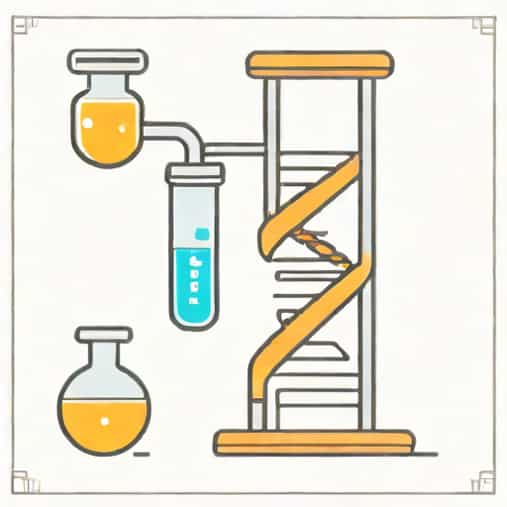
DNA extraction is a fundamental technique in molecular biology, genetics, and biotechnology that allows researchers to isolate and study the genetic material from cells or tissues. One of the most widely used methods for extracting high-quality DNA involves the use of phenol-chloroform, a chemical mixture that efficiently separates DNA from proteins and other cellular components. Understanding the uses of phenol-chloroform in DNA extraction is essential for students, researchers, and laboratory technicians, as it ensures the purity and integrity of the DNA, which is critical for downstream applications such as PCR, sequencing, cloning, and genetic analysis. The method has been a cornerstone of molecular biology for decades due to its reliability and effectiveness in obtaining uncontaminated DNA samples.
Introduction to Phenol-Chloroform
Phenol-chloroform is a biphasic solvent system composed of phenol, chloroform, and sometimes isoamyl alcohol. It is used in molecular biology laboratories to separate nucleic acids from proteins and lipids. Phenol is an aromatic compound that denatures proteins, while chloroform helps in phase separation and enhances the removal of proteins and other organic contaminants. Isoamyl alcohol is occasionally added to reduce foaming during the extraction process.
Composition and Properties
- Phenol Denatures proteins and disrupts cellular membranes.
- Chloroform Improves phase separation and helps in the removal of lipids.
- Isoamyl alcohol (optional) Reduces foaming during mixing and extraction.
The combination of these chemicals creates a system where DNA can be efficiently separated into an aqueous phase, while proteins and lipids are trapped in the organic phase, enabling the recovery of pure DNA suitable for sensitive molecular biology experiments.
Role of Phenol-Chloroform in DNA Extraction
The primary use of phenol-chloroform in DNA extraction is to purify DNA by removing proteins, lipids, and other cellular debris that may interfere with downstream molecular techniques. By creating a biphasic system, phenol-chloroform allows for the selective partitioning of biomolecules based on their solubility in aqueous or organic phases.
Step-by-Step Mechanism
- Cell lysis The cells or tissues are first lysed using a buffer that disrupts cell membranes and releases DNA, proteins, and other cellular components into solution.
- Phenol-chloroform addition The lysate is mixed with an equal volume of phenol-chloroform, which denatures proteins and facilitates the separation of nucleic acids.
- Phase separation Upon centrifugation, the mixture separates into two layers an upper aqueous phase containing DNA and RNA, and a lower organic phase containing denatured proteins and lipids.
- DNA recovery The aqueous phase is carefully collected, avoiding contamination from the interphase or organic layer, and the DNA is further purified using ethanol or isopropanol precipitation.
Advantages of Using Phenol-Chloroform
Phenol-chloroform extraction offers several advantages that make it a preferred method in many molecular biology laboratories
High Purity DNA
The method effectively removes proteins, lipids, and other contaminants, resulting in highly pure DNA suitable for sensitive downstream applications such as PCR, restriction enzyme digestion, and sequencing.
Versatility
Phenol-chloroform can be used to extract DNA from a variety of sources, including blood, tissues, bacterial cells, plant cells, and cultured mammalian cells. Its adaptability makes it a standard method across diverse research fields.
Cost-Effectiveness
Compared to commercial DNA extraction kits, phenol-chloroform is relatively inexpensive and accessible, especially in resource-limited laboratories. It allows researchers to process large numbers of samples without significant cost.
Applications in Molecular Biology
Phenol-chloroform extracted DNA has numerous applications in research, diagnostics, and biotechnology. Some of the primary uses include
Polymerase Chain Reaction (PCR)
High-quality DNA obtained using phenol-chloroform is essential for PCR amplification. Contaminants like proteins or phenolic compounds can inhibit DNA polymerase, reducing amplification efficiency. Purified DNA ensures accurate and reliable PCR results.
Cloning and Recombinant DNA Technology
In molecular cloning, DNA fragments must be pure to be inserted into vectors and propagated in host cells. Phenol-chloroform extracted DNA provides a clean template free from inhibitory contaminants.
Genomic and Plasmid DNA Analysis
Researchers often use phenol-chloroform extraction to isolate genomic or plasmid DNA for restriction enzyme analysis, sequencing, and genetic studies. The method ensures that the DNA is intact and free from proteins that could interfere with enzymatic reactions.
Forensic and Diagnostic Applications
In forensic science, DNA extracted from biological samples like blood, saliva, or hair is used for identification and genetic profiling. Phenol-chloroform extraction ensures that even trace amounts of DNA can be purified for sensitive forensic analysis.
Limitations and Safety Considerations
While phenol-chloroform is effective, it has certain limitations and safety concerns that must be addressed in the laboratory
Limitations
- Time-consuming The procedure involves multiple steps, including phase separation and precipitation, which can be slower than using commercial kits.
- Toxicity Both phenol and chloroform are toxic chemicals that require careful handling and appropriate protective equipment.
- Potential contamination Improper handling can lead to carryover of organic solvents into the DNA, which may inhibit downstream reactions.
Safety Precautions
- Use gloves, lab coats, and eye protection when handling phenol-chloroform.
- Perform all procedures in a well-ventilated area or fume hood to minimize inhalation exposure.
- Dispose of waste solvents according to institutional and environmental regulations.
Alternatives to Phenol-Chloroform
In recent years, commercial DNA extraction kits and column-based methods have become popular alternatives to phenol-chloroform extraction. These methods are faster, safer, and often provide comparable DNA purity. However, phenol-chloroform remains valuable in research settings where high yield and cost-effectiveness are important, especially for large-scale extractions.
The use of phenol-chloroform in DNA extraction is a classical and highly effective method for isolating pure DNA from various biological samples. By separating DNA from proteins, lipids, and other contaminants, it ensures high-quality DNA suitable for numerous molecular biology applications, including PCR, cloning, sequencing, and forensic analysis. Despite its limitations and safety concerns, phenol-chloroform extraction continues to be an essential technique in research laboratories due to its reliability, versatility, and cost-effectiveness. Proper handling, adherence to safety protocols, and careful execution of the extraction steps are critical to obtaining uncontaminated DNA and achieving successful results in downstream applications.