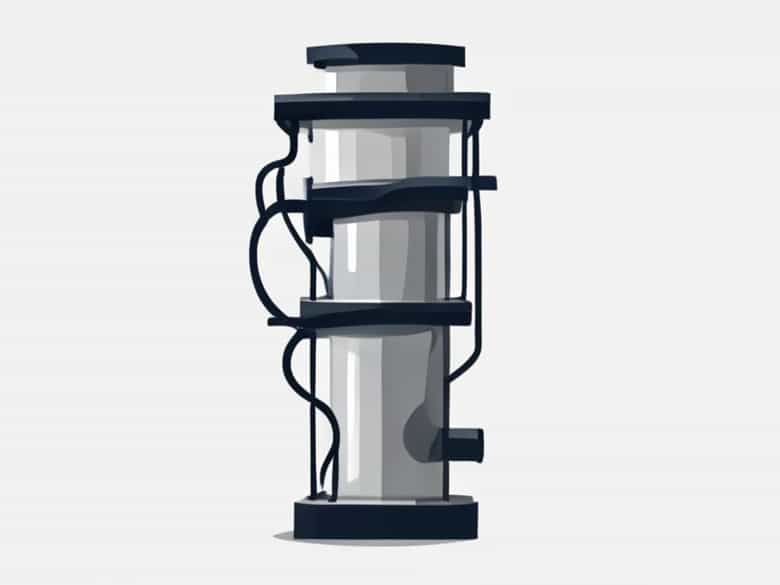
In many industrial, commercial, and municipal applications, the need to move water or other fluids efficiently at high pressure is essential. This is where vertical multistage centrifugal pumps play a critical role. These pumps are widely used in water supply systems, pressure boosting, boiler feed applications, and industrial processes. Understanding the working principle of a vertical multistage centrifugal pump helps operators, engineers, and general readers appreciate why this pump design is so reliable, compact, and energy efficient for demanding applications.
Basic Concept of a Vertical Multistage Centrifugal Pump
A vertical multistage centrifugal pump is a type of dynamic pump that uses multiple impellers arranged in series to increase fluid pressure. Unlike single-stage pumps, which rely on one impeller, a multistage pump stacks several impellers to achieve higher head without increasing the pump’s overall footprint significantly.
The vertical design refers to the orientation of the pump shaft, which is positioned vertically. This design allows the pump to save space and operate efficiently in installations where horizontal space is limited.
Core Components and Their Functions
To understand the working principle clearly, it is important to recognize the main components of a vertical multistage centrifugal pump and their roles in fluid movement.
Main Components
- Electric motor that provides rotational energy
- Vertical shaft that transmits power to the impellers
- Multiple impellers arranged in series
- Diffusers or guide vanes between stages
- Pump casing that directs fluid flow
Each component contributes to the pump’s ability to generate high pressure efficiently.
The Fundamental Working Principle
The working principle of a vertical multistage centrifugal pump is based on centrifugal force. When the motor starts, it rotates the vertical shaft, which in turn rotates all the impellers mounted along the shaft.
Fluid enters the pump through the suction inlet and reaches the first impeller. As the impeller rotates, it imparts kinetic energy to the fluid, causing it to move outward from the center of the impeller toward the edges.
Conversion of Energy
At each stage, the kinetic energy gained by the fluid is converted into pressure energy. This conversion happens when the fluid passes through a diffuser or guide vane, which slows down the fluid while increasing its pressure.
This process is repeated across multiple stages, resulting in a significant increase in total discharge pressure.
Role of Multiple Stages in Pressure Generation
The defining feature of a multistage centrifugal pump is the use of several impellers in series. Each stage adds a fixed amount of pressure, known as head, to the fluid.
Instead of relying on a single large impeller, the pump achieves high pressure through cumulative energy addition.
Why Multiple Stages Are Used
- Higher pressure output without oversized components
- Improved efficiency compared to single-stage designs
- Better control over flow and head characteristics
This staged approach makes the pump suitable for high-rise buildings and industrial systems.
Vertical Orientation and Its Advantages
The vertical orientation of the pump shaft offers several practical benefits. It reduces the horizontal space required for installation and allows the pump to be integrated easily into pipelines.
This design also helps in maintaining proper alignment and reducing mechanical stress.
Benefits of Vertical Design
- Compact footprint
- Ease of installation in confined spaces
- Better cooling of the motor in some configurations
These advantages contribute to the popularity of vertical multistage centrifugal pumps in modern systems.
Fluid Flow Path Inside the Pump
The fluid flow path in a vertical multistage centrifugal pump is carefully engineered to minimize losses and maximize efficiency. After entering the suction inlet, the fluid passes through each impeller and diffuser in sequence.
The pump casing ensures smooth directional flow from one stage to the next.
Step-by-Step Flow Process
- Fluid enters the suction port
- First impeller increases velocity and pressure
- Diffuser converts velocity into pressure
- Fluid moves to the next stage
- Final discharge at high pressure
This controlled flow path is central to the pump’s reliable performance.
Efficiency and Energy Considerations
Energy efficiency is a major reason why vertical multistage centrifugal pumps are widely used. By distributing pressure increase across multiple stages, energy losses are minimized.
The design also reduces turbulence and mechanical stress.
Factors Affecting Efficiency
- Impeller design and material
- Number of stages
- Operating speed
- Fluid properties
Proper selection and maintenance ensure long-term efficiency.
Common Applications of Vertical Multistage Centrifugal Pumps
These pumps are used in a wide range of applications due to their versatility and performance.
Typical Uses
- Water supply and pressure boosting
- Boiler feed systems
- Reverse osmosis and filtration plants
- Industrial process circulation
Their ability to handle clean and slightly aggressive fluids adds to their appeal.
Maintenance and Operational Reliability
Vertical multistage centrifugal pumps are known for their durability and low maintenance requirements. Their design allows easy access to internal components for inspection and servicing.
Regular maintenance ensures consistent performance and extended service life.
Basic Maintenance Practices
- Checking seals and bearings
- Monitoring vibration and noise
- Ensuring proper lubrication
- Inspecting impellers for wear
Preventive maintenance reduces downtime and operating costs.
Advantages Over Other Pump Types
Compared to other pump designs, vertical multistage centrifugal pumps offer a unique combination of efficiency, pressure capability, and compact size.
They are particularly effective where high pressure is required without excessive flow.
Key Advantages
- High head generation
- Space-saving design
- Smooth and continuous flow
- Long operational life
These benefits make them a preferred choice in many industries.
Understanding Limitations
Despite their advantages, these pumps are best suited for clean or lightly contaminated fluids. Solid ptopics can cause wear and reduce efficiency.
Proper application matching is essential for optimal performance.
Important Considerations
- Fluid cleanliness
- Correct pressure and flow requirements
- Proper installation alignment
Awareness of these factors helps avoid operational issues.
The working principle of a vertical multistage centrifugal pump is based on the efficient conversion of mechanical energy into fluid pressure through multiple impellers arranged in series. Its vertical design, high efficiency, and ability to generate substantial pressure make it ideal for modern water and industrial systems.
By understanding how these pumps operate, users can make informed decisions about selection, operation, and maintenance. The combination of compact design and reliable performance ensures that vertical multistage centrifugal pumps remain a cornerstone of fluid handling technology across many industries.