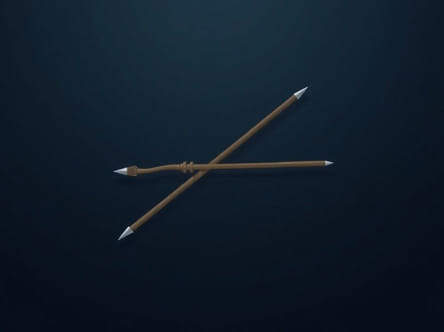
The term ‘quarterstaff’ might sound unusual to modern ears, especially to those unfamiliar with medieval weapons or traditional European martial arts. This wooden staff was not just a stick but a powerful weapon used in England for centuries. Understanding why it’s called a quarterstaff requires exploring its structure, history, and how it was used in both training and combat. This topic will guide you through the origins and meaning of the word ‘quarterstaff’ and explain why it became such an important part of English fighting culture.
What Is a Quarterstaff?
A quarterstaff is a long wooden pole, usually between six to nine feet in length, traditionally made from hardwood like ash or oak. It was used as a weapon for self-defense, combat, and martial arts practice in England, particularly during the Middle Ages and Renaissance. This staff was most often wielded with both hands, allowing the fighter to strike, block, and thrust with remarkable speed and power.
Basic Structure and Use
The quarterstaff was generally round in shape and tapered slightly toward the ends. Fighters would typically grip the staff with their hands about a quarter of the way in from each end. This grip provided balance and allowed for effective offensive and defensive movements. Because of this hand placement, many historians believe it may have contributed to the term ‘quarterstaff.’
Theories Behind the Name ‘Quarterstaff’
The origin of the term ‘quarterstaff’ has been the subject of debate among scholars and historians. Several theories attempt to explain why it is called a quarterstaff. Each theory is rooted in language, technique, or historical practice.
1. The Quarter Gripping Theory
One of the most popular explanations is based on the way the staff is held. Practitioners typically held the staff with their hands positioned about a quarter of the way from each end. This hand placement allowed for excellent control and versatility in movement. Because of this specific technique, the staff may have earned the name ‘quarterstaff’ to reflect the way it was handled.
2. The Quartered Wood Theory
Another theory suggests that the name comes from how the staff was made. Some believe that the best quarterstaves were made by splitting a log into four quarters, and then fashioning the staff from one of those quarters. This would make it a ‘quarter’ of a staff-sized tree, giving it the name quarterstaff. While this theory is less popular, it offers an alternative view that connects the name to the weapon’s physical origin.
3. The Quarter of a Hundredweight Theory
A more obscure theory proposes that ‘quarter’ may refer to the weight of the staff. In old English measurement systems, a ‘quarter’ was a unit equal to a quarter of a hundredweight. Though there is little historical evidence to support this, some speculate that the name could be derived from the typical weight of the weapon itself.
4. The Military or Social Rank Theory
Another interpretation is that quarterstaff might have been associated with a type of military or civic rank, especially among guards or retainers who were equipped with staves. This theory posits that the ‘quarter’ prefix may have related to duties, payment, or position within a social hierarchy, although this idea is not widely supported by primary sources.
The Quarterstaff in English Martial Tradition
The quarterstaff was more than just a weapon; it was a symbol of personal defense, sport, and training in English martial culture. It gained prominence during the Elizabethan era and remained a key part of fencing schools and public exhibitions well into the 18th century.
Training and Tournaments
Quarterstaff combat was commonly featured in tournaments and exhibitions. Fighters would display remarkable agility and precision, often treating matches like a sport. These demonstrations were popular among commoners and even gained the attention of nobility. Training with a quarterstaff was not only a method of self-defense but also a way to build strength, coordination, and discipline.
In Literature and Folklore
Quarterstaffs have appeared in English literature and folklore, perhaps most famously in the tales of Robin Hood. In many versions of the Robin Hood stories, characters such as Little John engage in quarterstaff duels to prove their strength and gain respect. These stories helped to romanticize the weapon and made it a cultural icon of English resistance and fairness.
Decline of the Quarterstaff
As firearms and more modern weapons became widespread, the quarterstaff gradually fell out of favor as a practical tool for combat. However, its role in training and its presence in English martial arts allowed it to remain relevant in certain circles. Eventually, it was replaced by other forms of sticks and staffs in martial training, such as the singlestick or the cane.
Modern Interest and Revival
In recent years, there has been a revival of interest in historical European martial arts (HEMA), including quarterstaff techniques. Enthusiasts study historical manuals and recreate techniques based on illustrations and written descriptions. These efforts help preserve the legacy of the quarterstaff and maintain its role in the study of historical weaponry.
The quarterstaff is a fascinating weapon with a rich history and multiple possible explanations for its unique name. Whether the name refers to how it is held, how it is made, or an old system of measurement, the quarterstaff remains a symbol of traditional English martial skill. Understanding why it is called a quarterstaff helps us appreciate the linguistic, cultural, and historical context of weapons in the past. As a part of England’s combat heritage, the quarterstaff stands tall not only as a physical tool but also as a testament to the ingenuity and adaptability of historical warriors.