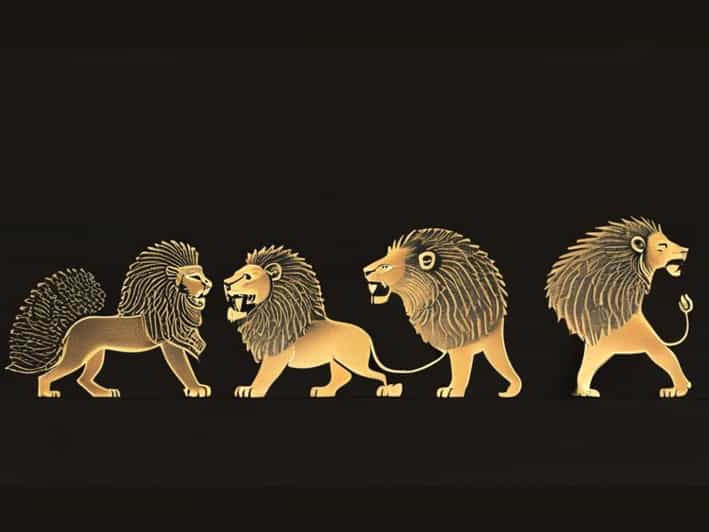
The depiction of Ashurbanipal hunting lions is one of the most striking and well-known examples of Assyrian art and royal propaganda. Created around the 7th century BCE, these intricate bas-reliefs from the palace of Nineveh vividly illustrate the king’s strength, courage, and dominance over nature. More than just a record of royal leisure, these scenes served a deeper political and symbolic purpose, reflecting the king’s authority, military power, and divine favor. The images of Ashurbanipal confronting and killing lions in an arena demonstrate not only his skill as a hunter but also his role as the protector of his people and enforcer of order in the kingdom.
Historical Context of Ashurbanipal
Ashurbanipal reigned as one of the last great kings of the Neo-Assyrian Empire, ruling from 668 to 627 BCE. He is often remembered for his impressive library at Nineveh, which preserved countless cuneiform tablets, but he was also a warrior king deeply concerned with maintaining control over his vast empire. The lion hunting scenes were carved in his palace to emphasize his bravery and to assert the strength of the Assyrian monarchy. Lions, being symbols of chaos and danger, represented the challenges and threats to the kingdom, which the king was expected to overcome.
The Art of Lion Hunting Reliefs
The reliefs of Ashurbanipal hunting lions are remarkable for their level of detail and realism. Artists carefully depicted the anatomy of lions, the movement of horses, and the expressions of both animals and humans. This realism helped convey the intensity and danger of the hunt, making the king’s heroism more dramatic. Typically, these scenes show the king on horseback, wielding a bow and arrow, surrounded by his attendants and hunting dogs. The imagery emphasizes his courage and skill, portraying him as a figure who faces danger directly and triumphs through strength and strategy.
Symbolism in the Lion Hunt
Beyond their artistic achievement, these scenes are highly symbolic. In Mesopotamian culture, lions were considered powerful and dangerous creatures that could threaten both humans and the divine order. By killing lions, Ashurbanipal was demonstrating his ability to maintain balance and protect his people. The hunt symbolized the king’s dominance over nature and chaos, reinforcing his divine right to rule. These reliefs were therefore not just decorative, but a form of propaganda, showing that the king was capable of both physical and moral leadership.
Political and Religious Significance
The lion hunt reliefs also served political and religious functions. Politically, they reinforced the image of Ashurbanipal as a fearless and competent leader. They were strategically placed in the palace to impress visitors and subjects, reminding them of the king’s strength and the power of the Assyrian state. Religiously, the lion hunt was connected to the idea of kingship as a divinely sanctioned duty. Lions were seen as forces of chaos, and the king’s ability to conquer them mirrored his role as a guardian of cosmic order and justice.
Techniques and Materials
The reliefs were carved from alabaster, a smooth and soft stone that allowed fine details to be achieved. Artists used chisels to create depth and texture, highlighting the muscles of the lions and the tension in the hunting scenes. The choice of material and the skill involved in the carving contributed to the lasting impact of these artworks. Even centuries later, viewers can still sense the intensity and drama of the hunt, which speaks to the mastery of Assyrian sculptors and their understanding of visual storytelling.
Legacy of the Lion Hunt Scenes
Ashurbanipal’s lion hunt reliefs have had a lasting influence on our understanding of ancient Mesopotamian art and culture. They provide insight into the values, beliefs, and priorities of the Assyrian Empire, highlighting the importance of strength, bravery, and divine favor in leadership. Art historians study these works to explore themes of power, human-animal relationships, and the ways rulers used art to communicate authority. Museums around the world, including the British Museum, house these reliefs, allowing contemporary audiences to appreciate their historical and artistic significance.
Impact on Modern Understanding of Assyrian Kingship
These reliefs have shaped how scholars and the general public perceive Assyrian kingship. The imagery reinforces the idea that a king’s legitimacy depended on his ability to protect his people, maintain order, and demonstrate personal valor. By analyzing the lion hunts, historians gain a clearer picture of the ways power and religion intersected in the Neo-Assyrian Empire. Additionally, the reliefs contribute to a broader understanding of how ancient civilizations used art for propaganda and communication.
In summary, Ashurbanipal hunting lions is a prime example of how art can serve multiple purposes simultaneously historical record, political propaganda, and religious symbolism. These reliefs celebrate the king’s physical prowess, reinforce his divine mandate, and illustrate the values of the Assyrian Empire. Their enduring appeal lies not only in their aesthetic qualities but also in their ability to convey a powerful narrative about leadership, courage, and the struggle to maintain order in a chaotic world. The lion hunts remain a testament to the sophistication of Assyrian art and the enduring human fascination with stories of heroism and power.